|
Forwarded this email? Sign up for free to have it sent directly to your inbox.
|
|
|
Good morning,
Today, we’re looking at lessons from the Strait of Hormuz closure, AI’s limitations, and life in Israel during the Iran war.
Write to us at editors@city-journal.org with questions or comments.
|
|
|
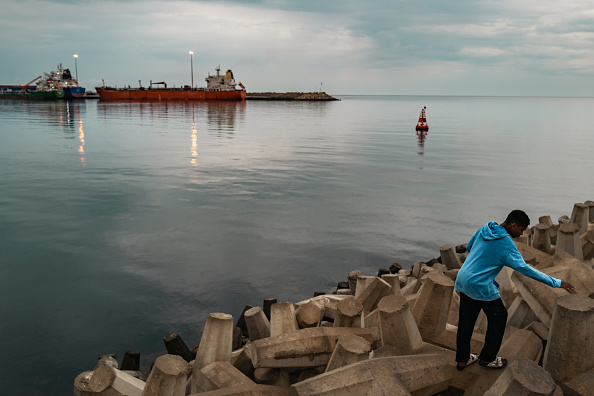
Photo credit: Elke Scholiers / Stringer / Getty Images News via Getty Images
|
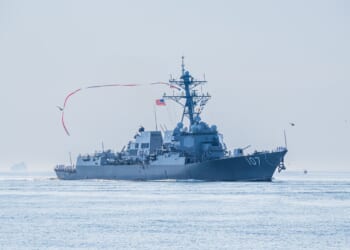
The closure of the Strait of Hormuz has locked up nearly 20 percent of the world’s oil supply. If the closure persists, argues Mark P. Mills, the consequences will rival that of the 1973–74 Arab oil embargo, which saw nearly 10 percent of global oil held out of the market, ushering in skyrocketing prices, a global recession, and bad energy policies.
The first lesson here? Oil is vital to modern civilization. It’s the world’s largest energy source, used in supply chains for just about everything—including building the machines designed to replace oil. “Thus, when oil is expensive, it’s broadly inflationary,” Mills explains. “Without oil, systems everywhere grind to a halt.”
Despite the more than $10 trillion spent on clean energy efforts over the past two decades, per-capita global oil use remains unchanged, and total global use has risen 30 percent. As Mills observes, “the world is more dependent on oil now than when the grand and expensive energy-transition experiment began.”
Read more here.
|
|
|
The field of social science is often riddled with errors, bias, and even fraud. It seems plausible that artificial intelligence could one day fix these problems, but some recent studies reveal the technology’s current limitations.
“AI can spot errors in human work and generate passable code and prose at remarkable speed, advantages we should not understate,” Robert VerBruggen writes. “But for now, the technology still makes frequent mistakes, carries its own ideological baggage, and fails to converge on consistent results when different models tackle the same question—unless heavily steered by the very humans whose foibles we hope to escape.”
Read more about the research findings here.
|
|
|
When the war with Iran began, many feared that the regime in Tehran would inflict enormous casualties and damage on Israel. Thankfully, that has not happened. Civilian deaths due to Iranian strikes remain low, and the country’s air defenses have intercepted more than 90 percent of Iranian missiles.
That doesn’t mean daily life in Tel Aviv is easy. More than 4,000 Israelis have been sent to hospitals for injuries, though most have not been severe. And the strikes have forced about 3,500 residents out of their homes.
But even so, Adam Zivo observes, “the mood in Tel Aviv remains buoyant.” Despite the quieter-than-usual streets, shops, beaches, and cafes are still buzzing. “Like many others,” he writes, “I came here to bear witness to devastation that largely has not materialized.”
|
|
|
“Progressives have absolutely no ability to differentiate between what they hope will happen, and what multiple millennia of observing human behavior tells us will happen.”
|
|
|
A quarterly magazine of urban affairs, published by the Manhattan Institute, edited by Brian C. Anderson.
|
|
|
Copyright © 2026 Manhattan Institute, All rights reserved.
|
|
|
|
Source link