A counter-proposal to Washington’s Ukraine War peace deal would see the country join the European Union by January first 2027, a report states.
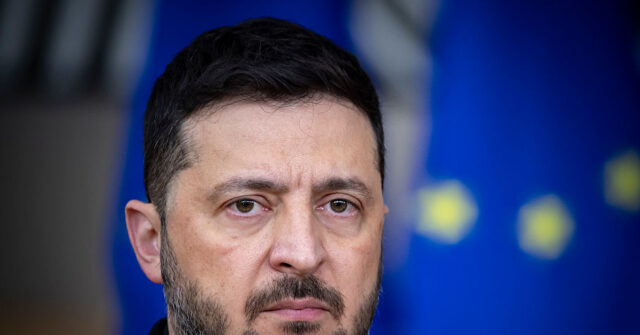
Ukraine could bypass the normally years-long accession process — and possibly the scrutiny and democratic consent of its members — and join the European Union next year, if a counter-proposal in the peace negotiation process said to have been submitted to Washington D.C. is adopted. British newspaper The Financial Times claims sources familiar with talks on the proposal, which are reported to have said a bid to make peace conditions appear less loaded towards Moscow could see Ukraine join the European trade and political bloc no later than the first day of 2027.
The FT cites Ukraine’s Zelensky who said this week: “The issue of Ukraine’s future EU membership depends largely on the Europeans — and on the Americans too, in fact”.
There is no indication of how well the idea will land with either the United States or Russia. Moscow in particular has been repeatedly accused of slow-walking talks for its own ends, particularly by sticking to its own maximalist position on what it expects to get out of them, making meaningful progress difficult. Commenting on the rumours of proposed changes, Moscow is reported to have said: “We have an impression that this version, which is being put forward for discussion, will be worsened”.
Ukraine is a long way from European Union membership by the standards of the normal accession process, which for most members can take many years. In previous reviews of its candidate status, the European Union has criticised Ukraine for its treatment of linguistic minorities and for its very serious issues with corruption, which out of war time would hold up membership.
There are also several European Union member states which have serious misgivings about making Ukraine a member. Hungary is not by any means the least of them, and as well as the Hungarian-speaking minority in Ukraine which has been a victim of that alleged discrimination for which Budapest professes acute concern, Hungary has also long been opposed to policies which draw the Union closer to an all-out conflict with Russia.
Critics of Hungary say, on the other hand, that these concerns are a figleaf for Hungarian sympathy for Russia itself, and its self-interest in importing cheap Russian energy, on which it depends and is less able to wean itself off than other European countries.
Over-ruling dissenting nations like Hungary or Slovakia is loaded with risk for the European Union, which would at once load an extremely expensive new member onto the books to be subsidised, while signalling to its smaller members that their wishes — even where they have a veto written into European law — are not respected.
It is not as if the European Union hasn’t set aside its own processes to get politically desirable outcomes. Perhaps the clearest of those was allowing Greece to join the Eurozone, which critics say was pushed through for the self-image reasons of having the ‘birthplace of democracy’ in the club, over the head of concerns about the actual strength of its economy. Years of pain followed as Greece struggled in the straightjacket of a currency neither designed for, nor run in favour of its own interests.
It is clear nevertheless that Europe’s elites want Ukraine as a member. Germany has spoken of a Union that spans from “Lisbon to Luhansk” while EU boss Ursula von der Leyen made it as clear as possible, saying: “they belong to us. They are one of us and we want them in”.