|
Forwarded this email? Sign up for free to have it sent directly to your inbox.
|
|
|
Good morning,
Today, we’re looking at President Trump’s nominee to chair the Federal Reserve, why women are more likely than men to endorse political violence, and the challenges behind the construction of the Golden Gate Bridge—and their lessons for today.
Write to us at editors@city-journal.org.
|
|
|
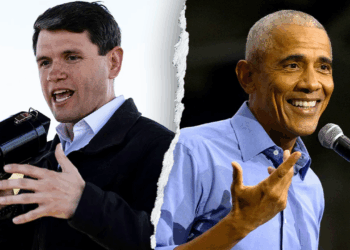
Last week, President Trump nominated Kevin Warsh to lead the Federal Reserve as its next chair. A former Fed governor, Warsh built a respectable career in finance and is close to the Trump administration. But he also has a long history of being more hawkish than Trump on monetary policy, making him a somewhat surprising choice.
Even so, he “may be just what the Fed needs to restore integrity to the institution,” Allison Schrager writes. If Warsh “acts in harmony with his statements over the last 15 years,” she continues, “he could be the one to restore more independence to the Fed and protect it from future interference.”
Read more about Warsh’s views and what his leadership could mean for monetary policy.
|
|
|
The Network Contagion Research Institute recently conducted a survey on society’s tolerance for political violence. The survey asked 1,055 individuals across different ages, sexes, races, and education levels whether the murder of President Donald Trump and New York City Mayor Zohran Mamdani would be justified.
Among those left of center politically, 67 percent said that they would feel at least some justification for the murder of Trump. Among those right of center, 54 percent said that they would feel at least some justification for the murder of Mamdani.
Unexpectedly, though, women were about 21 percent more likely than men to express some justification for the murder of Mamdani and nearly 15 percent more likely to justify the murder of Trump.
“Over the past decade, women—especially younger women—have become more politically and affectively polarized in their political judgments,” Colin Wright explains. “Political disagreement is increasingly treated as a serious moral offense rather than a simple difference of opinion. When you see the world that way, punishing someone for holding different views becomes a moral good.”
Read more about what Wright refers to as “punitive femininity.”
|
|
|
Opened in 1937, the Golden Gate Bridge remains a source of inspiration for engineers for its swift and under-budget construction. But this feat wasn’t accomplished solely through a more permissive regulatory environment, as many assume. And while the bridge took just four-and-a-half years to build, the entire process, from conception to completion, took 15 years. That was because of politics.
“Before building the bridge, its designers had to create an independent governing ‘district’ focused solely on this project—something then almost unprecedented in America,” Judge Glock explains. “When construction finally began early in 1933, the district had already accumulated $200,000 in debt, mostly from attorneys’ fees. Though originally intended to be funded entirely by bonds and tolls, the district had to impose property taxes to keep itself operating.”
Read more about the challenges behind the bridge’s completion and the lessons it offers today’s infrastructure project managers.
|
|
|
The Manhattan Institute is proud to serve as the Principal Institutional Partner for the Sun Valley Policy Forum’s 2026 Winter Summit in the iconic resort town of Sun Valley, Idaho on February 11, 2026.
We are thrilled to join Joe Lonsdale and MI senior fellow Christopher F. Rufo for an evening on principled leadership and the future of American institutions in an AI-driven era. Please click here to learn more about the Sun Valley Policy Forum and our partnership and to purchase tickets at a discounted rate for friends of the Manhattan Institute.
|
|
|
“They sure love to bring up Charlie ‘only debated’ college kids, as if the professors weren’t on the same campuses when he was there. A rare few did debate Charlie, but they were few and far between, and those that did also found out that he could hold his own among the credentialed class.”
|
|
|
Photo credit: Anadolu / Contributor / Anadolu via Getty Images
|
|
|
A quarterly magazine of urban affairs, published by the Manhattan Institute, edited by Brian C. Anderson.
|
|
|
Copyright © 2025 Manhattan Institute, All rights reserved.
|
|
|
|
Source link