The al-Qaeda terror network operates with impunity out of Iran and Afghanistan. America must lean on both countries’ regimes to bring it to heel.
Iran’s nuclear program is at the heart of its ongoing standoff with the United States, but Washington also needs to confront Iran on another key issue: its persistent support for al-Qaeda and its ongoing relationship with the Taliban.
Saif al-Adel, a top al-Qaeda leader, resides in Tehran under the protection of Iran’s Islamic Revolutionary Guard Corps (IRGC), according to the UN Security Council’s Monitoring Team. Al-Adel is the likely successor to Ayman al-Zawahiri, the former al-Qaeda chieftain killed by a US airstrike in Kabul, Afghanistan, five years ago.
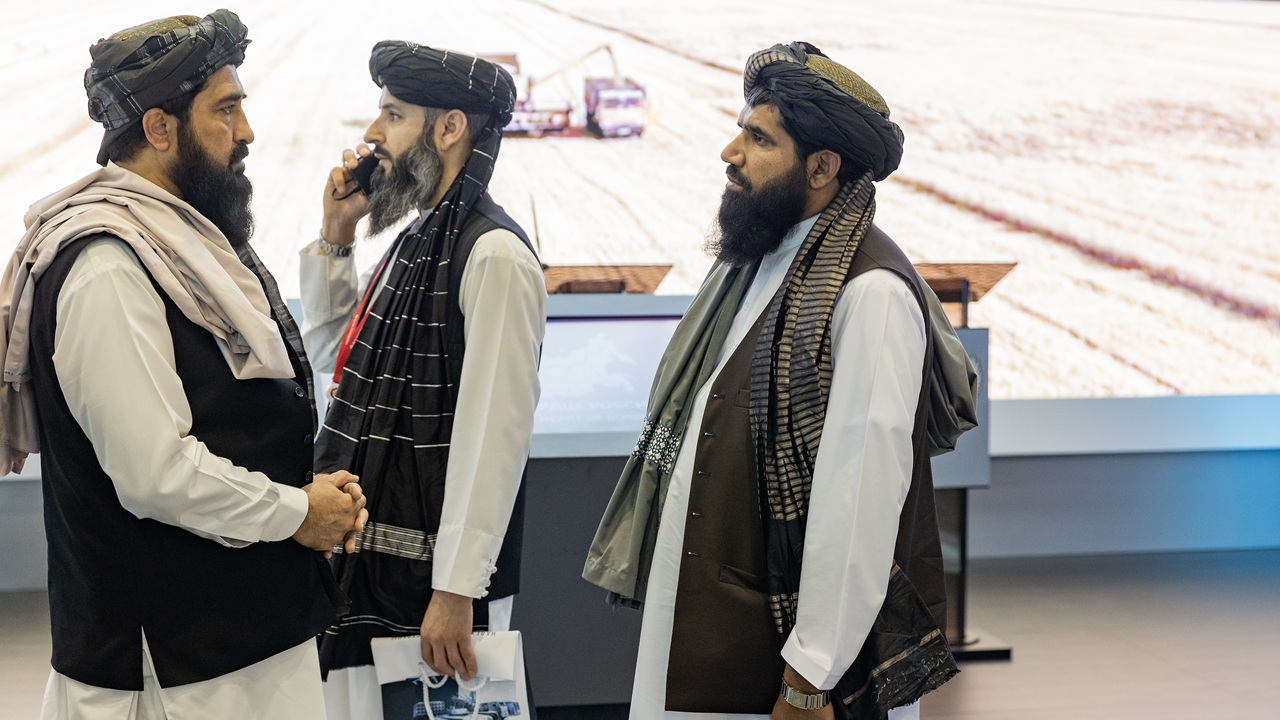
The Taliban remains as close to al-Qaeda as ever, and its leadership has publicly inserted itself into the tense standoff between the United States and Iran, siding with the Iranian regime. On February 15, the Taliban’s chief spokesperson, Zabihullah Mujahid, told Radio Iran’s Pashto service that if the United States were to launch an attack on Iran and Tehran requested assistance, the Taliban would cooperate and show solidarity with the Iranian regime. Mujahid was circumspect in his remarks, noting Afghanistan preferred a diplomatic settlement between Washington and Tehran, and adding that Afghan support to Iran in the event of a military confrontation would necessarily be within Afghanistan’s somewhat limited “capacity.” The Taliban statement should serve as a stark reminder of the regime’s disdain for the United States—and fierce opposition to the possibility of the US assuming an expanded position of strength along Afghanistan’s western border.
Al-Qaeda Never Stopped Working with the Taliban
The purpose of Mujahid’s comments was almost certainly to gain good will with the Iranian regime. Since the Taliban’s return to power in August 2021, the relationship between the two countries has been a mixture of engagement and localized conflict. There have been ongoing disputes over resources, borders, refugees and migrants, and the Taliban’s treatment of its Shia Hazara minority, which Shia-majority Iran has long assumed an informal protective role over. Nevertheless, the Iranian regime is close to formally recognizing the Taliban, which would make it only the second nation after Russia to do so.
While Mujahid’s comments constitute no real threat to the United States, they underscore the long-standing support of both Kabul and Tehran for al-Qaeda, which remains committed to attacking the United States and the West. Al-Qaeda’s regional entities in Yemen, Somalia, and the Sahel remain hard at work in plotting against America. Unlike its longtime adherent Ahmed al-Shara (alias Abu Mohammed al-Jolani) in Syria, who has at least paid lip service to moderation, al-Qaeda has never even pretended to seek an ideological transformation and remains as dangerous as ever. Only the dogged work of US and allied military forces and intelligence services have made these groups somewhat less capable of carrying out attacks in the West.
Pursuant to the 2020 Doha Agreement with Washington, the Taliban pledged that al-Qaeda would not use Afghan soil to plot against the United States. These commitments have been utterly meaningless. There was no starker example of this than the Taliban’s granting the late al-Qaeda emir Ayman al-Zawahiri refuge in an upscale district of Kabul, in an area controlled by and under the protection of the Taliban Minister of Interior Sirajuddin Haqqani. To this day, the Taliban provides operational shelter and passive support to al-Qaeda. Of course, the Taliban curtails some al-Qaeda activity from its soil, but that is solely to prevent US drone strikes on its territory, not in any sense out of an obligation to adhere to the Doha Agreement.
America Could Lean on Iran to Expel Al-Qaeda Members
Iran has likewise provided al-Qaeda senior leadership safe haven since 2001. It has allowed al-Qaeda leaders to reside in Iran and to move money internationally and personnel between Afghanistan and Syria. In fact, the IRGC has provided logistical support, travel documents, and various levels of freedom of movement to al-Qaeda elements in Iran. A stark reminder of al-Qaeda’s presence in Iran was the 2020 assassination in Tehran of al-Qaeda’s number two leader, Abu Muhammad al-Masri.
The Iranian regime is currently in its weakest state since the 1979 revolution. The US is currently examining all options, from negotiations to kinetic action, to force Iran to curb its menacing actions in the region or face the hastening of regime change. One urgent US request should be the extradition of Saif al-Adel to his home country of Egypt and the removal of other al-Qaeda members known to the US intelligence community from Iran.
The Taliban regime is also in a weakened state, presiding over an isolated and economically crippled state. Like the Iranian leader, the Taliban Supreme Leader Hibatullah Akhundzada faces both internal and external opposition to his regime. Now, too, is a good time for the United States and its international partners to pressure the Taliban to fully live up to its commitments under the Doha Agreement—or else face consequential US support to viable alternatives to the Hibatullah regime.
About the Author: Joe Zacks
Joe Zacks recently retired from the CIA as its Deputy Assistant Director for Counterterrorism. Prior to his retirement, he spent over 42 years in the US Army and Central Intelligence Agency. He is currently the co-founder and managing partner of Aardwolf Global Solutions, a strategic intelligence and advisory firm, a national security contributor to CBS News, and an adjunct fellow at the Foundation for Defense of Democracies.