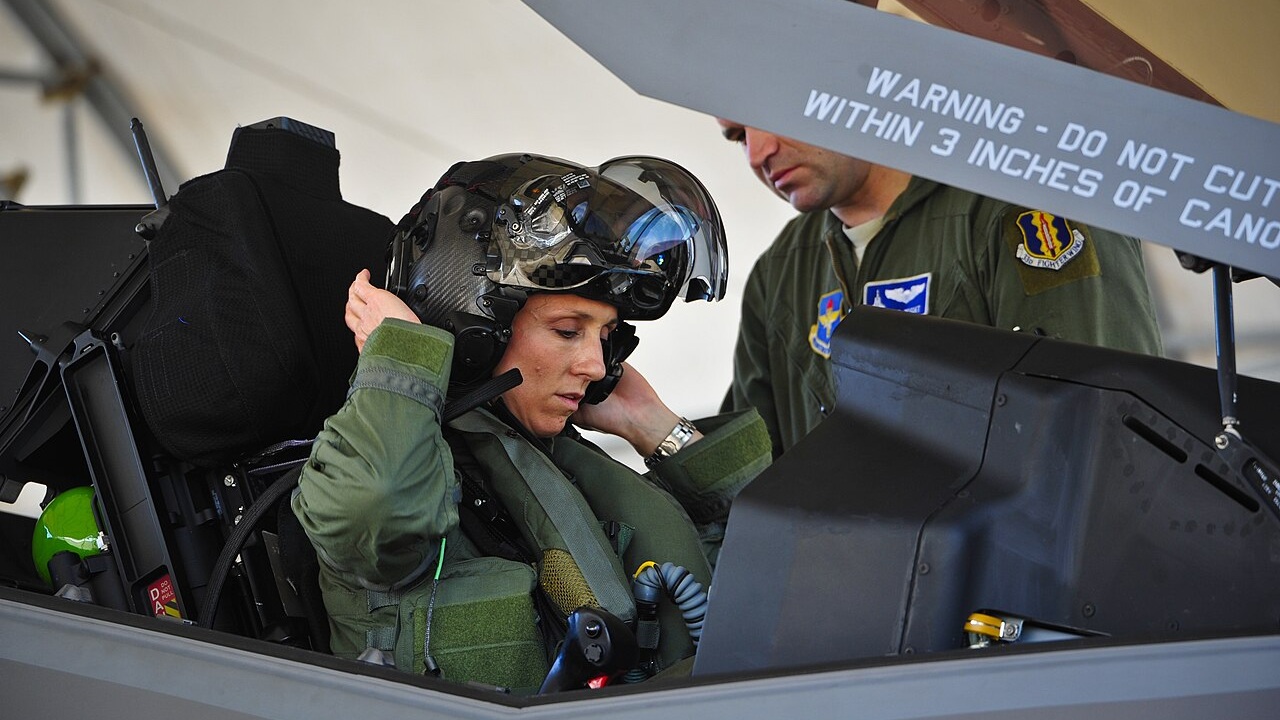
The F-35I Adir is jam-packed with custom Israeli electronics, and its pilots need a custom helmet to help make sense of them.
The Israeli Air Force (IAF) operates a unique variant of the F-35 Lightning II, the F-35I Adir. The aircraft—dubbed “Mighty One” in Hebrew—incorporates Israeli-made technology and weapons, including a domestic advanced electronic warfare (EW) suite layered on top of the jet’s existing avionics. The plane has cut its teeth in Israel’s various regional engagements over the past decade, and has recently played a leading role in Israel’s ongoing war against Iran.
The F-35I has a handful of differences from the F-35A. Changes to the base model F-35A include bespoke datalink functionality specific to the Israel Defense Forces (IDF) and enhancements to the F-35’s already-potent data-gathering and processing capabilities. These upgrades were meant to ensure that the F-35I will retain a qualitative edge over other aircraft in the Middle East for decades to come.
A new, and somewhat noteworthy, difference between the US fighter and the IAF’s version is the flight helmet that its aviators now wear.
The F-35I Adir’s Specifications
- Year Introduced: 2016
- Number Built: ~48 (50 expected in service soon)
- Length: 51.4 ft (15.7 m)
- Wingspan: 35 ft (10.7 m)
- Weight (MTOW): ~70,000 lbs (31,751 kg)
- Engines: One Pratt & Whitney F135 engine
- Top Speed: ~1,200 mph (1,930 km/h) / Mach 1.6+
- Range: ~1,380 miles (2,220 km)
- Service Ceiling: 50,000+ ft (15,240 m)
- Loadout:
- Internal Gun: One 25mm GAU-22/A rotary cannon
- Payload: Up to 18,000 lbs (8,165 kg) internally/externally
- Aircrew: 1
The Original F-35 Comes with a Fancy $400,000 Helmet
At approximately $82.5 million, the F-35A—on which the F-35I is based—is among the most expensive jet fighters ever built, but the price doesn’t include a crucial piece of equipment. F-35 aviators wear a flight helmet that costs upwards of $400,000 and requires two days of specialized fittings.
The Gen III Helmet-Mounted Display System (HMDS), developed by Elbit Systems in coordination with Rockwell Collins, is custom-fitted to the wearer.
Made from a carbon fiber bubble to reduce weight, the helmet is also reinforced with Kevlar and features a checkerboard pattern for rigidity. In addition to the space-age materials, it is loaded with displays to provide pilots with the information needed to complete their missions – including airspeed, heading, altitude, targeting information, and warnings. All of this is projected onto the pilot’s visor rather than via a traditional heads-up display, reducing the pilot’s workload whilst increasing responsiveness.
“The helmet is much more than a helmet, the helmet is a workspace,” then Air Force Chief of Staff General Mark A. Welsh III explained at a 2015 news briefing. “It’s an interpretation of the battle space. It’s situational awareness. Calling this thing a helmet is really… we’ve got to come up with a new word.”
Each F-35 helmet is designed to fit even under intense G-forces. This process is more complicated than being fitted for an expensive suit. It involves taking a 3D scan of the pilot’s head, which enables the precise laser cutting of a foam liner. Each pilot has his/her eyes measured with a special “pupilometer” to align the optic package to just 2mm from the center of the pupil, which helps ensure that images are in the field of vision, reducing eye strain and fatigue.
Weight gain or a different haircut can affect the fit and thus the effectiveness of the flight helmet, so pilots may need to maintain their weight and hairstyle.
Israel Saw America’s F-35 Helmet—and Built Its Own
The numerous changes to the F-35I required IAF pilots to use a helmet variant specific to the Adir’s systems.
“The F-35’s advanced helmet lets pilots see through the aircraft using panoramic cameras and sensors that project data directly to their eyes, eliminating the need to look down at cockpit instruments,” The Jerusalem Post explained.
The Adir’s HMDS is equipped with “two miniature projectors, one for each eye, based on liquid crystal on silicon technology,” which project information directly to the pilot as if it were floating in the air. The helmet’s head-tracking system can “know” where the pilot is looking at all times, as it relays critical data.
Little else about the helmet is known to the public—perhaps understandably. One gap in public knowledge is how much the Adir-specific version of the helmet costs—though, given the $400,000 price tag of the Gen III HMDS base model, it is unlikely to be cheap!
About the Author: Peter Suciu
Peter Suciu has contributed to dozens of newspapers, magazines and websites over a 30-year career in journalism. He regularly writes about military hardware, firearms history, cybersecurity, politics, and international affairs. Peter is also a contributing writer for Forbes and Clearance Jobs. He is based in Michigan. You can follow him on Twitter: @PeterSuciu. You can email the author: [email protected].