In the latest episode of Russia Decoded, hosts Andy Kuchins and Chris Monday unpack how Russian media has responded to the growing conflict in the Middle East.
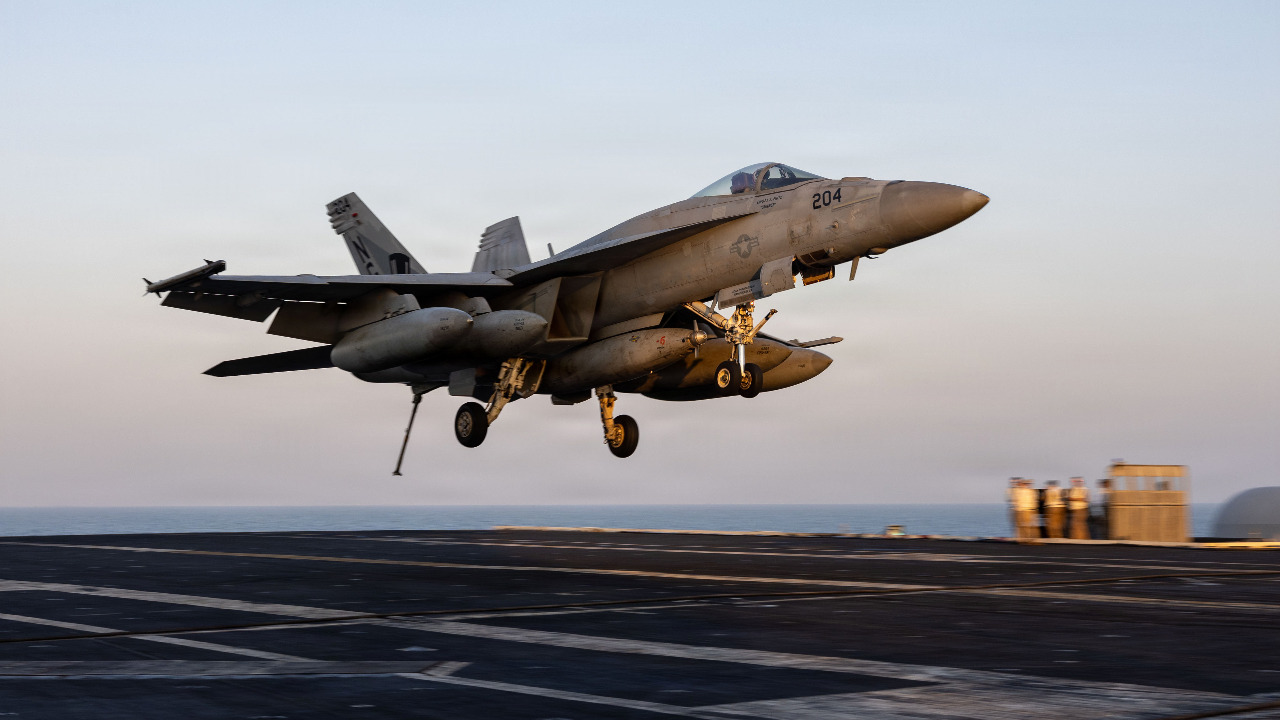
What began as US-Israeli airstrikes against Iran have dramatically escalated into a wider regional conflict encompassing nearly every state in the Middle East. The war has also begun to have a global impact, with oil and gas shipments disrupted and prices rising worldwide. The war comes with some clear positives for Russia’s economic and military goals: reduced global supply means more countries may turn to Russia to meet demand, and large-scale US involvement in Iran will likely reduce its ability to support Ukraine militarily for the time being. However, the war in Iran has pushed Gulf states firmly into the US camp—a blow to Moscow after years of trying to court those nations through energy, commodities, and investment coordination.
The growing conflict has also caused a split in Russian opinion toward the United States, and specifically President Donald Trump and Vice President J.D. Vance. While Trump continues to be gracious toward Vladimir Putin and Russian elites want to maintain a working relationship with the US president, Russian state media has played to public opinion and Putin’s own anger regarding US involvement in the Middle East. Since the United States, in his view, deposed Libyan dictator Muammar Gaddafi after he had met Western demands, Putin has feared that the path of US military interventions and regime change could eventually reach him. US desire for regime change in Iran and Venezuela has reignited those fears, translating into the strongest direct criticism of Trump and Vance in Russian state media since they assumed power after the 2024 elections.
French President Emmanuel Macron’s plans to expand France’s nuclear weapon stockpile have also made waves in Russia, with the Kremlin seeing it as a direct threat from a NATO member state. The announcement comes as France continues to reduce its reliance on the United States for deterrence and after the US and Russia failed to renew the New START nuclear arms reduction treaty last month.
Will the Kremlin use US involvement in the Middle East strategically to advance its goals in Ukraine? Will the war in Iran mark a potentially negative shift in what has so far been a relatively positive relationship between Trump and Putin? And how will a changing nuclear landscape affect Russia’s relations with the West?
In this episode of Russia Decoded, Andy Kuchins and Chris Monday unpack how Vladimir Putin and Russian elites understand the world and how they seek to influence it. Listen now on Apple, Spotify, or wherever you get your podcasts.
Have a comment? Contact us at [email protected].
About the Speakers: Andy Kuchins and Chris Monday
Andrew C. Kuchins is currently a senior fellow at the Center for the National Interest and an adjunct professor at the Johns Hopkins University School of Advanced International Studies. He has served as President of the American University of Central Asia and the Director of the Carnegie Moscow Center as well as the Russia and Eurasia Programs at the Carnegie Endowment for International Peace and the Center for Strategic and International Studies. He is the author or editor of 7 books and published columns for The Wall Street Journal, The New York Times, The Washington Post, and many other media outlets.
Chris Monday is an associate professor of economics at Dongseo University in Busan, South Korea.