As the United States has fallen behind its adversaries in hypersonic weapons development, private-sector actors are attempting to help close the gap.
The race for hypersonic weapons is on, and the United States finds itself behind the curve. Both China and Russia are ahead of the Americans in the development and deployment of hypersonic weapons.
In fact, Iran and North Korea might even be outpacing the Americans in this key domain. That’s why the defense technology company Castelion raising $350 million in Series B financing to support their development of the Blackbeard hypersonic weapon is important for the Pentagon.
How the Future of War Is Funded
With the money raised, Castelion intends to build what they’re calling “Project Ranger,” a 1,000-acre solid rocket production campus in Sandoval County, New Mexico. This is where the firm intends to make thousands of Blackbeard missiles every year—and create hundreds of highly-skilled jobs.
Toward that end, Castelion has plans to hire a large staff that will expand the firm’s manufacturing, testing, and engineering efforts. The firm wants to use the money to accelerate the flight testing and integration of the Blackbeard with US Army and Navy platforms throughout the next year. It’s an ambitious (albeit necessary) goal.
A previous round of funding raised $100 million for this venture—including $70 million from Lightspeed Venture Partners, plus $30 million in debt financing through Silicon Valley Bank. The Series B fundraising includes Lightspeed Venture Partners as well as Altimeter Capital but incorporates Andreessen Horowitz, General Catalyst, Avenir, BlueYard, Champion Hill, First In, Interlagos, and Lavrock Ventures.
The inclusion of all these different funding sources, and the amount of money given to Castelion for the Blackbeard hypersonic weapon project, should highlight how lucrative the investing community believes this venture to be. That’s likely because they all understand how committed to creating hypersonic weapons the United States military is—and how desperate the Pentagon is to get such weapons reliably and quickly.
Castelion just might deliver this much-needed capability that the US military has sorely lacked while its rivals have not.
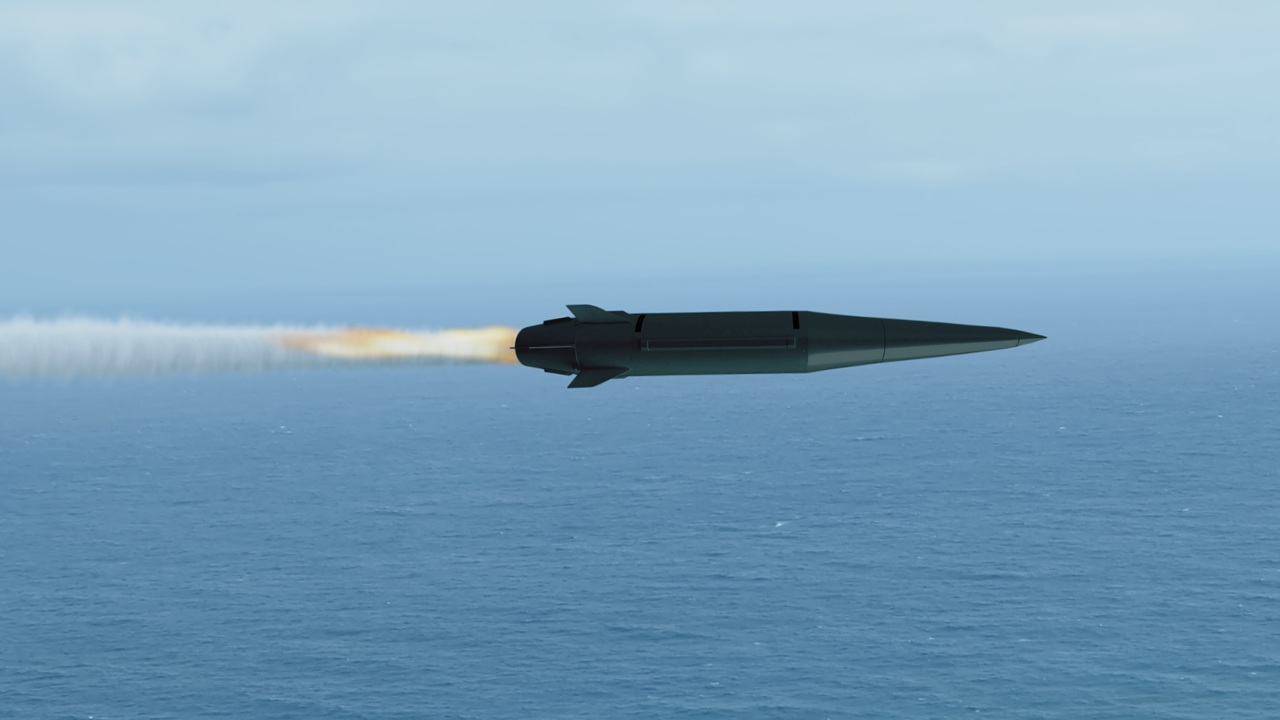
As for the Blackbeard hypersonic weapon itself, Castelion advertises that this an affordable weapon that is easily mass produced. It can strike hardened targets as well as mobile targets at more than Mach 5. Blackbeards can be fired from HIMARS/MLRS launchers, offering real tactical flexibility. Castelion prides the weapon as being more affordable than the Dark Eagle system that is also being developed for the US Army.
The Geopolitical Implications of the Blackbeard Missile
Currently, Russia leads the pack in terms of developing hypersonic weapons. They have a coterie of variants for their hypersonic weapons, some of which can be launched from the ground and others that can be launched from submarines and from aircraft. Meanwhile, China is slightly behind the Russians, yet they, too, have developed a growing capability in the hypersonic weapons domain. In fact, Beijing claims it is developing defenses against hypersonic weapons as well.
If Beijing’s claims are true, they are ahead of the Americans in two major ways: in terms of developing hypersonic weapons themselves and in terms of defending against enemy hypersonic weapon attacks.
Bear in mind that America has been researching hypersonic weapons for decades. It just got outmaneuvered in the development of these weapons. Castelion’s project, especially when paired with Dark Eagle, could be just what the US needs to catch up with its rivals.
About the Author: Brandon J. Weichert
Brandon J. Weichert is a senior national security editor at The National Interest. Recently, Weichert became the host of The National Security Hour on America Outloud News and iHeartRadio, where he discusses national security policy every Wednesday at 8pm Eastern. Weichert hosts a companion book talk series on Rumble entitled “National Security Talk.” He is also a contributor at Popular Mechanics and has consulted regularly with various government institutions and private organizations on geopolitical issues. Weichert’s writings have appeared in multiple publications, including The Washington Times, National Review, The American Spectator, MSN, and the Asia Times. His books include Winning Space: How America Remains a Superpower, Biohacked: China’s Race to Control Life, and The Shadow War: Iran’s Quest for Supremacy. His newest book, A Disaster of Our Own Making: How the West Lost Ukraine is available for purchase wherever books are sold. He can be followed via Twitter @WeTheBrandon.
Image: Shutterstock / Anelo.