The insistence on maintaining the artificial unity of the country has prolonged the Yemeni Civil War and made it impossible to resolve.
The Saudi-led intervention in March 2015 was driven by regional strategic necessity rather than choice. And while the intervention succeeded in containing the crisis within Yemen’s borders and preventing the spillover of the civil war into neighboring countries, it failed to present a fixable Yemen.
Today, the pressing issue isn’t merely the Houthi threat but Yemen’s fundamental unviability as a unified nation state. With more than 19.5 million Yemenis requiring humanitarian assistance in 2025, a decade of civil war, multiple failed peace processes, and persistent humanitarian crises, no amount of force or money can solve this problem.
The notion of a unified Yemen has been a fiction since the 1990 merger. President Ali Abdullah Saleh did not pursue equitable unification but domination. The resulting 1994 civil war revealed that unification was fatally flawed. History demonstrates that attempts to force national unity where none naturally exists only sow the seeds of future conflict, as seen in the former Yugoslavia and Sudan.
Today’s Yemen catastrophe flows directly from this foundational error, and while the internationally recognized government controls parts of Yemen, the Houthis dominate the north. The UAE-backed Southern Transitional Council (STC) and various tribal and other factions represent other competing interests with fundamentally incompatible visions for Yemen’s future.
The STC’s recent offensive in Hadhramaut Governorate demonstrates how southern separatist sentiment remains strong. With Yemen effectively split into two economic zones and the currency sharply depreciating in government-controlled areas, ordinary Yemenis face impossible choices between food, medicine, and other basic necessities.
The National Dialogue Conference (NDC), held in Sanaa from March 18, 2013, to January 24, 2014, presented a potential path forward through federalism. That structure might have accommodated regional differences while maintaining nominal unity, especially with GCC endorsement and support. Yet transitional President Abd Rabbu Mansour Hadi failed spectacularly to address the grievances of both the northern communities and southern aspirations.
This failure created the vacuum that allowed the Houthis’ takeover of Sanaa in 2014, and the international community’s insistence on preserving Yemeni unity, despite clear evidence of its artificiality, has only prolonged this crisis.
What we’re witnessing now isn’t merely a civil war but the final, painful unraveling of an artificial state. The Houthis and the internationally recognized government are both part of the problem, and neither is a solution.
Saudi Arabia and the UAE are backing fundamentally different Yemens. The UAE is increasingly throwing its weight behind the STC’s secessionist movement but failing to assess potential fallout from that decision, including security risks to Saudi Arabia and Oman.
Maintaining the fiction of Yemeni unity while the country burns serves no one. The prolonged suffering of Yemeni civilians will only lead to spillover, with wider regional risks and humanitarian consequences.
The path forward requires honest and tough realism about Yemen’s reality. A transitional arrangement brokered by regional powers and supported internationally could facilitate an orderly separation into two states (prior to 1990). This wouldn’t be unprecedented, and a peacefully agreed separation is the less risky option now that unity has proven unsustainable.
Regional powers (Saudi Arabia, UAE, and Oman) must have a stake in the transition with careful management of resources, particularly oil fields in Hadhramaut. It would also need mechanisms to protect minority populations in both territories. Crucially, it would require international recognition that sometimes the most humane solution to intractable conflicts is not to preserve artificial unity but to allow separate statehood.
The alternative, continuing to pour humanitarian aid into a country while ignoring its fundamental political fracture, is to condemn Yemen to another generation of war. As the Southern Transitional Council’s military actions demonstrate, the desire for southern independence hasn’t faded; it has only grown stronger through years of misrule.
Yemen’s tragedy isn’t that it unified two countries in 1990; it’s that it tried to be one when its people never truly embraced a shared national identity.
The international community must stop treating Yemen’s disintegration as a problem to be solved and recognize it as the necessary path to peace. Only when Yemenis are free to build separate futures can the suffering end and genuine stability begin.
About the Author: Abdulla Al Junaid
Abdulla Al Junaid is a geopolitical columnist and commentator in Middle Eastern and international media. He is the former department head for Analysis and Policies at the National Unity Party in Bahrain, the former deputy director of MENA2050, an advisory board member of the German-Arab Friendship Association (DAFG), and a permanent committee member of the Germany-GCC Annual Conference on Security and Cooperation. He was a guest speaker at the German-GCC Annual Conference on Security & Cooperation, the Herzliya Conference, and the Abu Dhabi Strategic Forum. He is also an executive partner at INTERMID Consultancy (Bahrain).
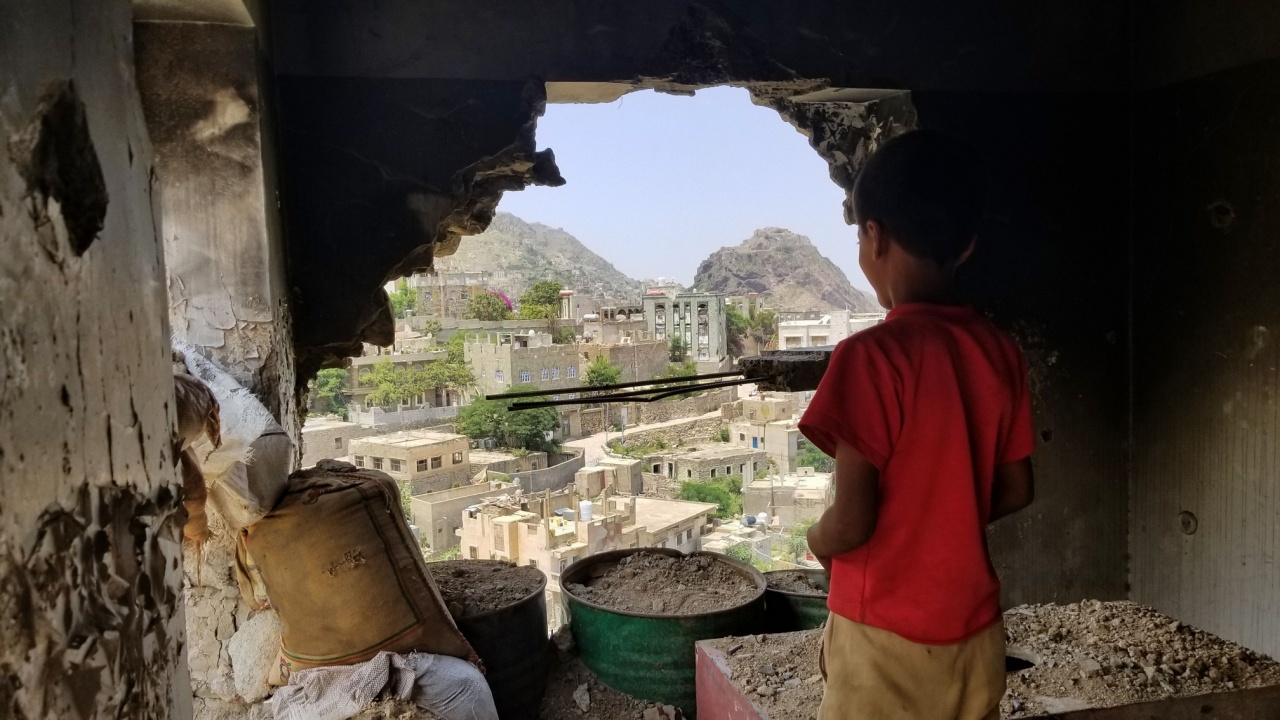
Image: Anas al-Hajj / Shutterstock.com.