The United States must act to punish and, by extension, deter militia attacks on US bases in Iraq.
Iraqi militias have bombarded US assets in Iraq for weeks. Flames rose from the embassy compound on March 17 while rockets and drones sought to evade its air defenses. The US military is hitting Iranian targets hard inside Iran, but it is time for President Donald Trump to step up the effort against Tehran’s proxies in Iraq.
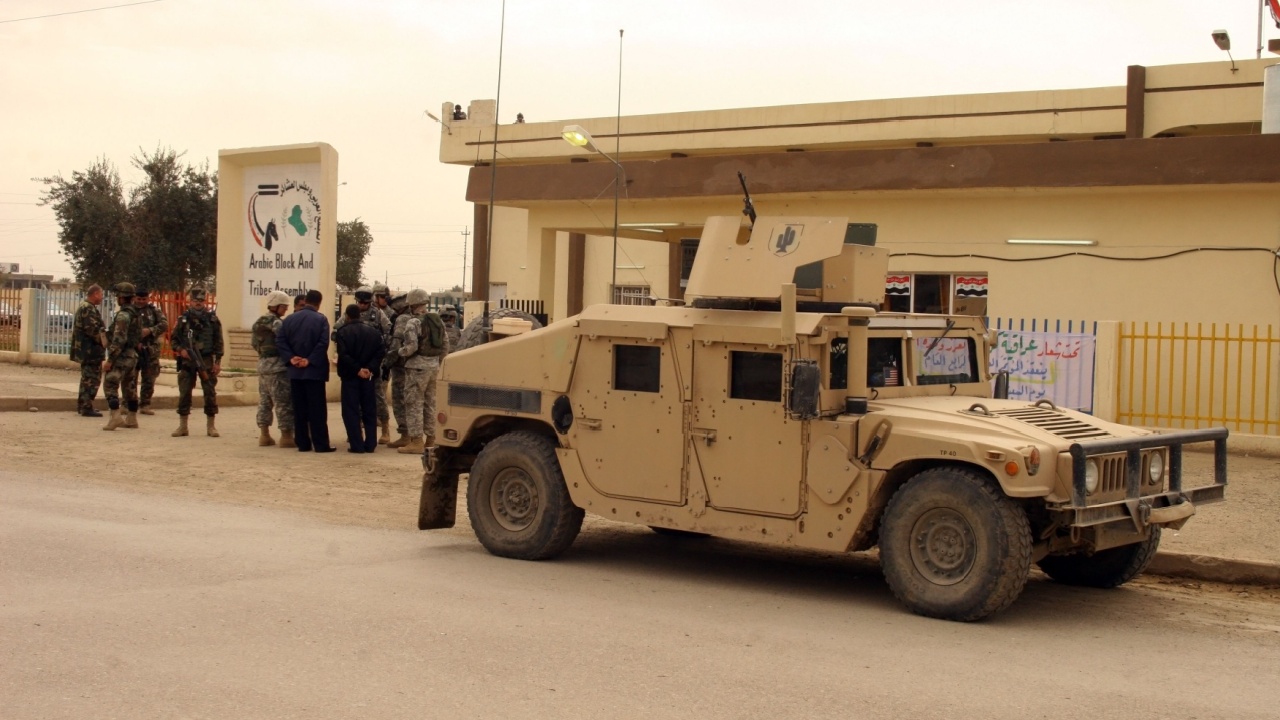
The militias have attacked bases that host US forces across the country. Iran’s proxies also struck hotels that they claim house US servicemembers in the capital of Baghdad and the northern Iraqi Kurdistan region. In southern Iraq, militia drones have targeted US-operated energy infrastructure.
President Trump included degrading Iran’s regional terror network as a goal of the Iran War. This will require targeted military action against Iraqi militias and sanctions on their political and financial enablers in Baghdad.
The last time tensions escalated to this level was between October 2023 and February 2024, after the Hamas-led October 7 massacre in Israel that killed 1,200 people. Iran-backed militias launched a sustained campaign of attacks on US bases in Iraq and Syria—more than 200 claimed attacks, with rockets and drones targeting US forces almost daily. Faced with this onslaught, Washington hesitated. The Biden administration did not respond militarily as the strikes mounted, projecting weakness rather than resolve. The Islamic Republic’s proxy network came to believe it could target American forces with impunity.
In January 2024, a drone attack launched by Iraqi groups killed three US servicemembers at the Tower 22 base in Jordan. President Joe Biden decided to act. Even then, the response was limited—strikes on mid-level Iraqi militia figures temporarily curbed attacks on US bases but left the network intact. These groups kept targeting Israel, and today, they’re once again going after American interests.
President Trump should not repeat his predecessor’s approach. He has already shown that he’s willing to use force in Iraq. Now he needs to go further—expand the strikes, hit higher-value targets, and make clear that attacks on Americans will be met with an overwhelming response. Since the war with Iran began on February 28, the United States has already carried out airstrikes focused on local headquarters and bases affiliated with US-designated terror groups, which killed militia fighters.
On March 16, the strategy seems to have shifted to include senior militia leadership as targets. Kataib Hezbollah, a US-listed Foreign Terrorist Organization and participant in attacks against American interests, announced that its security commander and spokesperson, who used the online profile Abu Ali al-Askari, was killed in an airstrike. This was a direct hit on the voice of one of Iran’s most dangerous proxies in Iraq. It comes after the group openly threatened the United States, warning that if Washington “ignites the fuse of war in the region,” it would suffer “massive losses that cannot be contained or recovered.”
Just days after an airstrike took out Askari, Kataib Hezbollah agreed to a temporary ceasefire with the United States. The terms included a five-day pause in attacks on the US Embassy in Baghdad in exchange for an end to American attacks on “residential” areas in Iraq—code for leadership hideouts. Targeting senior militia figures—those who order strikes on American interests, not just the cells that carry them out—pushes leadership to reevaluate the risks of attacking the United States.
But taking out top leaders isn’t enough. Washington must ramp up operations against the militias’ weapons smuggling routes across Iraq’s borders with Iran and Syria. That also means going after weapons depots of Iranian-made cruise missiles, Shahed drones, and other projectiles used to target US troops across the region. Washington should also take the fight directly to the source—wiping out the cells pulling the triggers and the commanders giving the orders.
The United States needs to establish a hard line and enforce it. Every attack on an American base, diplomatic mission, or energy asset should be met with an immediate response. The only way to rebuild deterrence is to make every attempted strike against the United States a guaranteed losing move.
However, military action alone may not deter the most aggressive militias. Additional targeted sanctions should be levied against the militias’ financial lifelines and political enablers. Shia leaders, either directly from Iran-backed militias or affiliated with them, have spent years entrenching their influence in Baghdad to protect and enrich themselves, the terror groups, and ultimately Tehran.
Trump has a clear path to break Iran’s proxy network. Still, it requires hitting them from both sides at once—degrading operational capacity while simultaneously stripping away the money that keeps them alive. Doing so will make Americans in the region safer than they’ve been for many years.
About the Authors: Bridget Toomey and Ahmad Sharawi
Bridget Toomey is a research analyst at the Foundation for Defense of Democracies, focusing on Iranian proxies, specifically Iraqi militias and the Houthis. Prior to joining FDD, she was a Fulbright Fellow in Israel, where she completed an MA in security and diplomacy at Tel Aviv University. During her undergraduate studies, she interned for the American Enterprise Institute’s Critical Threats Project, focusing on jihadi terror groups, and for the Senate Foreign Relations Committee. She holds a BA in government with a minor in modern Middle Eastern studies from Harvard.
Ahmad Sharawi is a research analyst at The Foundation for Defense of Democracies, focusing on Middle East affairs, specifically the Levant, Iraq, and Iranian intervention in Arab affairs, as well as US foreign policy toward the region. Previously, Sharawi worked at the Washington Institute for Near East Policy. He created a map visualizing the border clashes on the Israeli-Lebanese frontier and authored articles on Jordan and Morocco. Ahmad previously worked at the International Finance Corporation and S&P Global. He holds a BA in international relations from King’s College London and an MA from Georgetown University’s School of Foreign Service.