The rise of Mojtaba Khamenei shows that the Islamic Republic is far more durable than many policymakers assume.
In the span of just a few days, two developments have fundamentally reshaped the debate about Iran’s political future.
The first is a reported assessment by the US National Intelligence Council (NIC) concluding that even a large-scale military campaign is unlikely to bring about regime change in Iran or achieve Washington’s broader political objectives.
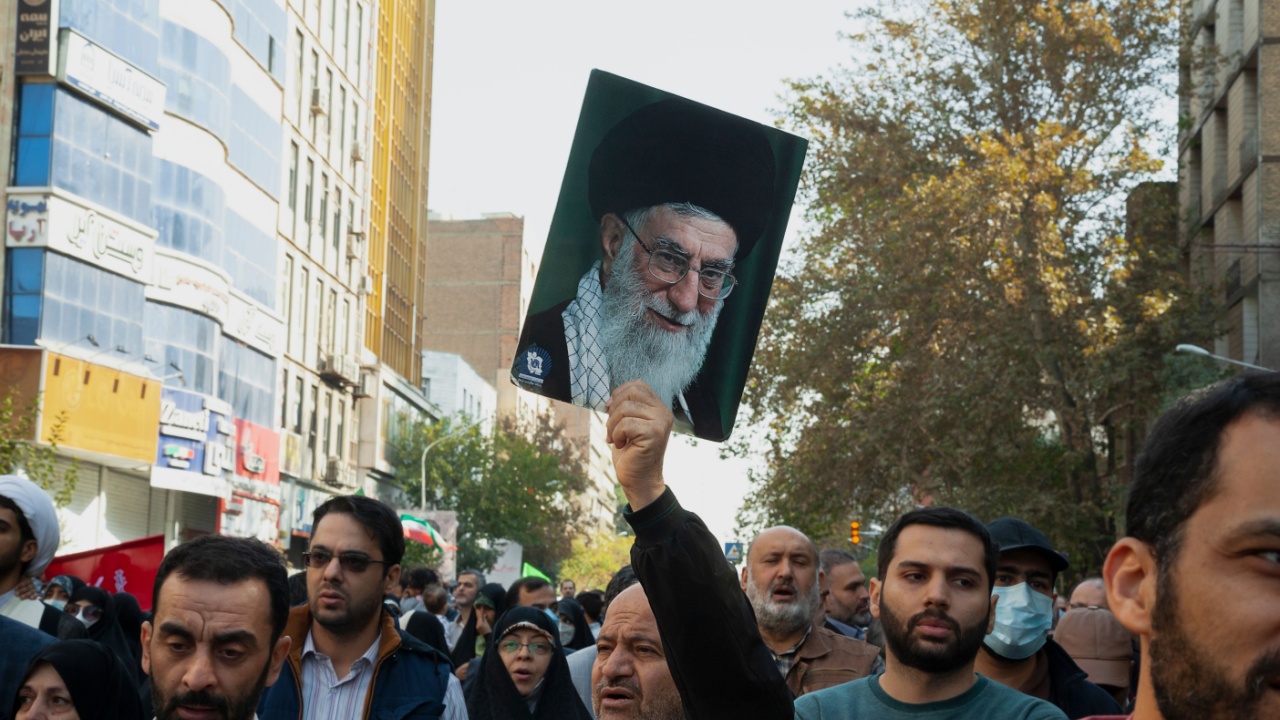
The second is the swift elevation of Mojtaba Khamenei—the son of the late Supreme Leader Ayatollah Ali Khamenei—to the position of supreme leader following his father’s death at the outset of hostilities on February 28 with an attack on Iran by Israel and the United States.
The Islamic Republic of Iran, despite economic crisis, social unrest, and now the devastation of war, possesses institutional mechanisms that allow it to absorb external shocks and maintain political continuity. Rather than signaling imminent collapse, the combination of war and succession may instead be accelerating the consolidation of a more centralized, security-driven, and possibly revanchist Iranian state.
Understanding this resilience is essential for American policymakers. For more than two decades, much of the debate in Washington has implicitly assumed that the Islamic Republic is fragile and that sufficient external pressure—sanctions, covert action, or military force—might eventually trigger regime change. The evidence now suggests that this assumption may be fundamentally flawed.
The NIC’s reported assessment represents a sobering reassessment of long-standing assumptions in Western policy debates about Iran. According to the analysis, even extensive military strikes are unlikely to produce regime collapse or bring opposition forces to power.
Several factors underpin this conclusion. Iran’s political system contains institutional mechanisms designed to ensure continuity in times of crisis. The constitution provides procedures for leadership succession overseen by the Assembly of Experts, while the country’s powerful security institutions—the Islamic Revolutionary Guard Corps (IRGC) and the Basij militia—remain capable of suppressing internal unrest even during wartime.
Equally important, Iran’s opposition remains fragmented and organizationally weak. While waves of protests have erupted periodically across the country over the past decade, opposition groups inside and outside Iran have struggled to develop unified leadership or a coherent political program capable of replacing the existing system. The notion that the son of the deposed shah, Reza Pahlavi, who lives in exile in the United States, can offer a credible alternative to the present regime is nothing but a pipe dream.
The elevation of Mojtaba Khamenei to the supreme leadership illustrates precisely the institutional resilience highlighted by the intelligence assessment. Following the death of Ayatollah Ali Khamenei, Iran’s Assembly of Experts convened and quickly selected Mojtaba as his successor. Rather than triggering prolonged elite competition, the transition appears to have been managed in a relatively orderly fashion, with senior political figures and the Revolutionary Guards quickly pledging loyalty to the new leader.
Although Mojtaba Khamenei never held elected or appointed office, he operated for years within his father’s inner circle, cultivating close relationships with influential clerical networks and, crucially, with senior commanders of the IRGC. His elevation, therefore, represents less a radical departure than the formalization of an existing balance of power within the Iranian political system.
The succession is not without its paradoxes. The Islamic Republic was founded in 1979 as a revolutionary state explicitly opposed to hereditary monarchy. Yet, the transfer of power from father to son introduces a quasi-dynastic element into a political system. This may enhance regime stability in the short term. By selecting a successor deeply embedded within existing power networks, the ruling elite reduces uncertainty and prevents factional rivalry from spiraling into internal conflict.
The rise of Mojtaba Khamenei also reflects a broader transformation within the Islamic Republic over the past two decades: the growing dominance of the IRGC. Originally established as a revolutionary militia following the 1979 revolution to balance the army, whose loyalty to the revolutionary regime was initially suspect, the IRGC has evolved into the central pillar of Iran’s national security architecture.
Today, it functions simultaneously as a military organization, an intelligence service, a political power broker, and a major economic conglomerate. Through its engineering arm and affiliated companies, IRGC controls significant sectors of Iran’s economy, including construction, energy, and telecommunications. Its influence within the political system has expanded steadily as civilian institutions have weakened and security threats to the state and regime have multiplied.
Equally important, the IRGC directs much of Iran’s regional strategy. Through what Tehran calls the “Axis of Resistance,” Iran has cultivated a network of allied actors across the Middle East. This network includes Hezbollah in Lebanon, Shia militias in Iraq, allied forces in Syria, and the Houthis in Yemen. Rather than relying solely on conventional military power, Iran has developed a strategy based on distributed deterrence. By supporting allied militias and political movements across the region, Tehran has attempted to create multiple pressure points capable of challenging its adversaries at a low cost.
This asymmetric strategy also complicates the US and Israeli military planning, which must contend with threats emerging from multiple theaters simultaneously. And it provides Tehran with a degree of strategic ambiguity, enabling it to exert influence without always appearing directly responsible for escalation.
Although weakened by Israeli attacks on Hamas and Hezbollah and the fall of the Assad regime in Syria, Iran’s proxy forces still possess considerable residual power to hurt American interests in the region and force Israel to divert its firepower away from the Iranian front.
Israel’s retaliation against Hezbollah strongholds in Lebanon shows that this strategy is still operative. Hezbollah’s missile arsenal, even if depleted, remains a critical component of Iran’s deterrence posture against Israel. At the same time, militia groups in Iraq and Syria provide additional pressure points against American forces in the region. Meanwhile, the Houthis’ ability to threaten shipping routes in the Red Sea, as they did last year, proves how Iran’s regional partners can destabilize global trade and economic stability at will.
The IRGC’s expanding influence over Iranian strategy also helps explain Mojtaba Khamenei’s selection as supreme leader. His longstanding ties with senior IRGC commanders suggest that the leadership transition reflects a consolidation of the clerical-military alliance that has gradually come to dominate the Islamic Republic.
The circumstances surrounding the succession further reinforce this consolidation. The leadership transition in Iran is taking place amid a major war. Historically, external conflict has often strengthened existing regimes rather than weakened them. War tends to suppress internal divisions, strengthen nationalist sentiment, and justify the expansion of coercive powers. Furthermore, Iran’s leadership has long framed confrontation with the United States and Israel as a central element of the Islamic Republic’s revolutionary identity. In this narrative, resistance to external pressure is not merely a strategic necessity but a moral obligation.
If you add to this the NIC’s assessment regarding the resiliency of the regime, then one of the central premises of American policy toward Iran must be reconsidered. For years, American strategy has oscillated between pressure designed to compel negotiation and pressure intended to destabilize the regime itself. Both approaches have often rested on the assumption that the Islamic Republic is internally fragile.
The Islamic Republic has survived a devastating war with Iraq, decades of economic sanctions, leadership succession, and repeated waves of domestic unrest. Its institutions have evolved precisely to withstand external pressure and internal dissent. This does not mean that Iran’s political system is stable in the long run. Economic stagnation, demographic pressures, and social discontent remain powerful structural challenges. But these forces are unlikely to produce swift or sudden regime collapse, especially under the pressure of war that threatens Iran’s national existence.
In fact, the war, which many Iranians perceive was forced upon them, may have the exact opposite effect with opinion solidifying behind a regime strategy to fight to the finish and in the process inflict as much damage as possible not only on its direct adversaries, Israel and the United States, but also on the entire energy rich region thus destabilizing the international economy and especially hurting the energy dependent rentier economies of the GCC countries allied with the United States.
In short, the war on Iran, instead of leading to regime collapse, may end up consolidating support behind a regime where clerical authority is increasingly intertwined with the power of military and security institutions. The result may be the emergence of a more centralized, security-oriented state led by a leadership closely aligned with the Revolutionary Guards that may eventually turn Iran into a revanchist state after the dust of war has settled. The Israeli-American attack has, in all likelihood, given the regime a further lease of life, thus having exactly the opposite effect of that intended by Washington’s policy makers.
About the Author: Mohammed Ayoob
Mohammed Ayoob is a university distinguished professor emeritus of International Relations at Michigan State University and a senior fellow at the Center for Global Policy. His books include The Many Faces of Political Islam (University of Michigan Press, 2008), Will the Middle East Implode? (2014), and, most recently, From Regional Security to Global IR: An Intellectual Journey (2024). He was also the editor of Assessing the War on Terror (2013).