Iran has hinted it will broaden the ongoing war by striking at American commercial targets across the Gulf, rather than purely military ones.
Iran’s Islamic Revolutionary Guard Corps (IRGC) threatened on Wednesday to carry out attacks on more than a dozen American tech firms if the United States continued to conduct attacks on the Islamic Republic.
“In the name of Allah, the Merciful, so whoever attacked you, attack him as he attacked you,” the IRGC wrote in a statement published by Iran’s state-run Tasnim news agency.
“Warning to the aggressive American ruling body and its affiliated spy companies! You ignored our repeated warnings about the need to stop terrorist operations, and today, a number of Iranian citizens were martyred in both your and your Israeli allies’ terrorist attacks; since the main element in designing and tracking terror targets are American ICT and AI companies, in response to these terrorist operations, from now on, the main institutions effective in terrorist operations will be our legitimate targets,” the IRGC statement read.
American (and Other) Companies Specifically Named
The IRGC specified the companies that would now be in its crosshairs. Those firms are a who’s-who list of major American financial and technology companies, including Cisco, HP, Intel, Oracle, Microsoft, Apple, Google, Meta, IBM, Dell, Palantir, Nvidia, J.P. Morgan, Tesla, General Electric, and Boeing.
It should be noted that the IRGC or Tasnim misidentified J.P. Morgan as “G.P. Morgan,” and Dell as “DEL.”
The IRGC also listed G42, an Emirati artificial intelligence (AI) development holding company based in Abu Dhabi, and Dubai-based cybersecurity provider Spire Solutions, as future targets.
The firms were so named due to their alleged involvement in the US efforts to assassinate Iran’s leadership, and have either operations in or commercial ties to Israel, Time magazine explained.
“Several of the companies, including Palantir, Microsoft, Google, IBM, and G42, also have documented links to the Israeli military or defense firms,” Time wrote.
The threats from the IRGC come as President Donald Trump has stated that one of his aims in the ongoing Operation Epic Fury is regime change in the Islamic Republic.
Iran Could Carry Out Both Kinetic Strikes and Cyberattacks
Iran had previously targeted three AWS data centers in the Persian Gulf region in a drone attack, including two in the United Arab Emirates (UAE) and another in Bahrain. That attack resulted in outages in several apps and digital services in the region for several days.
Tehran initially denied that it was responsible for the attack, but Iranian state media later claimed the facilities were legitimate targets, as the US military was presumed to be using artificial intelligence (AI) systems housed on the servers for intelligence analysis and war simulations.
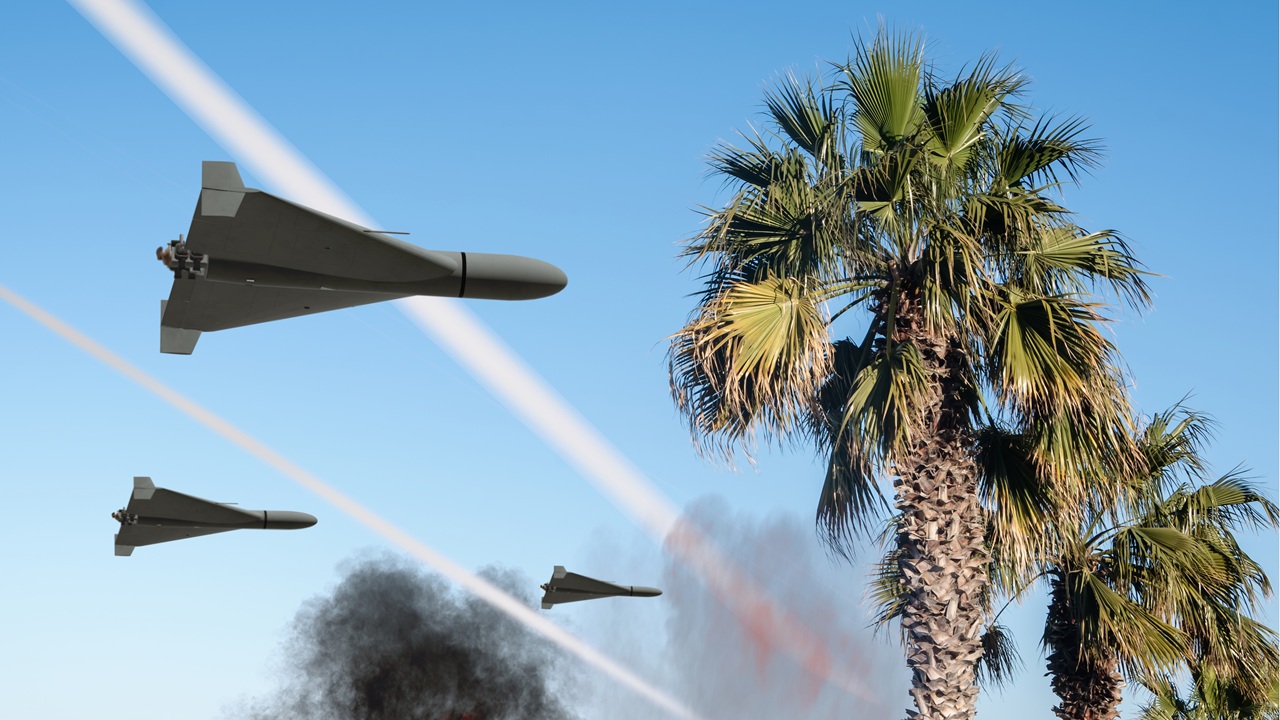
The attacks conducted so far have mostly been kinetic, involving drones and missiles targeting physical infrastructure, as was the case with the strikes on the AWS facilities. At the same time, however, Iran’s hackers have also been conducting cyberwarfare operations.
Are Data Centers Legitimate Military Targets? It’s Hard to Say
The question of what are legitimate targets is unclear, especially as AI and other apps are being used, and as so much US military data and information could be flowing through the region.
“The targeting of international communications infrastructure during wartime has deep historical roots. The global digital economy relies heavily on a vast network of submarine cables, which carry approximately 95 percent of international data traffic,” Tech Policy Press explained. “Navigating liability for such disruptions requires a nuanced understanding of international law.”
Companies that operate in the region may have to accept the risk, and likely won’t receive compensation for any damage incurred from either side.
Tech Policy Press cited Spain’s underwater telegraph cables in the late 19th century, which were cut by the United States during the Spanish-American War of 1898.
“Actions taken by a state as legitimate acts of war override private property rights without an obligation to compensate affected entities,” TPP wrote. “Because the private telegraph company was contractually required by Spanish concessions to transmit official government correspondence, its operations were deeply intertwined with enemy military interests.”
However, it does seem that the American firms are less concerned about the physical damage, as they are their own employees and other personnel who may come into danger.
“The safety and well-being of our team is our number one priority,” an Intel spokesperson told CNBC. “We are taking steps to safeguard and support our workers and facilities in the Middle East and are actively monitoring the situation.”
Iran’s Asymmetric Warfare Strategy Relies on Economic Pain
Since the start of Operation Epic Fury, it was clear that Iran couldn’t possibly defeat the United States militarily. But it has succeeded in closing the Strait of Hormuz, which in turn has driven up oil prices on the global market. Its targeting of American tech firms in the region by missiles and drones, and its cyber attacks, will cause further disruptions.
“Tech assets are now treated as part of the conflict, not peripheral to it,” James Henderson, CEO of risk management firm Healix, told CNBC. “It also signals that future crises may target data centers and cloud platforms as much as traditional strategic sites.”
Even as Trump has claimed victory repeatedly and suggested Tehran is ready to make a deal, the regime has claimed otherwise.
“Yes, military bases have been targeted. A lot of military commanders have been killed. But from their point of view, they are winning the war,” Saeid Golkar, an associate professor of political science at the University of Tennessee at Chattanooga and an expert on the Islamic Revolutionary Guard Corps (IRGC), told Time magazine. “They have been able to push Trump back to negotiating.”
For the American and Middle East firms, if the United States is currently “winning,” they’d hate to see what losing might look like!
About the Author: Peter Suciu
Peter Suciu has contributed to dozens of newspapers, magazines and websites over a 30-year career in journalism. He regularly writes about military hardware, firearms history, cybersecurity, politics, and international affairs. Peter is also a contributing writer for Forbes and Clearance Jobs. He is based in Michigan. You can follow him on Twitter: @PeterSuciu. You can email the author: [email protected].