India’s government is escalating its protests against the State Department’s new curbs on rampant visa fraud by migrant workers at U.S. embassies.
“While we do understand … that visa-related issues pertain to the Sovereign Domain of any country, we have flagged those issues and our concerns of our nationals to the U.S. side, both in New Delhi and in Washington D.C.” an Indian government spokesman said on December 26.
“There are several people who have been stranded in India for an extended period of time … These [delays] have also caused hardship to their families … and also to the education of their children,” he said.
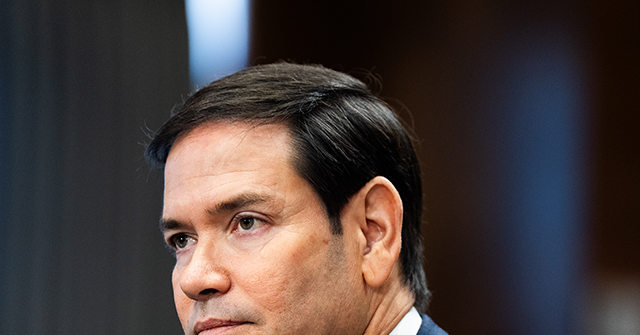
The “several” Indian workers are stuck in their home nation because Secretary of State Marco Rubio has suddenly curbed the U.S. embassy’s rapid-fire process of granting new visas and visa extensions to Indian migrants. The migrants must now wait for several months before traveling to their U.S. jobs.
India’s protest is just one corner of a lobbying campaign to preserve the controversial visa programs.
The Indian government is aggressively championing the visa programs because it wants to maximize the flow of Indian workers into jobs in the United States, as well as Germany, the United Kingdom, Ireland, Australia, the Gulf States, and even wartime Russia.
India’s economy is deliberately built on the wealth extracted by its migrant workers. For example, India gains at least $40 billion in remittances from the United States — plus huge investments from many U.S. companies that are now run by legalized Indian migrants.
At least one million Indian graduates are working in U.S. white-collar jobs, via the H-1B, L-1, B-1, OPT, and CPT programs, often as subcontractors to major companies. That huge population is an economic boon for India’s tax collectors and for hiring managers in the corrupt program, but it is a lifetime disaster for American graduates, professionalism, productivity, and innovation.
Since January 2025, President Donald Trump’s deputies have been tweaking the H-1B visa program to help raise hiring among Americans, amid closed-door objections by pro-business lobbies in D.C.
Trump is zig-zagging between the voters he needs to win the 2026 election, the business leaders that he needs to keep growing the economy, and the Indian government officials who can shrink U.S. exports to India.
The State Department has said little about the impact and scale of its new visa curbs. On December 17, the department responded to questions from Breitbart News with a vague statement:
Under the Trump Administration, the Department of State is using all available tools to rigorously screen every visa applicant. While in the past the emphasis may have been on processing cases quickly and reducing wait times, our embassy and consulates around the world, including in India, are now prioritizing thoroughly vetting each visa case above all else. They do not issue a visa unless the applicant can credibly demonstrate they meet all requirements under U.S. law – including that they intend to engage only in activities consistent with the terms of their visa.
As part of this effort, the Department is conducting online presence reviews for applicants who will spend substantial periods of time within American communities, including students, exchange visitors, specialty occupation temporary workers, and their dependents. We will not allow foreigners who pose a risk to Americans or U.S. national interests to abuse our immigration system.
The Rubio curbs come after news reports of massive fraud in India, driven largely by the huge gains that Indians can make from even low-wage jobs in the United States.
“I would say 80 to 90 percent of the people that I encountered in each of the visa categories… were basically using the non-immigrant visa pipeline to essentially come and work in the United States and never go back home and essentially displace American workers,” Mahvash Siddiqui, a former U.S. Foreign Service officer, told the Center for Immigration Studies in November.
She added:
Sadly, because of political pressure from the top, our objections were overturned by our [U.S.] bosses [before Trump]. There was a lot of political pressure from Indian politicians who spoke to our ambassador in Delhi, to our Consul General, and put pressure on us from Delhi, saying, “Please stop running this.” They called us a rogue operation.
Many of the subcontracting firms in the United States that lease Indian workers to U.S. companies are part-owned by Indian politicians, she added.
In the United States, multiple corporate media outlets are siding with the imported workers. On December 19, Jeff Bezos’s Washington Post posted an article sympathizing with Indian migrant workers who are now holding jobs that would otherwise be held by American graduates:
The sudden cancellations have upended lives, the lawyers said, leaving workers on expired visas fearful of losing their jobs. Emily Neumann, a partner at the Houston-based immigration firm Reddy Neumann Brown PC, said she had at least 100 clients stranded in India. Veena Vijay Ananth, an immigration attorney in India, and Charles Kuck, who practices immigration law in Atlanta, said they each had more than a dozen similar cases.
Many of those affected are tech workers in their 30s and 40s, the lawyers said, who have lived in the United States for years. They are now scrambling to find alternative work arrangements with their U.S. companies. Some who traveled to India with their kids must now decide whether to keep them out of school or send them home alone; others are separated from their families entirely.
Bezos’ Amazon companies are the largest users of migrant H-1B workers, Optional Practical Training (OPT) migrants, and also employ many truck-driving migrants. The article was written by two ethnic Indian reporters in the United States, Pranshu Verma and Supriya Kumar.
Middle-class Americans are increasingly opposed to India’s migrant-extraction economy as they see themselves and their peers sidelined by hiring managers in the Fortune 500 and their subcontractors. The Los Angeles Times reported on December 19:
“Stanford computer science graduates are struggling to find entry-level jobs” with the most prominent tech brands, said Jan Liphardt, associate professor of bioengineering at Stanford University. “I think that’s crazy.”
…
“That’s been a dramatic reversal from three years ago, when all of my undergraduate mentees found great jobs at the companies around us,” Stanford’s Liphardt said. “That has changed.”
The India-born author of the L.A. Times article blamed the job shortage on Artificial Intelligence, even though he actually quotes one Turkish graduate who did win a job that would otherwise have gone to an American:
After four months of searching, LMU graduate [Eylul] Akgul finally landed a technical lead job at a software consultancy in Los Angeles. At her new job, she uses AI coding tools, but she feels like she has to do the work of three developers.
Akgul is likely able to work because she enrolled in the Optional Practical Training program, which grants work permits lasting up to three years to foreign graduates of U.S. universities. Many foreign-born managers at U.S. companies prefer to hire foreign graduates because they can be paid very little and will work long hours in the hope of staying in the United States.
In contrast, American graduates demand their compensation in the form of dollars, which they also need to pay off college debts, get married, and have kids.