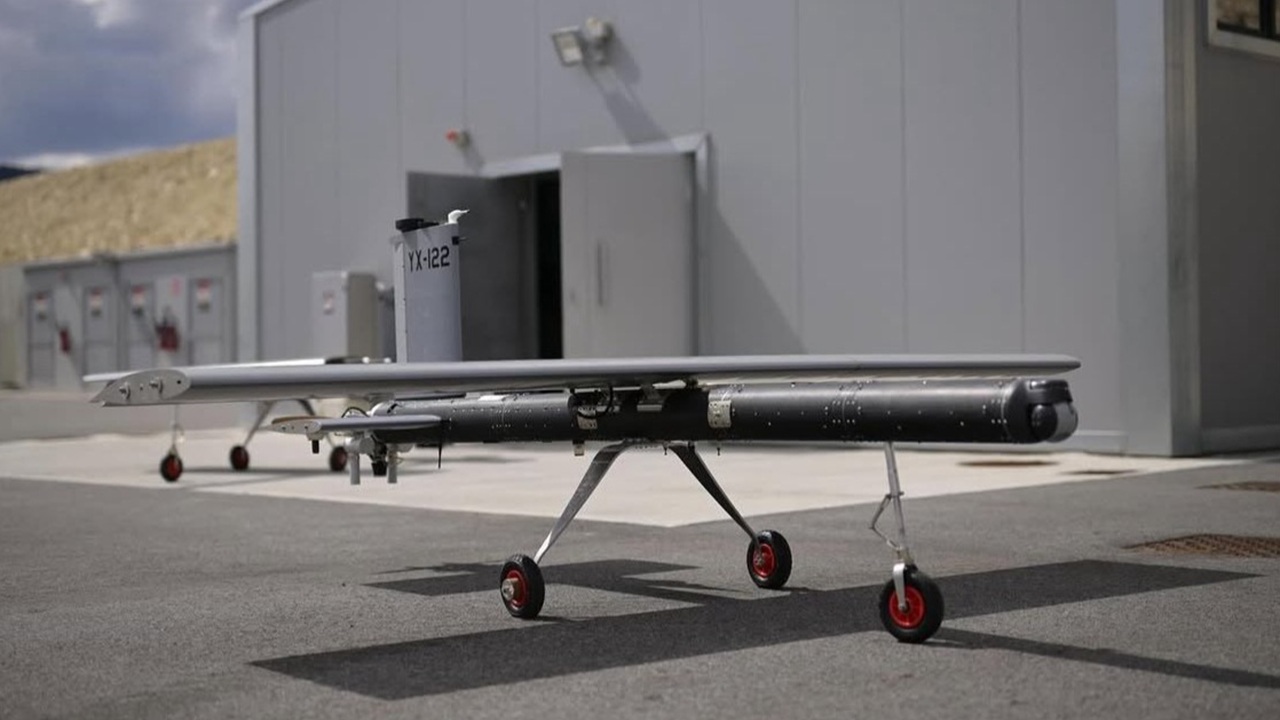
Pakistan used the Turkish-designed YIHA-III kamikaze drone during its four-day war with India in May—reportedly to great effectiveness.
“Operation Sindoor” was the name of India’s four-day military campaign against its Pakistani neighbor in May. India claimed that Pakistan had been harboring the Islamist militants who had attacked Indian citizens in Pahalgam, Kashmir on April 22. Predictably, the Pakistanis denied this.
We Still Don’t Understand All the Lessons from Operation Sindoor
The ensuing conflict, which erupted in May of this year and lasted for four brutal days, quickly became somewhat of a proxy war between the Chinese and a conglomeration of US and European systems.
The Indians went into the war expecting quick and easy victory. But the Pakistani Air Force (PAF) stunned the Indian Air Force (IAF) with the level of resistance they displayed. This, in turn, forced the Indians to climb the escalation ladder—threatening to deploy a naval force to strike key targets in Karachi.
Meanwhile, the Pakistanis, despite the unexpectedly good performance of their Chinese-made warplanes and PL-15 air-to-air missiles, struggled in other areas. Notably, Pakistan’s air defenses relied disproportionately on Chinese-made HQ-19 air defense (AD) systems, which didn’t work right and ended up as mincemeat for the IAF.
What ultimately ended the war, though, was when the American leadership waded into the affair on the penultimate day. Whatever was said by the Americans to their Indian interlocutors remains a matter of debate. What we do know is that the Indians unilaterally stood down—much to the chagrin of the many Indians who believed that their country was justified in striking Pakistan.
The Prospect of Nuclear Escalation Scared the Americans
My original reporting at this site has since been confirmed by multiple other news outlets. Essentially, the otherwise-ambivalent American leadership was brought into the fray after India launched strikes on Pakistan’s Kirna Hills nuclear weapons depot—and may have breached the containment of the nuclear weapons there.
New Delhi was also threatening to attack key Pakistani nuclear command-and-control networks. Had the Indians followed through with those threats, on top of attacking Pakistan’s Kirna Hills Mountain depot, the Pakistani military may have simply launched a preemptive nuclear strike in a use-it-or-lose-it mentality.
Concern of spiraling nuclear escalation in an uncontrolled environment was what brought the Americans and ended the war as quickly as it had started. And while the Indians were upstaged in key ways by their Pakistani rivals, as noted above, the Pakistanis faced insurmountable odds, and were humiliated by the Indians in specific instances.
Take, for example, the loss of one of Pakistan’s Chinese-made PL-15 air-to-air missiles. This system, which generally performed much better than expected in combat against the French warplanes of the IAF, failed to detonate in some isolated instances. Those duds fell to the Earth below and were promptly captured by the Indian Armed Forces, and reverse-engineered by the Indian military.
Another point of embarrassment for the Pakistani military was the capture of a Turkish-made (production licensed to Pakistan) YIHA-III drone. It was shot down by the Indian Army during the four-day Indo-Pakistani War and is today on display at the Indian Army chief’s residence.
Understanding The Turkish-Pakistani YIHA-III Drone
- Year Introduced: 2023
- Number Built: Over 1,000
- Length: 2.5 m (8.2 ft)
- Wingspan: 3 m (9.8 ft)
- Weight: Around 135 kg (298 lb)
- Engines: DLE-170 Internal Combustion Engine (Chinese-made)
- Top Speed: 180–300 km/h (112–186 mph)
- Range: 180–200 km (112–124 mi)
- Service Ceiling: 1,220–1,830 m (4,000–6,000 ft)
- Loadout: Carries OMTAS warhead
The YIHA-III is a precision-strike loitering munition. It can detect, track, and attack targets, such as air defense systems, radar networks, and forward operating bases (FOBs). This system can remain aloft for several hours, giving the drone operators ample time to identify valuable targets, track them, and then put the drone into a terminal dive.
Turkish engineers designed the system to operate in swarms, with the idea that these drone swarms would saturate defensive coverage and effectively break through whatever air defenses an enemy had established around their key targets. Albania and Ukraine are known to operate these systems, along with Pakistan.
The drones come loaded with electro-optical sensors and, as mentioned above, can either be autonomously operated or controlled by a human operator on the ground below. The system has fixed landing gear so it can be launched via catapult or traditional runway. It was co-developed by Turkey’s Baykar defense consortium and Pakistan’s NASTP.
Turkey Is Dominating the New Revolution in Military Affairs
Drones of this make have been used in Syria and Ukraine, along with Albania and Pakistan.
Despite the capture of this system by India, the fact remains that for every one of these cheap suicide drones that fails to reach its target, dozens of more can—and that’s the real threat these Turkish-made systems pose to India and others.
Unmanned systems have fundamentally changed the face of warfare. Turkey has been at the forefront in this revolution in military affairs—and Turkish partners, like Pakistan, are benefiting mightily from these developments. A few of the drones shot down and captured is a small price to pay for their tremendous effectiveness elsewhere.
About the Author: Brandon J. Weichert
Brandon J. Weichert is a senior national security editor at The National Interest. Recently, Weichert became the host of The National Security Hour on America Outloud News and iHeartRadio, where he discusses national security policy every Wednesday at 8pm Eastern. Weichert hosts a companion book talk series on Rumble entitled “National Security Talk.” He is also a contributor at Popular Mechanics and has consulted regularly with various government institutions and private organizations on geopolitical issues. Weichert’s writings have appeared in multiple publications, including The Washington Times, National Review, The American Spectator, MSN, and the Asia Times. His books include Winning Space: How America Remains a Superpower, Biohacked: China’s Race to Control Life, and The Shadow War: Iran’s Quest for Supremacy. His newest book, A Disaster of Our Own Making: How the West Lost Ukraine is available for purchase wherever books are sold. He can be followed via Twitter @WeTheBrandon.
Image: Wikimedia Commons.