Last week, President Trump announced his intent to curtail institutional ownership—that is, ownership by what Trump called “large institutional investors”—of single-family homes. The goal is noble: encourage homeownership by improving affordability and driving corporate competition out of the market. America is and should be a nation of homeowners.
Trump’s proposed ban may well come to fruition. Public opinion on institutional homeownership is wildly negative. The image of a family bidding against Blackstone or Cerberus for a starter home strikes many people as fundamentally un-American, and few politicians from either party will want to be seen as pro-Blackstone in an election year.
Finally, a reason to check your email.
Sign up for our free newsletter today.
But going after institutional owners is the wrong way to pursue the goal of boosting homeownership. Though less than 1 percent of all U.S. single-family homes—a tiny slice of the housing market—are institutionally owned, single-family rentals provide meaningful benefits, particularly to families seeking access to high-quality public schools. Banning or severely restricting institutional ownership will harm renters, do little to increase homeownership, and risk reviving exclusionary patterns in American housing.
Institutional ownership of single-family homes was negligible before 2012. Owning such assets was operationally complex and poorly suited to large-scale investment. Individual homes were too heterogeneous, transaction sizes too small, underwriting too difficult, and management too localized.
The global financial crisis changed this by bringing a large number of single-family homes to the market at deeply discounted prices within a short period. Much of the inventory was concentrated in Sunbelt markets with relatively homogeneous housing stock, making portfolio-level underwriting feasible. Around the same time, advances in software and property-management technology made it possible to acquire, finance, and operate dispersed housing at scale.
This was not the first time institutional investors had owned Americans’ homes. Large institutions have owned apartment buildings for decades—often to the relief of tenants, who prefer professional management to absentee or undercapitalized landlords. But while no one blinks at Blackstone buying a large apartment building, single-family homes provoke a different reaction.
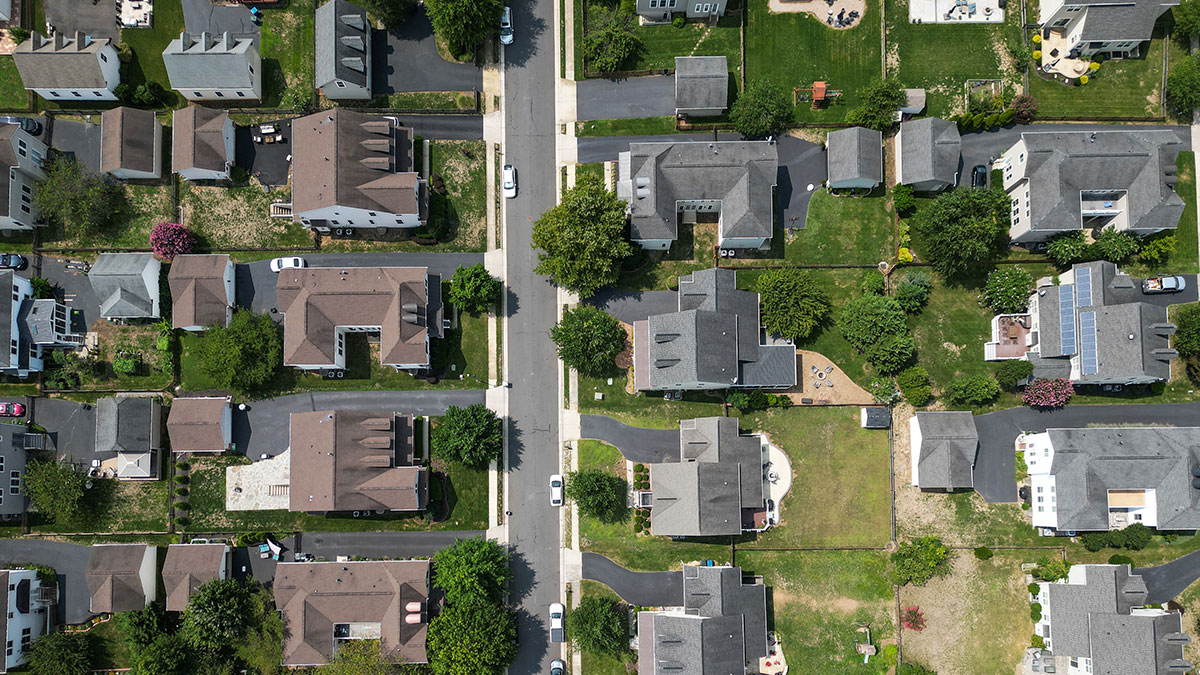
Much of the public debate turns on exaggerated or misunderstood statistics and varies depending on how investors are categorized. Again, “large investors,” defined as firms that own more than 100 homes, own roughly 1 percent of all single-family homes in the United States. Of those, a portion are owned by non-institutional large investors, such as family offices, making the truly institutional share even smaller.
Even when restricted to single-family rental stock, large investors account for only 2 percent to 4 percent of units. The vast majority of single-family rentals are owned by mom-and-pop landlords. Viral claims that large firms buy a quarter or more of all homes in certain cities usually rely on misused data, such as confusing shares of rental stock in a given market with shares of total housing, or conflating quarterly transaction volume with cumulative ownership.
But institutions’ relatively small presence in the rental market isn’t a sufficient defense. Many crimes are rare, but that doesn’t mean we want to make them legal. We should oppose banning institutional ownership of single-family homes on the merits.
“People live in homes, not corporations,” wrote Trump. But institutional single-family rentals are more likely to be lived in than privately owned homes, over 5 percent of which are second homes or seasonally vacant. Institutional landlords have strong incentives to keep units occupied, and their vacancy rates reflect that.
More importantly, single-family rentals play a critical role in access to public education. In many metropolitan areas, the highest-performing public schools are found in neighborhoods dominated by single-family homes. Access to those schools often requires homeownership, which in turn requires a down payment and mortgage qualification that many working families cannot afford. Alternatively, paying a security deposit and signing a one-year lease are far more attainable.
Some firms, like Scholastic Capital, are specifically targeting this market, purchasing homes in high-quality, exclusive school districts and renting them to families seeking a better education for their children. As a society that prides itself on merit and advancement, we should praise these efforts rather than seek to prohibit them.
Recent academic research supports the benefits of institutional investment. A study from the University of California at Berkeley found that the entry of institutional single-family landlords increased rental supply, modestly reduced rents, and led to greater economic diversity within neighborhoods.
Nor is there any fiscal justification for prohibiting institutional homeownership. Renters pay property taxes through their rent; they receive no discount on school funding. In fact, in states such as California, where long-term homeowners benefit from property-tax caps, recently acquired rental homes pay higher effective tax rates than owner-occupied properties.
None of these is an argument against homeownership. Broad-based ownership remains a worthy policy goal. But the fear that institutional rentals will turn the United States into a nation of permanent renters is not supported by the data.
The national homeownership rate has fluctuated between 64 percent and 68 percent since the late 1960s. It peaked during the mid-2000s housing boom and declined after the financial crisis as credit tightened. Today, it stands at roughly 65.6 percent, slightly below historical averages, due primarily to high mortgage rates and a shortage of entry-level housing.
When including mom-and-pop investors, the share of single-family homes purchased by investors has remained relatively stable over time, ranging from 18 percent to 26 percent of transactions. What has changed is not the overall share of investor activity but its composition. Institutional buyers have gained market share largely at the expense of small, multi-property investors, not owner-occupants.
Institutions struggle to compete against owner-occupants when buying homes. Institutions typically underwrite conservatively, tying purchase prices to local rents and strict financing limitations. They rarely outbid families. Institutional ownership took off in the post-financial crisis years, when few buyers were in the market, and has retreated in recent years as home prices rose. Institutions do, however, outcompete smaller investors by accessing cheaper capital and achieving operational scale.
While mom-and-pop landlords may be more sympathetic, protecting them from market competition should not be a public-policy objective. Unlike small investors, institutions invest on behalf of pension funds, endowments, insurance companies, and public retirement systems. Blackstone, for example, manages capital for pensioners and retirees around the world. The ultimate beneficiaries are teachers, firefighters, and municipal workers.
Small landlords, by contrast, invest on their own behalf. The tax code provides numerous advantages to long-term real estate ownership, from like-kind exchanges to stepped-up basis. There is no compelling public interest in using state power to protect these investors from competition.
Poorly drafted bans on institutional ownership would likely have unintended consequences. They could chill build-to-rent development, which relies on institutional buyers as exit partners. Even if such laws exempt new construction, limiting resale options would raise financing costs and reduce supply.
The path to higher homeownership is well-known: build more housing and expand responsible access to credit. Attacking institutional rentals does neither. Instead, it risks harming renters, limiting access to good schools, and repeating past mistakes under the guise of populism.
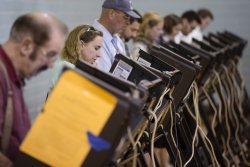
Photo by ANDREW CABALLERO-REYNOLDS/AFP via Getty Images
Source link