Following President Trump’s fiery statements against several legislators, Congress must assert its constitutional control over war powers.
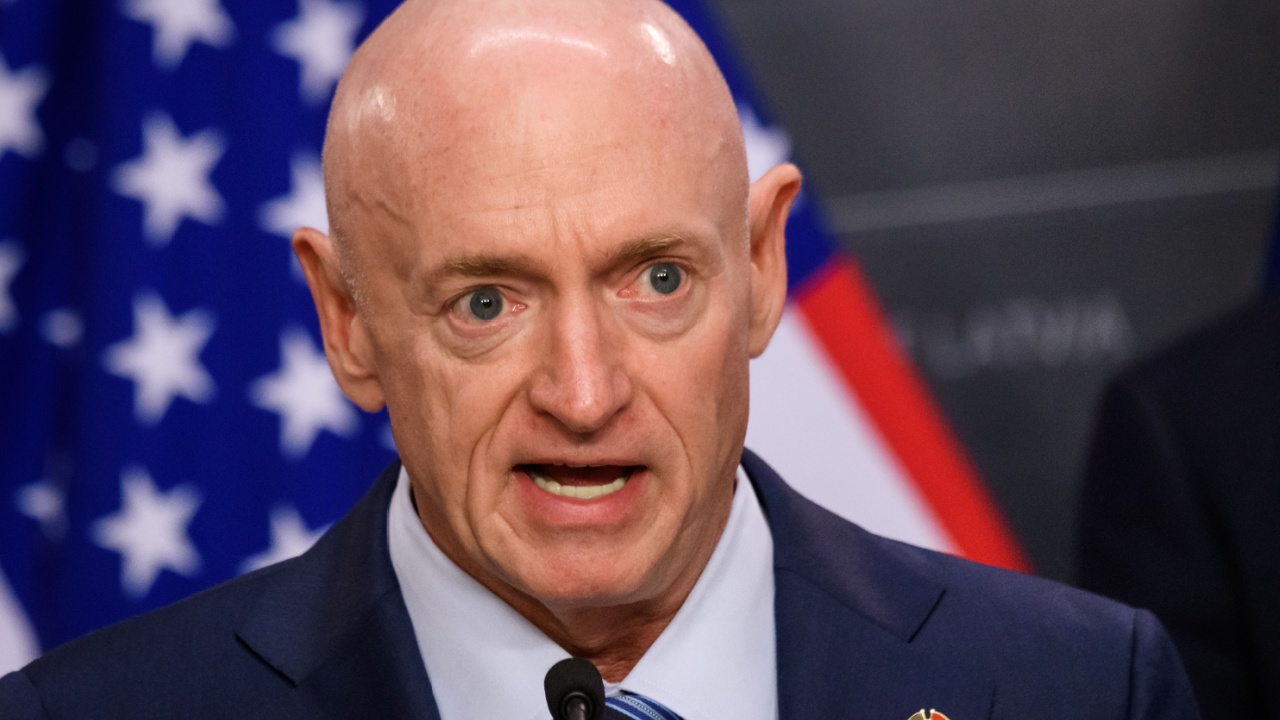
President Donald Trump, responding to videos by some military veterans who are currently members of Congress reminding American military and intelligence personnel that they had the legal right to refuse to obey an unlawful order, went into hyperdrive. The lawmakers posted videos on November 18, and Trump responded on November 20, charging six Democratic senators and representatives with “SEDITIOUS BEHAVIOR AT THE HIGHEST LEVEL.” Additionally, the president wrote: “Their words cannot be allowed to stand. SEDITIOUS BEHAVIOR FROM TRAITORS!!! LOCK THEM UP???” He later added: “Seditious behavior, punishable by death!”
Although Trump later seemed to back down from explicit charges of sedition and references to death penalties, the temperatures of some other legislators and commentators were raised to elevated levels. In response, White House Press Secretary Karoline Leavitt criticized the members of Congress for encouraging military and other national security personnel to defy lawful presidential orders.
Meanwhile, the criticized legislators released a statement calling on Americans to “unite and condemn the President’s calls for our murder and political violence.” Some reported that they were already working with Capitol Police to safeguard their families after having received various threats from anonymous sources.
Notwithstanding the hyperbole and hysteria so characteristic of Washington, DC, on many issues, this controversy raises particular issues that need clarification and further definition.
First, there is an important distinction to be made between policy formulation and policy implementation. Policy formulation means getting the right answer in the abstract. In this case, military personnel should not execute orders that they know are illegal. That is a statement of principle, and it is included in the United States Uniform Code of Military Justice. The problem comes in the implementation of this principle in any specific case of an allegedly illegal order. For this purpose, the US military has a system of criminal investigation and courts-martial, implemented by officers in the Judge Advocate General (JAG) chain of command.
Second, determining illegality in military orders or other behavior is highly circumstantial. Volumes have been written by scholars and lawyers on the subject of just and unjust wars. Just wars are fought for a just purpose and in a just manner. But these designations are highly subjective. So, too, are the judgments as to whether an individual soldier knowingly and deliberately, or unknowingly and accidentally, violated one or more legal guidelines in carrying out his or her duties.
Admittedly, some cases are obvious. If a platoon leader or company commander in Vietnam herded unarmed civilians into a ditch and shot them in cold blood. That was clearly a war crime and was prosecuted as such. On the other hand, the treatment by higher-ranking officers of some Vietnamese territory as “free fire zones” in the same war, allowing for indiscriminate air bombardment of those areas, was not considered to be illegal. Nor was the counterinsurgency program of culling Viet Cong cadres in South Vietnam by aggressive measures of capture and interrogation considered by many to have been juridically dubious.
During the Global War on Terror following the attacks of 9/11, US political leaders authorized “extraordinary renditions” that snatched suspected terrorists off the streets of foreign countries and dumped some of them into undesignated “black sites.” The Office of Legal Counsel in the George W. Bush administration signed off on “enhanced interrogations” of military captives, including waterboarding, a tactic for which US troops in the Philippine Insurrection following the Spanish–American War were punished. The revelations about the treatment of detainees at Abu Ghraib created a firestorm of national controversy and caused Secretary of Defense Donald Rumsfeld to offer his resignation to President Bush (it was refused).
The point is that, even with the best of intentions, our wartime plans can melt down, and our hard-pressed military personnel, whose lives are at risk, can make what look like mistakes, seen from the cloistered calm of a TV studio or a Congressional hearing. The members of Congress who posted those videos about defying illegal orders are themselves military or intelligence veterans.
Doubtless, they are aware of Carl von Clausewitz’s warning about “friction,” the difference between war on paper and real war. Therefore, it’s likely that their motives are not only legal, but moral and political. They fear that President Trump will overstep widely accepted norms and legal precedents about presidential use of the military, including possible attacks on Venezuela or deployment of National Guard troops for riot control in American cities.
If so, then members of Congress who fear Trump’s military overbite should do what legislators are paid to do: legislate. Congress should revisit the War Powers Act and put some additional constraints on the president’s use of military force. Past presidents have gotten away with ignoring the War Powers Act and bypassing the constitutional requirement that Congress, and only Congress, can declare war.
Instead, presidents invoke the commander-in-chief clause in Article II of the Constitution to order force deployments or instigate potential military clashes while Congress runs to catch up with events. Congress’ powers are defined in Article I, and it holds the purse strings. The legislature must assert its coequal status as a branch of government that does something more than just allocate the budget. Otherwise, assertive presidents will use the considerable tools at their disposal, undisciplined by independent supervision.
About the Authors: Stephen Cimbala and Lawrence Korb
Stephen Cimbala is a distinguished professor of Political Science at Penn State Brandywine and the author of numerous books and articles on international security issues. Lawrence Korb, a retired Navy captain, has held national security positions at several think tanks and served in the Pentagon in the Reagan administration.
Image: Gints Ivuskans / Shutterstock.com.