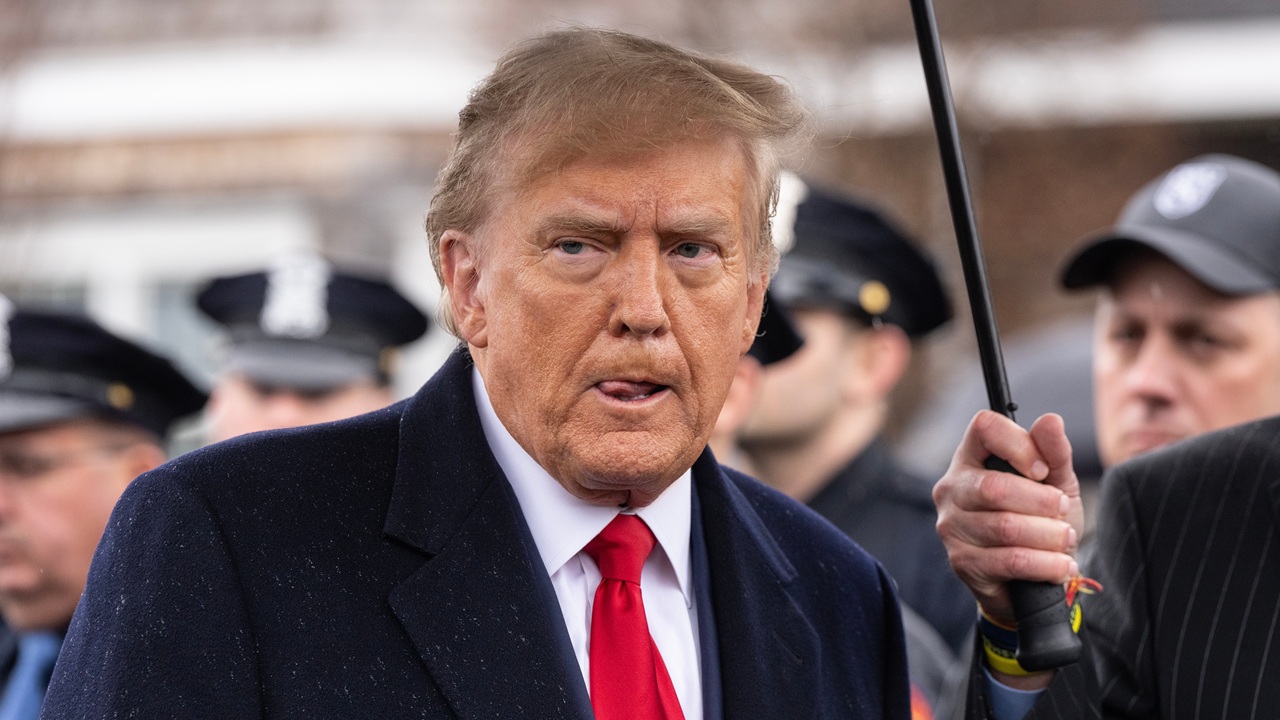
The precise wording of the NSS means little, as Trump will act however he pleases in any case. But the document is thought to accurately outline his thinking.
The equivalent of geopolitical shockwaves has roiled the capitals of the world ever since the Trump administration released its long-awaited Nation Security Strategy (NSS) memo. The key takeaway from the 33-page document is that the United States will no longer prioritize Eurasia and the Middle East (and Africa). It will instead focus on the Western Hemisphere.
As a result of this document’s release, the British and Europeans are claiming that they will be prepared to fight—and win—a major war like the kind the grandfathers fought against the Russian Federation by 2028. Japan immediately tested Washington’s resolve by picking a diplomatic fight with China over the fate of Taiwan.
The Middle Eastern powers are all jockeying for a new security arrangement, as the Arab states silently align against Israel and both the Russians and Chinese move into the area. Meanwhile, activist foreign policy advisers in Washington keep trying to goad President Trump to take a more active military role in distant Africa, a region in which the United States has few national interests.
Not even one of these foreign powers that have become far too dependent on inherently unreliable long-term American security and economic guarantees are serious about rearming or standing against their rivals militarily. It is all a show intended to keep Trump committed long enough for his replacement to inevitably take power.
From Europe to the Middle East to Asia, the countries most worried about the new NSS are praying that Trump’s damage to their relationship with the US military can be mitigated, and he can ultimately be replaced by a more pliable leader. Indeed, it seems that Trump’s own party in Congress is doing its level-best to marginalize the long-term implications of the “MAGA” and “America First” agendas.
Trump Marches to His Own Drum—Not the NSS
And Trump himself—ever the mercurial billionaire, who has far more in common with the likes of Turkey’s Recep Tayyip Erdogan than he does, say, Ronald Reagan—is hardly guaranteed to hold fast to the 33-page document. In fact, the presence of certain advisers in his midst ensures that the NSS could just as easily be discarded in practice in another year or so. After all, the initial document was ready by the summer, but it sat on Secretary of Defense Pete Hegseth’s desk for months after its writing. Much of its language, notably about China, was allegedly watered down by special interests.
This explains why, despite European, Asian, and Middle Eastern diplomats being very worried behind the scenes, they have voiced only the most tepid reservations about the document. It’s all part of an act.
These so-called allies will continue pressing forward with the awful policies that got them into the precarious positions with China, Russia, and Iran that they today find themselves in, with the hopes that it will force the Americans to stand with those allied states if the autocratic powers of the world strike.
For now, at least, there have been some serious moves toward ensuring that the president remains committed to the strategy outlined in the recent NSS memo. For starters, the Pentagon stood up to the United States Army’s Western Hemisphere Command which is a fusion of the US Army’s Northern and Southern Commands.
Even this move, while an indicator of how serious the NSS is for the Trump administration, is a watered-down version of what was initially planned before the NSS was approved.
Word was that, earlier this year, the Trump administration was planning a much greater reorganization of America’s military commands.
Is a Major Military Reorganization Coming Soon?
One source indicated that there was real chatter about merging United States Africa Command (AFRICOM) with European Command (EUCOM) and combining US Northern Command (NORTHCOM) and Southern Command (SOUTHCOM) together, all while deemphasizing the importance of both US Central Command (CENTCOM) and Indo-Pacific Command (INDOPACOM) and expanding the importance of US Strategic Command (STRATCOM). Those plans were clearly reduced to just being in place for the US Army.
So, the question of how committed to a Western Hemispheric Defense strategy the Trump administration remains a key point of contention among the leadership classes of America’s alleged allies in Eurasia and the Middle East and Africa.
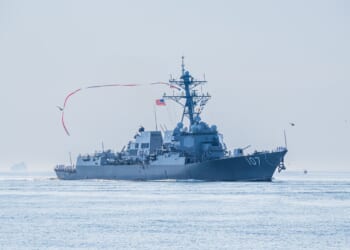
Trump’s apparent fixation on Venezuela, and the fact that 25 percent of the US Navy’s power projection is in the Caribbean with an additional 16,000 US Marines rearing for action in the region indicates that, at least for now, there is serious commitment to the Western Hemisphere by the Trump administration.
Because of the number of resources committed to whatever Trump is up to off the Venezuelan coast, it will take some period of time for his administration to reorient away from the Western Hemisphere toward other areas of responsibility, if President Trump is not truly committed to the NSS memo his Pentagon just released.
Trump Wants the Western Hemisphere
What should be of interest to those who want to focus more on Western Hemispheric Defense is the fact that, since his inauguration earlier this year, Trump has spoken repeatedly about his desire to reclaim US control over the Panama Canal Zone. He has acted earnestly to support the embattled pro-American government of Javier Milei in Argentina. He has made repeated comments about his desire to annex Greenland and rebuff Russia and China’s increased presence in the Arctic. And—for better or worse—he continues referring to Canada as the “51st state.”
In short, Trump might be a mercurial leader who is easily swayed by Europeans and other allies. But the combination of the NSS, the repositioning of significant US military assets into the Caribbean, the repeated comments about seeking greater control over the Western Hemisphere, and the fact that Trump is clearly seeking to mitigate tensions with Russia over Ukraine and China over Taiwan, indicate that maybe—just maybe—Trump will follow through and not be swayed by his more global-minded advisers.
Whatever happens with Venezuela, clearly, Trump is interested in more fully dominating the Western Hemisphere while leaving the rest of the world to its own devices. That, to me, indicates that the NSS is a serious document (even if watered down in parts) and America’s European, Mideast, and Asian allies had better start both truly picking up the slack in their own defenses…and making wiser strategic calculi when it comes to dealing with Russia, China, Iran, and North Korea.
About the Author: Brandon J. Weichert
Brandon J. Weichert is a senior national security editor at The National Interest. Recently, Weichert became the host of The National Security Hour on America Outloud News and iHeartRadio, where he discusses national security policy every Wednesday at 8pm Eastern. Weichert hosts a companion book talk series on Rumble entitled “National Security Talk.” He is also a contributor at Popular Mechanics and has consulted regularly with various government institutions and private organizations on geopolitical issues. Weichert’s writings have appeared in multiple publications, including The Washington Times, National Review, The American Spectator, MSN, and the Asia Times. His books include Winning Space: How America Remains a Superpower, Biohacked: China’s Race to Control Life, and The Shadow War: Iran’s Quest for Supremacy. His newest book, A Disaster of Our Own Making: How the West Lost Ukraine is available for purchase wherever books are sold. He can be followed via Twitter @WeTheBrandon.
Image: Shutterstock / lev radin.