Leonid Hambro was a most extraordinary human being. He was born in Chicago in 1920 and passed away at 86 in New York City. His father was a pianist who accompanied silent films. Leonid was a child prodigy and gave his first recital at age 5. His career never slowed down. He made over 100 recordings and was the pianist for the New York Philharmonic Orchestra for many years. He performed concerts throughout the world under the baton of such luminaries as Arturo Toscanini, Eugene Ormandy, and Leonard Bernstein. As a skilled chamber musician, he collaborated with Jascha Heifetz, Fritz Kreisler, Isaac Stern, and other distinguished musicians.
He possessed an uncanny ability to mimic other pianists and was a genius at improvisation. His sight reading skills were incomparable, and his memory was prodigious. He would, upon occasion, hand out to members of his audience a list of more than 100 piano pieces and play, on the spot, whatever they chose. He was also a composer and an author. He is best known, oddly enough, for working with legendary Victor Borge as his musical sidekick.
He was the official pianist of radio station WQXR in New York from 1946-1962. It was there, at the radio station that I had the distinct pleasure of meeting this musical giant. He was most friendly, and his manner was impeccable. There was not a scintilla of pride in his manner. We shook hands and were instant companions. This what I would have said to him if I had not been so overwhelmed by the moment: “Mr. Hambro, I am as tongue-tied in your presence right now as you will be when you get to heaven and meet Frederic Chopin.”
I imagine he would have laughed and questioned whether paradise was waiting for him, but he’d agree that words would escape him if he ever met the greatest composer for the piano who ever lived. I would have countered by saying, “God would not have lavished such gifts on you and not invite you to play for His saints. Besides, your graciousness alone would earn an eternal reward.”
What was the lesson I extracted from my meeting with this most extraordinary artist? It was this: As long as we have someone to look up to, there will be no room in our hearts for envy. I look up to Leonid Hambro, he looks us to Frederic Chopin, Chopin looks up to Bach, and Bach looks up to God. We are all happy that someone else is better at something that we love to do.
And it is this happy disposition that eradicates envy from our souls.
Well, Mr. Hambro, “good for you.” You remind me that admiration is far more enjoyable than envy. Your entire career has been spent on expressing admiration for others and now, as you have graciously indicated, you are pleased to meet me.
Envy, according to the classical definition, is sadness at another’s good fortune. Envy, which is the second of the Deadly Sins, robs one of the joy he could share with another person’s gifts. God grants people His gifts to please the recipient, but also to be shared with others. We should rejoice when anyone displays God’s gifts.
We all have our own gifts, modest as some of them may be. Our duty is two-fold: to nurture our own gifts and admire the gifts of others. Therefore, we should be more concerned about counting our own blessings rather that those conferred on others. Envy is a terrible intruder that places sadness where joy should abound.
As foolish as it is to be envious of another, envy is a common frailty. When we underestimate our own gifts and overestimate the gifts of others, we make room for envy. “The flower which is single,” wrote the Nobel Laureate, Rabindranath Tagore, “need not envy the thorns that are numerous.” It is hard to enjoy a good meal when one is envying the cook, or to enjoy a good book when envy of the author spoils the reading. Envy is self-punitive. How much happier we are when we can look up to the accomplishments of others with generosity and praise.
Children should look up to their parents, students to their teachers, pianists to their composers. Envy pushes away the very things that stand to benefit us. The envious person who wants to be the best is attempting the impossible. We cannot accomplish the things for which we have no aptitude. A horse, no matter how strong his envy, cannot sing like a nightingale. Each person should be who he is and refrain from attempting to be what he is not.
Leonid Hambro was a man who had the highest appreciation for artistic beauty. He would have admired the artistry of John Keats who, is his Ode to a Nightingale, presents the welcomed song of the nightingale to a man who may be on the edge of death:
‘Tis not through envy of thy happy lot,
But being too happy in thine happiness,—
That thou, light-winged Dryad of the trees
In some melodious plot
Of beechen green, and shadows numberless,
Singest of summer in full-throated ease.
Thank heaven for nightingales! In moments of suffering, there is no place for envy. Beauty, even in the song of a nightingale, can bring comfort and meaning. The envious person cheats himself.
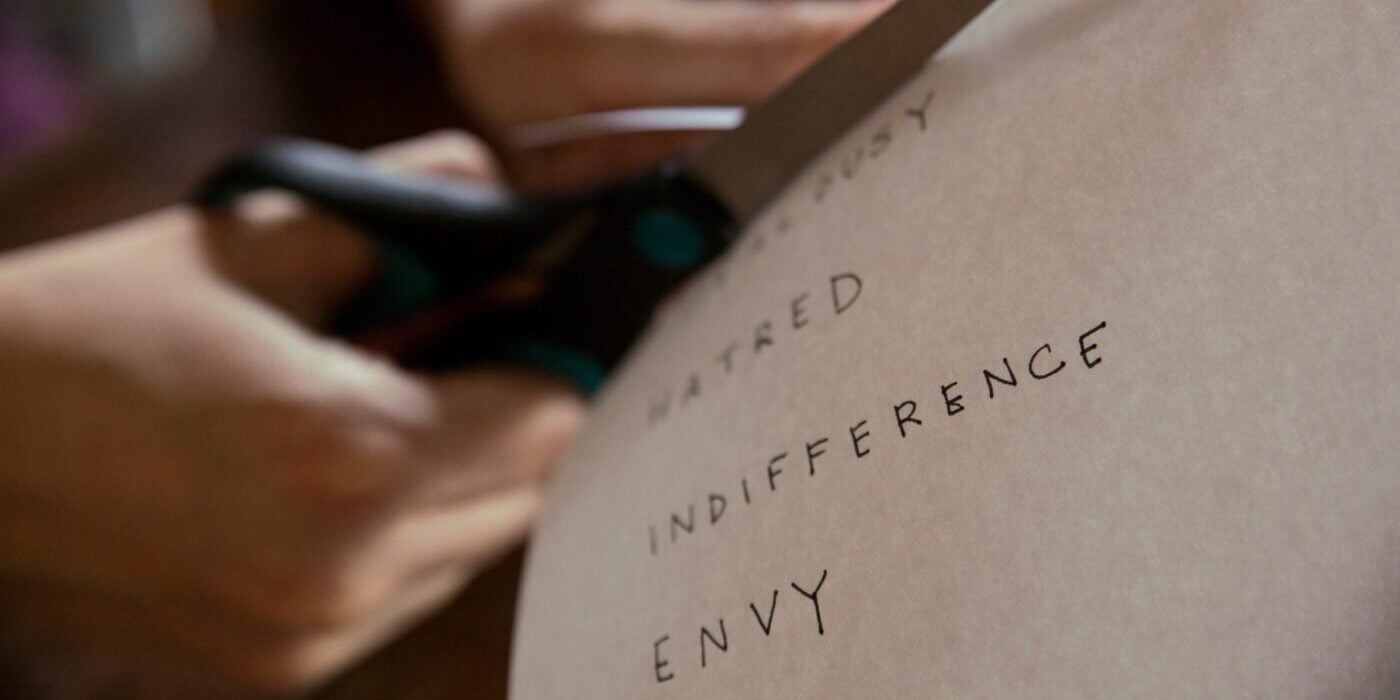
Photo by Megan Watson on Unsplash