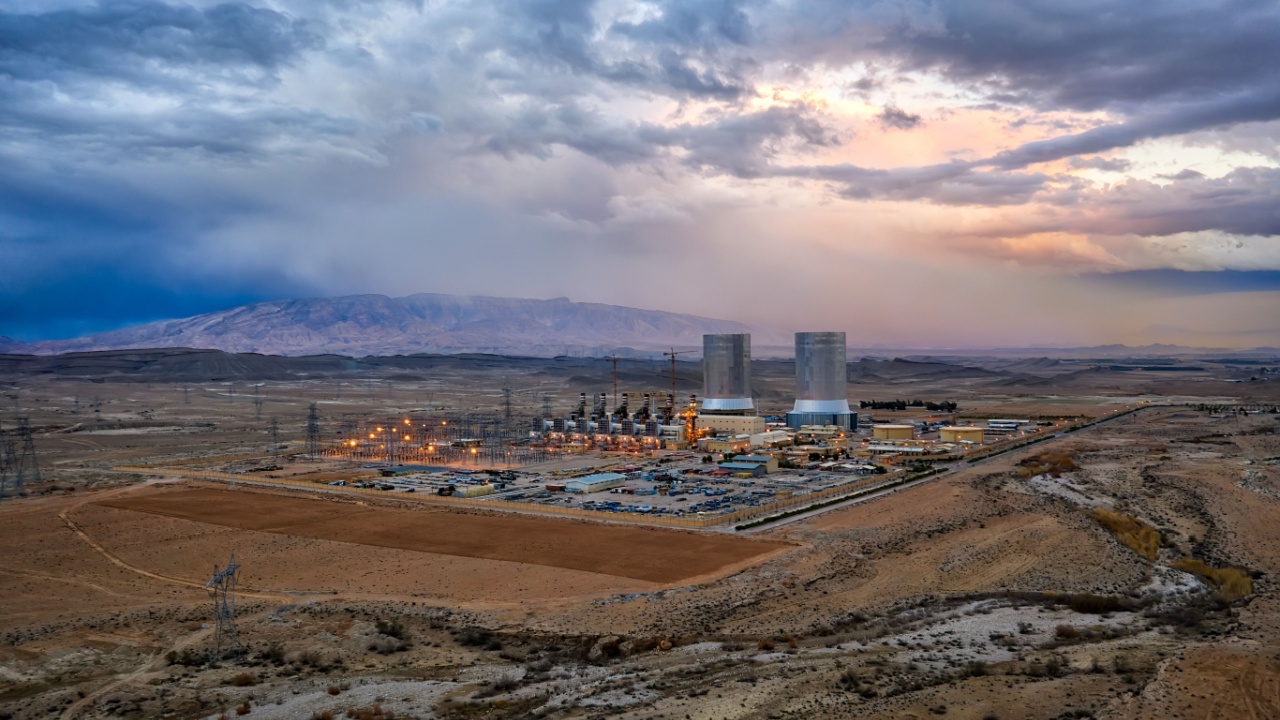
Following US and Israeli strikes since June 2025, Iran’s enriched uranium is the last viable component of its nuclear program.
Upon launching Operation Epic Fury on February 28, President Donald Trump declared, “Iran can never have a nuclear weapon.” Yet, Iran’s clerical rulers continue to defy this demand and seek to rebuild a nuclear weapons option. Thus far, they appear unmoved by Trump’s threats to “unleash hell.”
Whether through a negotiated settlement reportedly under discussion or through sustained military and intelligence operations, Washington and Jerusalem now have a historic opportunity to eliminate Iran’s future proliferation risks—but only if they act decisively. The allies must finish the destruction of Tehran’s nuclear capabilities and secure a full accounting and dismantlement of all related assets.
The US and Israeli strikes in June 2025 created severe bottlenecks in Iran’s nuclear-weapons program. Prior to the attacks, Tehran was roughly six months from producing a functional nuclear device. It possessed enough highly enriched uranium (HEU) for approximately 11 bombs, along with lower-enriched material sufficient for another 11.
The 12-Day War devastated fuel-production infrastructure at Natanz, Fordow, and Isfahan, while Israel targeted key weaponization sites, equipment, documentation, and personnel.
In the ongoing conflict, Israel has continued targeting Iran’s nuclear weaponization pathway, destroying critical facilities. These include Taleghan 2, where the regime was restoring a high-explosives vessel for nuclear-device development experiments; Minzadehei, a previously undisclosed site where Israeli intelligence tracked scientists reconstituting work on a nuclear-weapon component; a building at Malek Ashtar University associated with nuclear weapons research; and a laboratory building at Mojdeh, the former headquarters of Iran’s nuclear-weapons program. Jerusalem is also targeting additional scientists and university centers linked to the regime’s research on nuclear weapons. Washington, for its part, announced it is now targeting Iranian nuclear weapon research and development laboratories.
Israel has struck Iran’s uranium production pathway, including the Ardakan uranium processing plant, which turned uranium ore into yellowcake for later enrichment. It has reportedly collapsed the entrances to the already-damaged underground Natanz enrichment site, likely to prevent access to any salvageable remnants. The United States may have also struck key security and access points at Natanz.
In addition, Israel targeted the regime’s route to plutonium-based nuclear weapons, eliminating the Arak heavy water production plant, where Iran may have been reconstituting a moderator for plutonium-producing nuclear reactors.
While Iran’s ability to sprint toward a nuclear weapon has been severely degraded, substantial residual capabilities remain. Washington and Jerusalem must demand that Iran surrender—or else neutralize—all entombed stocks of HEU, any covert enrichment facilities, and remaining centrifuges, components, and materials.
Iran’s HEU is potentially evenly split between the Isfahan tunnel complex (whose entrances the United States collapsed in June using Tomahawk missiles) and the heavily damaged or destroyed Fordow enrichment plant (struck by 12 American massive-ordnance penetrators). Smaller quantities were located at the above-ground Natanz pilot enrichment plant, but those were likely destroyed in the US and Israeli airstrikes last June.
Without Iranian cooperation, recovering this material will likely require special forces and WMD disposal experts, supported by heavy equipment and air and ground cover. Trump has prepared US forces for such a mission—a risky effort that could require days of painstaking excavation at heavily damaged sites and careful removal of Iran’s prized nuclear weapons fuel.
The allies must also eliminate potential covert enrichment sites, such as one possibly under construction at Pickaxe Mountain near Natanz (buried up to 100 meters deep, potentially beyond the reach of conventional bunker-busters) and another plant within the Isfahan tunnel complex.
Absent a deal, the United States and Israel must prevent Iranian forces from retrieving sensitive fuel or enriching material to weapons-grade levels through additional air strikes, special operations missions, or sustained access denial.
Less is known about Iran’s remaining centrifuge stocks and production materials. Among the targets struck in this conflict was a plant previously linked to centrifuge production, known as the 7th of Tir. Israel also destroyed several such sites in June, but any surviving or restored assets must also be eliminated.
Once core threats are neutralized, the allies must secure a comprehensive, multi-year accounting and dismantlement of the rest of Tehran’s nuclear program—ideally under International Atomic Energy Agency (IAEA) or UN oversight—to prevent reconstitution or leakage. The IAEA has extensive experience in verifiably dismantling nuclear weapons programs in South Africa, Iraq, and Libya, and can help ensure that all scientists are redirected to peaceful work.
Thanks to decisive US and Israeli action, Iran now lacks the essential capabilities to build nuclear weapons, save for a few remaining tasks. The true test of any negotiations will be whether counterparts in Tehran accept full, permanent, and verified disarmament of its nuclear-weapons program. Anything less will signal the regime’s intent to reconstitute the threat.
About the Author: Andrea Stricker
Andrea Stricker is deputy director of the Nonproliferation Program and a research fellow at the Foundation for Defense of Democracies. She is an expert on nuclear weapons proliferation and counterproliferation, open-source proliferation and policy analysis, and strategic commodity trafficking. Follow her on X: @StrickerNonpro. FDD is a Washington, DC-based, nonpartisan research institute focused on national security and foreign policy.