The end of the Islamic Republic is a tremendous opportunity for Iran and poses serious risks for regional stability. The United States should be prepared.
President Donald Trump has long argued that deterrence of US adversaries, once eroded, must be restored decisively. In confronting the Iranian regime and eliminating Supreme Leader Ali Khamenei, he acted consistently with that doctrine.
When intelligence assessments concluded that Tehran was stalling diplomatically while expanding destabilizing activity, and after US special envoys Jared Kushner and Steve Witkoff’s high-stakes negotiations in Geneva that helped shape the president’s judgment on Iranian seriousness, the administration recalibrated. Its objective was clear: reestablish credible deterrence and signal that gray-zone aggression would no longer go unanswered.
That clarity matters. But restoring deterrence is only the first step. Strategy cannot end at retaliation. It must anticipate what comes next.
It is a mistake to treat the Islamic Republic as a personality-driven regime. It is not a system that will collapse simply upon the removal of a single leader. The Islamic Revolutionary Guard Corps (IRGC) is not merely a special branch of the military; it is an ideological institution, an intelligence network, and an economic conglomerate embedded deeply within the state.
Hostility toward the United States and Israel is doctrinal. As long as coercive institutions remain guided by that ideology, the threat persists. Degrading capabilities may temporarily restore deterrence, but only institutional transformation will bring about long-term stability in the region.
The Islamic Republic vs. Iran
Strategic clarity also requires distinction. Iran is not synonymous with the Islamic Republic. Iran is a civilization-state with enormous human capital, a young and educated population, and a society that has repeatedly demonstrated civic courage. Protest movements led by women and younger generations reveal a population that seeks root-and-branch change.
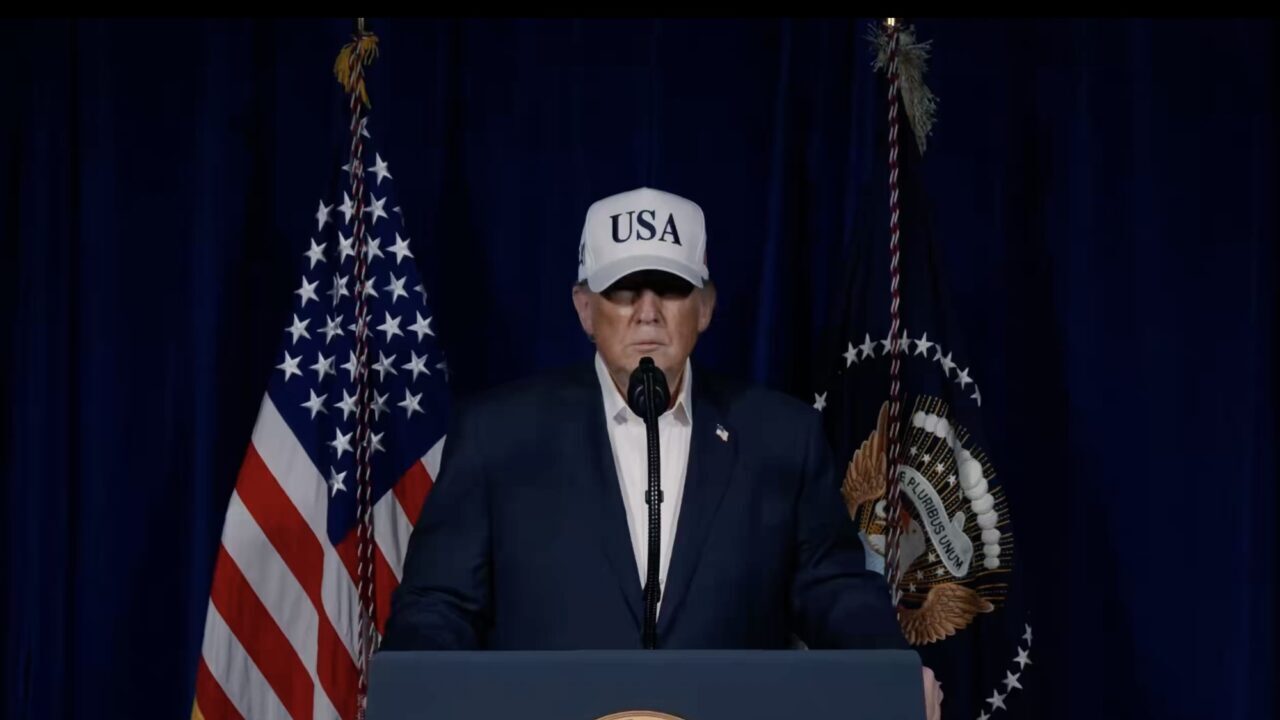
American policy is strongest when it reinforces this distinction: pressure on a destabilizing regime is not hostility toward the Iranian people. That framing weakens Tehran’s ability to use nationalism as a shield against accountability. And President Trump, in his speech announcing the strikes on Saturday, has made that clear.
The US Must Protect the Abraham Accords
US interests are also directly implicated in the security of regional partners who chose modernization over confrontation. The Abraham Accords, which normalized relations between Israel and Arab nations, represented a strategic shift toward integration, technological cooperation, and economic interdependence. The United Arab Emirates and Bahrain assumed real political risk by embracing that path.
They also faced retaliation. Missile and drone attacks from the Iranian Revolutionary Guard Corps targeted civilian targets in Abu Dhabi, Dubai, and Manama. When states align with integration and are punished for it, the credibility of US security guarantees is tested.
If Washington seeks a rules-based regional order, it must ensure that its defense architecture—including integrated air and missile defense, maritime coordination, and intelligence sharing—is durable and visible. Allies who choose modernization must not feel strategically exposed.
Planning for Iran’s Day After the Islamic Republic
Iran now faces mounting structural pressure: economic fragility, constrained proxy networks, sanctions, and recurring domestic unrest. The regime’s room for maneuver is narrowing rapidly. This does not guarantee transformation. But it creates the possibility. Responsible policy requires preparation for that contingency.
If systemic change occurs—whether through elite fracture, or popular uprising—the most dangerous moment will be the immediate aftermath. Revolutions invite fragmentation, militia competition, or renewed authoritarianism. The United States cannot afford improvisation in a country of Iran’s size and strategic importance.
Four priorities would emerge immediately. The United States should secure nuclear and missile infrastructure to prevent proliferation or sabotage; prevent fragmentation within the armed forces, and ensure elements of the IRGC do not reorganize into rogue militias; preserve territorial integrity and avoid separatist conflict; support the rapid formation of a transitional authority capable of restoring order and preparing constitutional governance. This requires engagement now with credible opposition figures and civil-society networks.
In my assessment, the most visible and structured opposition figure is Crown Prince Reza Pahlavi. His father’s legacy remains debated—and history must be examined honestly—but he bears no responsibility for that past. It is also historically accurate in arguing that the early years of the previous monarchy were characterized by significant modernization and institutional development before political rigidity eroded legitimacy in the 1970s.
Today’s Iran is fundamentally different from the country of 1979. Iranian youth are more educated, more globally connected, and more exposed to democratic norms than any previous generation. They are not seeking a rerun of autocracy. They seek dignity, prosperity, and accountable governance.
Reza Pahlavi has consistently advocated secular statehood, national reconciliation, and a democratic referendum allowing Iranians to determine their political system.
The American interest lies in a Middle East where expansionist militancy is contained, allies feel secure choosing integration, and regional powers operate within predictable norms rather than ideological confrontation.
Iran stands at a consequential juncture. Decisions made in Tehran will determine whether the country moves toward responsible statehood or deeper isolation. Decisions made in Washington will determine whether deterrence evolves into a durable security architecture or remains captive to episodic reaction. The choices made now will shape not only Iran’s trajectory, but also the strategic architecture of the Middle East—and America’s role within it—for decades to come.
About the Author: Ahmed Charai
Ahmed Charai is the publisher of the Jerusalem Strategic Tribune and serves on the boards of directors of the Atlantic Council, the International Crisis Group, the Center for Strategic and International Studies, the Foreign Policy Research Institute, and the Center for the National Interest.