China has spent years building a sophisticated A2/AD network covering its First Island Chain. America has likewise spent years planning to defeat it.
China’s A2/AD (Anti-Access/Area Denial) network is a layered defensive system of long-range missiles, radars, air defenses, cyber and electronic warfare tools, aircraft, ships, and submarines. All of these systems are designed with one purpose in mind: to keep US forces as far away from China as possible.
With the A2/AD network in place, any potential US military intervention in the region near Taiwan or the First Island Chain would become slower and more difficult—and more politically risky. Critically, China’s defense network doesn’t need to be perfect—it only needs to be strong enough to raise the stakes sufficiently to discourage the United States from entering a conflict. The result has been arguably the most challenging operational environment that US forces have encountered since the end of World War II.
The strategic stakes are high. If the US cannot penetrate or operate around A2/AD, then China gains de facto control over Taiwan, the South China Sea, and much of the Indo-Pacific, placing US allies in the region (Japan, Korea, Philippines, Australia) in a compromised security position. Accordingly, the United States is doing its best to develop countermeasures to the network in order to maintain Asia’s post-World War II security architecture.
America Probably Can’t Destroy the Network—but It Can Weaken It
During a hypothetical future clash with China, America’s goal is not to destroy the network—it is far too layered and dispersed for this. Rather, the US aim is to fracture the Chinese “kill chain” enough to create gaps in coverage. This requires surviving inside the contested zone long enough to degrade key nodes in the network. Such a mission requires a wide range of capabilities: stealth, long-range precision weapons, undersea dominance, dispersed basing, resilient communications; and integration with US allies.
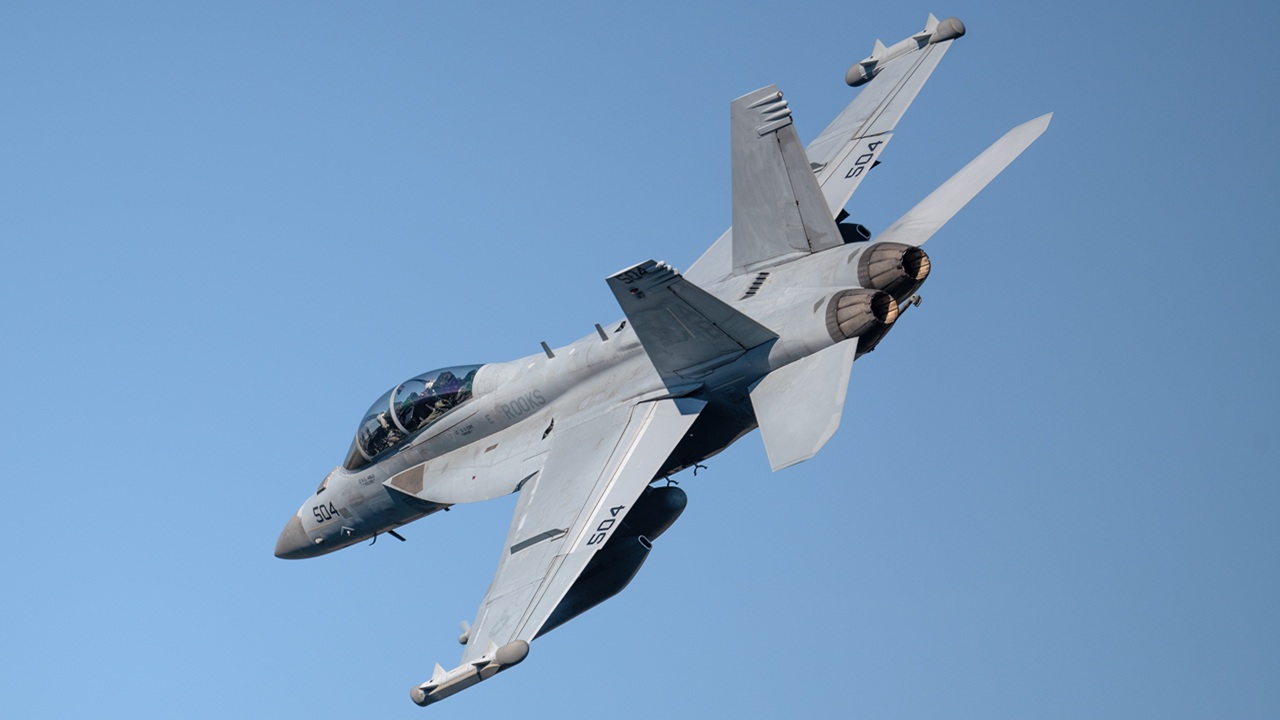
The US Air Force has shaped its efforts around the A2/AD network. Stealth platforms like the F-35 Lightning II, B-2 Spirit, and forthcoming B-21 Raider are designed to penetrate heavily defended airspace. Their mission set includes striking key radars, C2 nodes, missile-launch units, and air defense systems. Long-range missiles like the JASSM-ER, LRASM, SM-6, and Tomahawk complement stealth platforms, allowing US forces to hit A2/AD components from standoff distances without ever entering the densest threat zones. Together, long-range standoff and stealth platforms comprise an emerging doctrine, the tip of the anti-A2/AD spear.
America Has Critical Technology Advantages over China
US fast-attack submarines are integral to anti-A2/AD efforts, too. These are arguably the hardest assets for China to detect and counter, and are capable of killing PLAN surface vessels, sinking amphibious vessels designed to land troops on Taiwan or other contested islands, launching cruise missiles at strategic Chinese positions, and generally operating with near-impunity from within the A2/AD bubble. Critically, because China’s sub-hunting capabilities have not yet matured, it is unclear how Beijing could react to this threat.
To counter China’s massive missile arsenal, the US will need to disperse basing and operation across many, smaller nodes—a system known as the Agile Combat Employment (ACE). ACE makes use of Pacific island airstrips, highways, partner nation bases, and temporary expeditionary pads. The ACE concept is simple: making it harder for China to find and hit targets while making successful strikes less consequential.
In sum, the United States seeks not to defend against every Chinese asset, or to take the A2/AD system offline. All it can realistically do is to make the network more porous and fragile—thereby restoring the prospect of US intervention off China’s coast, and re-imposing a formidable threat that is likely to make Beijing think twice before launching an attack on one of its neighbors.
About the Author: Harrison Kass
Harrison Kass is a senior defense and national security writer at The National Interest. Kass is an attorney and former political candidate who joined the US Air Force as a pilot trainee before being medically discharged. He focuses on military strategy, aerospace, and global security affairs. He holds a JD from the University of Oregon and a master’s in Global Journalism and International Relations from NYU.
Image: Shutterstock / Peter R Foster IDMA.