The ACES II ejection seat ensured that two US airmen shot down over Iran could make it safely to the ground—though this was only the first step in the rescue effort.
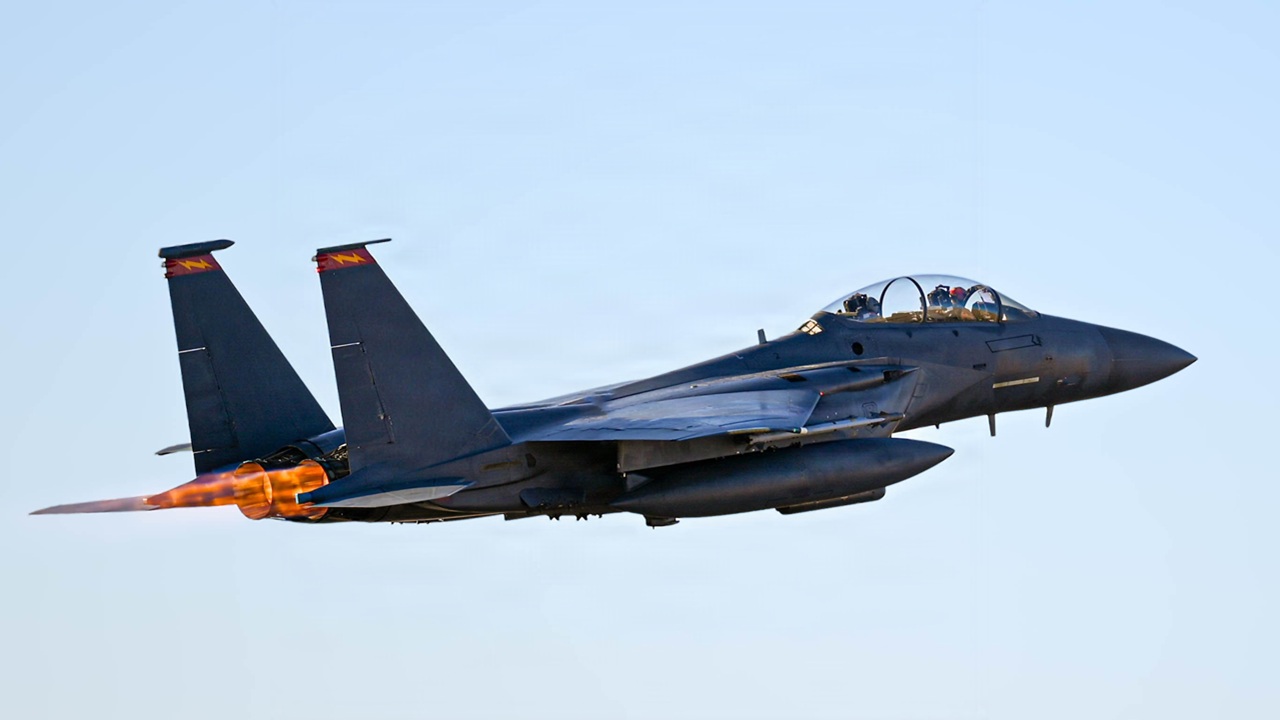
A US Air Force F-15E was shot down over Iran on Friday—the first aircraft confirmed shot down by Iran since the beginning of Operation Epic Fury. One of the two crew members was quickly recovered; the other was not, prompting a frantic search inside Iran complicated by the country’s remaining A2/AD systems and hostile ground forces also on the hunt. Ultimately, the missing crewmember was recovered on Sunday morning after an intensive two-day operation.
During that operation, an A-10 Thunderbolt II (“Warthog”) ground attack aircraft was also shot down, although its pilot managed to fly it back to Kuwaiti airspace before bailing out. Two additional aircraft involved in the rescue, a pair of C-130 Hercules transport aircraft, landed inside Iran, but became stuck in mud and were intentionally destroyed to prevent them from falling into Iranian hands. The total price tag of the weekend rescue mission almost certainly exceeds $100 million—but a culture of “leaving no man behind” is likely worth far more in the long run.
The F-15E’s two-man crew successfully ejected from the airframe using the F-15E’s ACES II ejection seat, one of the most reliable escape systems ever built—but nevertheless a violent and risky process that subjects crew members to real danger in the hopes of saving their lives.
About the ACES II Ejection Seat System
The ACES II is a third-generation ejection system installed in both the pilot and (back-seat) WSO seat. Equipped with “zero-zero” capability, the ACES II works at zero altitude and zero airspeed. It works with a rocket motor that launches the pilot and WSO upwards, subjecting them to 12-20 Gs. In subjecting the crew to such violent force, in such an immediate fashion, the ACES II roughly guarantees escape, but not without consequences.
When a crew member triggers the ejection sequence, explosive charges jettison the canopy. In the event that the charges fail, the aircraft is equipped with canopy breakers, which the crew can use to physically smash the canopy if needed. Accidents involving the ejection seat striking the canopy—notably depicted in the film Top Gun—are almost always serious or fatal, given the extremely high speeds involved.
The F-15E’s ejection seats are equipped with trajectory divergence rockets (TDR), which are unique to two-seat aircraft and function to separate the seats mid-air, preventing collision or rocket blast injury. Once launched, the systems adjust based on aircraft speed and altitude. At low altitude, the chute deploys immediately; at mid altitude, the drogue chute is used for stabilization; and at high altitude, chute deployment is delayed until falling to 15,000 feet. The automation removes pilot guesswork.
Why Don’t the Pilot and the WSO Crash into Each Other?
Because the F-15E has two seats, the ejection seat timing must be staggered. The back-seat WSO fires first. Then, after a delay of 0.3 to 0.4 seconds, the pilot fires second. The staggered timing, like the TDR, prevents a mid-air collision or rocket exhaust injury.
Timing precision is essential, because failure could be catastrophic. A mid-air collision between the two airmen would likely mean death for both.
Even if everything goes exactly as planned from a mechanical perspective, the pilot and WSO face legitimate physical risks. The G-force impact is severe, often causing spinal compression and fractures. If ejection occurs at high speeds, wind blast is possible. Limbs flailing on the way out of the canopy can cause broken bones. Neck injury is a possibility because modern head gear is heavy and adds strain. But remarkably, the ACES II boasts a 1 percent serious back injury rate—a significant reduction from previous models, which had accident rates closer to 33 percent!
For the Downed Fliers, Surviving the Fall Is Only Step One
Post-ejection realities can be harsh, too. The downed F-15E landed in Iranian territory, raising the possibility of capture and imprisonment. The pilot is at risk of being subjected to inhumane treatment, of divulging sensitive information, of being leveraged in negotiations.
Fortunately, the two-person crew survived the ejection, in large part owing to the ACES II, one of aviation’s most trusted systems. But the search for the missing aviator that unfolded over the following days was complex and risk-intensive in and of itself, placing additional airmen at risk. Ultimately, however, it ended in success.
About the Author: Harrison Kass
Harrison Kass is a writer and attorney focused on national security, technology, and political culture. His work has appeared in City Journal, The Hill, Quillette, The Spectator, and The Cipher Brief. He holds a JD from the University of Oregon and a master’s in Global & Joint Program Studies from NYU. More at harrisonkass.com.