Egypt and Sudan are unwittingly playing into the hands of the Horn of Africa’s most dangerous terrorist group: al-Shabaab.
The Horn of Africa is a volatile geopolitical crossroads where water rights, energy ambitions, military operations, and port access converge—with direct implications for US national security. The extremist group al-Shabaab, which is considered the “largest, wealthiest, and most lethal Al Qaeda affiliate in the world” by US Africa Command and was designated by the United States as a foreign terrorist organization in 2008, operates throughout the Horn from its stronghold in Somalia. Al-Shabaab is growing bolder, with aspirations to carry out a 9/11-style attack against the United States.
A UN peacekeeping coalition with representatives from Egypt and Ethiopia, among others, is currently keeping the group in check. Yet, regional disputes over water resources are stirring up conflict among peacekeeping partners and undermining the ability of allied forces to cooperate to counter this threat effectively. To prevent a crisis, the United States must take a more active role in mediating these tensions before they escalate further.
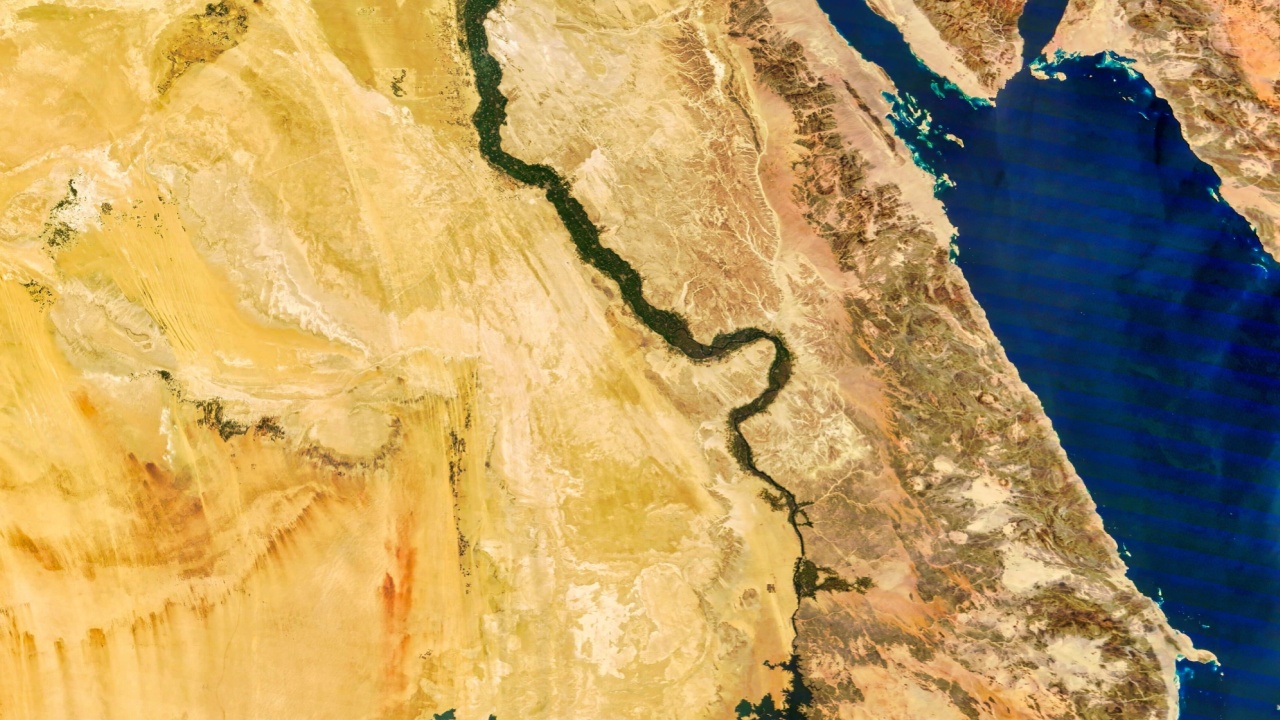
At the center of this reality is Ethiopia’s newly inaugurated $5 billion Grand Ethiopian Renaissance Dam (GERD), which now controls the flow of the Nile River’s largest tributary. For the first time in history, Ethiopia holds leverage over the river, upending a century of colonial-era agreements that favored Egypt and Sudan.
For Ethiopia, the dam promises economic growth and a much-needed source of electricity for its 60 million citizens living without power. For Egypt and Sudan, which rely on the Nile for 97 percent and 73 percent of their freshwater needs, respectively, the project is an existential threat.
Cairo and Khartoum tried to stop the dam at every turn—blocking international financing, demanding binding agreements governing Ethiopia’s use of upstream water, and even appealing to the UN Security Council. Then-Egyptian president Mohamed Morsi went so far as to declare unknowingly on live television, “if our share of Nile water decreases, our blood will be the alternative.”
In what the Egyptians thought was a secret briefing, senior Muslim Brotherhood officials made several plans for military action in Ethiopia, including sending special forces to destroy the dam and supporting rebel groups in Ethiopia. These are not empty threats, given that Egypt and Sudan conducted a six-day joint military exercise in 2022 dubbed “Guardians of the Nile.”
Despite the pressure, Ethiopia pressed ahead and finished the dam earlier this year. Careful reservoir filling and favorable rainfall have so far mitigated a drought crisis downstream, but uncertainty remains about long-term water management and climate shocks. To shield the project from foreign influence—and interference—Ethiopia financed this geostrategic asset without major foreign loans.
Instead, it relied heavily on domestic financial repression, compelling local banks to help pay for the dam, redirecting private savings, and paying civil servant salaries in bonds rather than cash. This strained credit markets, limited investment in other sectors, and added to growing public frustration. Yet for Ethiopia’s leaders, construction was worth the sacrifice and handed them the power to strangle rival Egypt.
America’s AI Stack Needs an Israeli Upgrade
The Department of Commerce should consider Israeli AI security companies for its trusted partner program to ensure the US tech stack is the global standard. The core of the Trump…
After the Muslim Brotherhood
Designating the Muslim Brotherhood as a terrorist organization should be a pillar of the emerging Middle East security architecture.
The GERD has shifted the regional balance of power. Yet, Ethiopia still depends on its neighbors. The landlocked nation has long sought reliable seaport access to boost trade and build a navy. Early this year, Somali officials restored diplomatic relations with Addis Ababa through Turkish mediation, opening the door to potential port agreements. Soon after, Egypt deployed 10,000 troops to Somalia in the name of supporting the African Union’s counterterrorism mandate against al-Shabaab.
Many Ethiopians saw the deployment not as a genuine effort to counter al-Shabaab, but as an attempt to check Ethiopia’s rise and complicate its port ambitions. However, al-Shabaab is a serious regional threat, and increased regional tensions could hinder counterterrorism cooperation, as both Ethiopia and Egypt contribute troops.
The Somalia-based group regularly bombs Western targets and local officials, killing Americans as well as regional partners. Its ambitions extend beyond the Horn: one al-Shabaab associate was arrested in the Philippines for an attempted hijacking of a US-bound plane.
Al-Shabaab is also keen to grow its global financial network to fund terror. Washington has responded with new sanctions to increase financial pressure on the group. So far, however, joint peacekeeping operations have been the most effective means of hindering the group’s ambitions. The flaring tensions over the GERD between Ethiopia, Egypt, and Sudan risk undermining the military cooperation, potentially undercutting that progress and giving al-Shabaab an opening to expand its reach just as security forces in the Horn are drawing down.
Washington has been largely silent on the issue. President Donald Trump mentioned his administration was monitoring the GERD in June. However, Secretary of State Marco Rubio’s recent meetings with Egyptian and Ethiopian officials conspicuously avoided discussion about the dam. For a project with the potential to destabilize the Horn and jeopardize US counterterrorism priorities, this hands-off approach is a mistake.
The United States should not wait until tensions spill over into open conflict. Cultivating strong relationships within the Horn of Africa and ensuring regional stability directly aligns with US counterterrorism mandates. The issues are interconnected, reflecting rising regional tensions and shifting power dynamics, so the solutions must be as well.
The United States should push for a binding water-sharing agreement among Nile River nations that sets clear drought-management rules, guarantees minimum flows, and establishes dispute-resolution mechanisms. To incentivize adherence to the agreement, it should link Ethiopian port access to the water-sharing agreement and make US aid contingent on countries’ abiding by its terms.
Security deployments in Somalia should continue, focused squarely on countering al-Shabaab rather than becoming a theater for proxy struggles between Addis Ababa and Cairo. To support military forces, the US Treasury should continue to exert financial pressure on al-Shabaab through sanctions to limit the group’s financial resources.
The GERD is a potential wedge between critical counter-terrorism partners. Without a negotiated solution, the project will jeopardize US operations against a lethal foe. If Washington stays passive, others will dictate the outcome to the detriment of both regional stability and US security.
About the Author: Daniel Swift and Susan Soh
Daniel Swift is a senior research analyst for economics, finance, and trade for the Center on Economic and Financial Power (CEFP) at the Foundation for Defense of Democracies (FDD). He is a retired US diplomat and was most recently the Acting Coordinator for Prosper Africa, a presidential-level national security initiative to increase two-way trade and investment between the United States and Africa.
Susan Soh is a research associate with CEFP. Her research focuses on China’s role in the global economy. Prior to her time at FDD, she was a Boren Scholar in Taipei, Taiwan. During her undergraduate studies, Susan interned at S&P Global Commodity Insights and an intellectual property consulting firm in Taipei. She holds a BA in international studies and Chinese from the University of Mississippi, with a minor in economics.
Image: BEST-BACKGROUNDS / Shutterstock.com.
America’s AI Stack Needs an Israeli Upgrade
The Department of Commerce should consider Israeli AI security companies for its trusted partner program to ensure the US tech stack is the global standard. The core of the Trump…
After the Muslim Brotherhood
Designating the Muslim Brotherhood as a terrorist organization should be a pillar of the emerging Middle East security architecture.