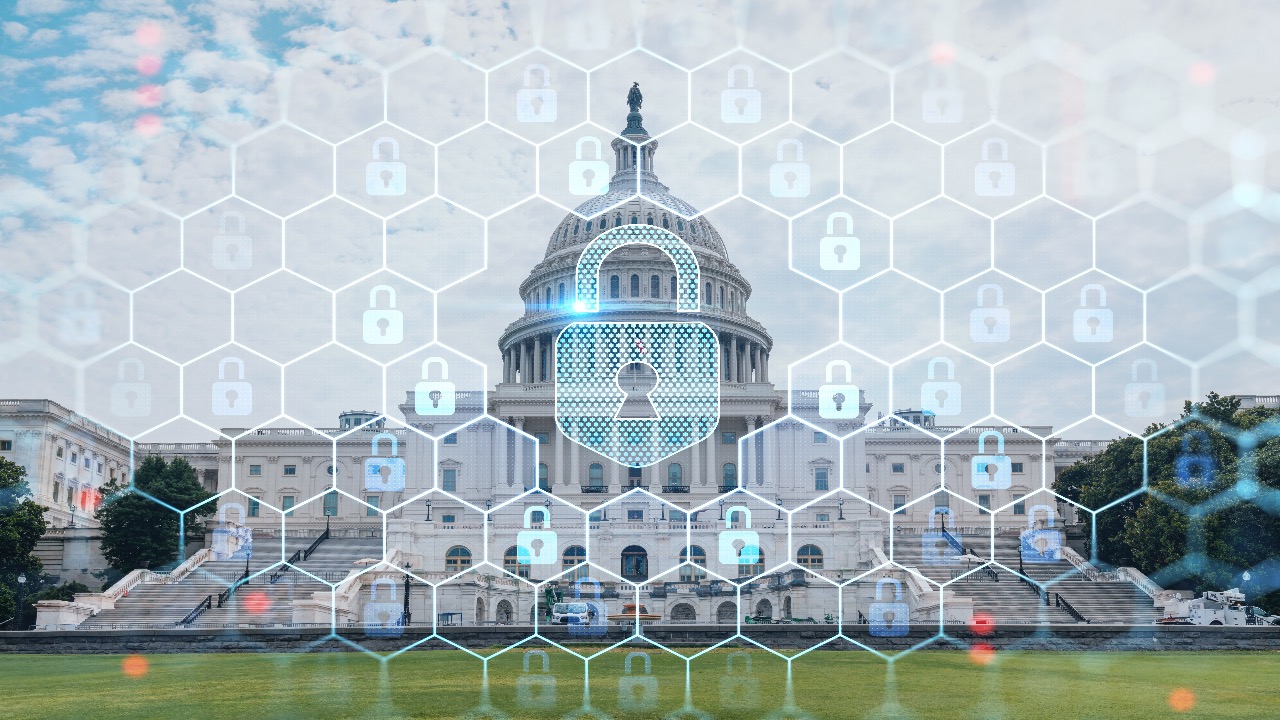
To combat China and Russia’s cyber capabilities, the Trump administration must stop eliminating cybersecurity professionals and invest in federal programs that protect domestic critical infrastructure.
While there will be heated disagreements on how President Donald Trump’s new National Security Strategy characterizes America’s relationship with both China and Europe, few will disagree with the clear sentiment to defend the homeland. More than any strategy document released since the September 11 attacks, this one emphasizes defending the homeland or, more specifically, “the continued survival and safety of the United States” as the top national security priority.
When Trump took office earlier this year, it must have been clear to him that the homeland has never been less secure, with challenges extending well beyond the border issues, which he tried to address in his first Presidency, to now include imminent missile and cyber threats to the homeland.
The President’s efforts to secure the border and defend against missile threats are well underway—he has reduced illegal immigrant crossings by 95 percent from March 2024, and signed a new “Golden Dome” executive order backed with $25 billion in resources.
America’s Unaddressed Cyber Vulnerability
There is one remaining homeland security vulnerability that has not been addressed—Trump inherited a national critical infrastructure that is dangerously vulnerable in cyberspace, with both Russia and China working hard to exploit this weakness. In fact, his administration’s actions in this first year back in office have, if anything, made America’s cyberspace less secure. And China and Russia are both postured and willing to take advantage of America’s cyber vulnerabilities.
Of greatest concern are the rail, aviation, and port systems that move military equipment, personnel, and supplies to the battlefield. These military mobility assets are almost wholly owned and operated by the private sector, and they are maintained with inconsistent and insufficient levels of cyber resilience.
Almost as important is the infrastructure that drives American economic productivity—energy grids, financial services, and manufacturing, to name but a few. These assets are also largely privately owned, and they are broadly insecure against nation-state threats.
And the public-private partnerships with US government agencies that are intended to support the cyber resilience of America’s critical infrastructure are significantly under-resourced.
China and Russia are Already Preparing the Cyber Battlefield
The recent Volt Typhoon and Salt Typhoon cyberattacks demonstrate that China is already working to exploit these American cyber weaknesses. The Volt Typhoon penetration of select US critical infrastructure is especially unnerving, as it is effectively “operational preparation of the battlefield.” It involved the installation of cyber malware or access that can be utilized to disrupt or destroy US infrastructure systems in a time of crisis.
The success of Chinese aggression in the Taiwan Strait (or Russian aggression in the Baltic) could depend on the speed with which the United States is able to send military forces forward from the United States. If adversaries can delay this mobilization and deployment of American forces by using cyberattacks to cripple key transportation infrastructure, that could make it much more difficult to defeat any aggression.
A Strategy–Execution Gap on Cybersecurity
Given the emphasis on defending critical infrastructure and cybersecurity in the 2024 Republican Party Platform and now this 2025 National Security Strategy, it is surprising that the Trump administration has taken a dismissive approach to addressing the cyber challenge. In fact, neither the Chinese cyber threat nor the ongoing Typhoon attacks are mentioned in the National Security Strategy.
Trump’s team has significantly reduced, by thousands, the number of cybersecurity professionals in government agencies such as the Cyber Security Infrastructure Agency and the National Security Agency. They have eliminated numerous cyber grants and contracting efforts, such as the Multi-State Information Sharing and Analysis Center (ISAC), that helped secure state and local government infrastructures. They defunded critical government cyber recruitment programs such as CyberCorps. And they disbanded the primary vehicle for building public-private collaboration efforts to secure critical infrastructures.
This has resulted in a measurable backsliding in the reliability and resilience of US critical infrastructure. Not the focus or trend-line one would expect on a key presidential national security priority.
What a Course Correction on Cybersecurity Requires for the Trump Administration
If he wants to reverse this trend, the President needs to end the cyber manpower exodus and restore federal cyber personnel recruitment efforts. He also needs to invest in the federal agency programs that build public-private collaboration to defend infrastructure. Finally, he needs to improve America’s ability to conduct offensive cyber operations overseas and defensive cyber operations on our domestic networks.
Fortunately, the President has just the tool to start this work—Sean Cairncross, the National Cyber Director, is developing the new National Cyber Strategy, and Trump can direct the inclusion of strong guidance that identifies the risk from China and builds America’s offensive and defensive cyber capabilities.
In the past, US presidents had the luxury of thinking about how to handle the threat from adversary states “over there” in the aggressor’s backyard. Things are different for Trump in his second term. America faces a variety of security challenges, but none is more serious than the Chinese and Russian cyber threats to the homeland.
About the Author: Mark Montgomery
Mark Montgomery is a retired US Navy rear admiral and a senior fellow at the Foundation for Defense of Democracies.
Image: VideoFlow/shutterstock