With the demand that Iran give up its ballistic missiles, the United States has made a long-term military commitment to maintaining Israeli missile supremacy.
Of the many troubling questions surrounding the war with Iran, one sticks out—why now? What was the urgency? Does the administration have an argument that would pass muster with the majority of the American public and Congress? We did not really have a full discussion of this before the onset of hostilities, which has led to the historically rare situation of launching a war without majority public support at the outset.
Outside the executive branch, those with the most access to sensitive intelligence are the Gang of Eight, the bipartisan, bicameral group of Congressional leaders who receive the most extensive briefings and access. One of them, Sen. Mark Warner (D-VA), appeared on the PBS NewsHour the evening of March 3. When he was asked whether any of the information he was privy to constituted an imminent threat to the United States, he replied, “Absolutely not.” He also said, “The timing of this war was dictated by Bibi Netanyahu…we have to show the direct and immediate risks to America. That was not the case.”
Based on that, and what has come out in public reporting and the periodic reports from the International Atomic Energy Agency (IAEA), the Iranian approach to reconstituting their nuclear enrichment program since the brief war last June has been rather cautious. There is certainly nothing that would rationally generate alarm about movement toward producing a warhead or possession of weapons-grade fissile material.
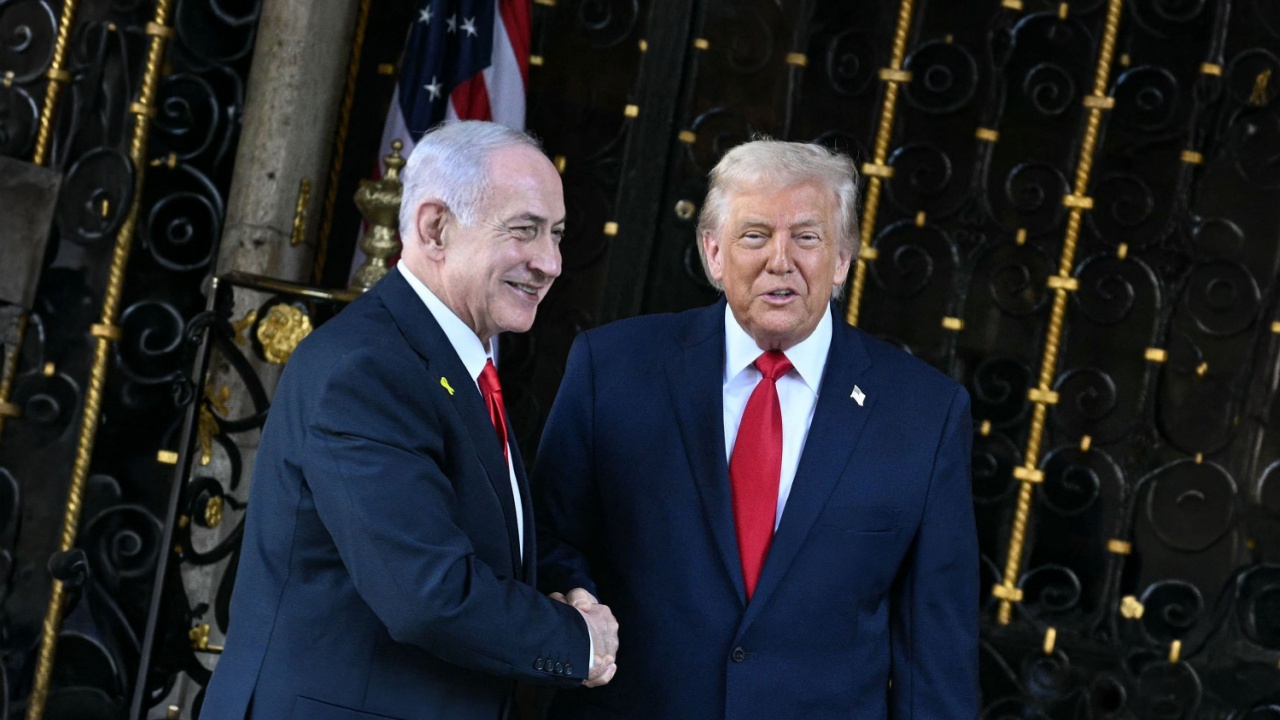
What changed was where the United States put the goalposts for fighting a preventive (not preemptive) war. Much of this shift dates back to the relatively little-noticed visit by Israeli Prime Minister Benjamin Netanyahu to the White House on December 28, 2025. In that meeting, Netanyahu made the case to President Donald Trump that, despite the lack of any cause for alarm on the nuclear front, Iran was making great strides in reconstituting and expanding its ballistic missile programs.
If these accumulated, the damage from a future exchange could be much worse than in June. Trump gave Netanyahu a “green light” in principle for a future strike, which implicitly would have to involve the United States, given Israel’s need for US assistance with defense against ballistic missiles and drones.
Recent Israeli reporting indicates that both leaders began discussing the details of a new military campaign at the December meeting, though with a notional timeframe of May 2026. The protests, beginning in late December and continuing into January, added momentum, especially once Trump issued his “help is on the way” pledge. Still, the structural underpinnings of this decision were much more about the missile programs.
Obviously, it is not in Israel’s interests for Iran to have any weapons that are capable of being used against it. But unlike Iran’s nuclear program, for which it has previously accepted strict limitations under the Joint Comprehensive Plan of Action (JCPOA) in 2015, giving up ballistic missiles with enough range to target Israel would leave Iran with no effective means of deterring hostile action from Israel. The comparison of Israel and Iran’s capabilities is already sharply unequal when considering Israel’s substantial nuclear arsenal.
Israeli strategists often speak of maintaining their “freedom of action” with regard to Iran—being able to take offensive actions as they see the need to without having to worry about direct and immediate Iranian retaliation with a missile arsenal. Obviously, for Israel, that is a very advantageous situation, but it also means this is not something Iran is going to negotiate away.
For the United States, this is more of a dilemma. If the Trump administration had made the case for war to Congress and the American public based solely on Iran’s conventional threat and maintaining Israel’s “freedom of action,” and admitted there was no reason for immediate alarm about the nuclear program, that would not have been anywhere near as convincing to most as a nuclear threat.
Indeed, President Trump tried to concoct an Iranian ICBM threat during his State of the Union address, even though the Defense Intelligence Agency sees any potential threat well into the future, if they decided to develop them from their existing satellite launch vehicles. There is no indication at present that they intend to do so.
Given Iran’s demonstrated ability to rebuild its missile program after a war, this implies that Israel would need to “mow the lawn” periodically to keep it in check. Israel also, based on recent experience, needs American backup for this type of strike, so we can help intercept missiles with our THAAD and SM-3 interceptor missiles, which were already depleted by about one-quarter during last June’s war and US clashes with the Houthis in Yemen in recent years. Having to do this repeatedly over time is an unattractive option for the United States and would not be sustainable at any realistic production rate of interceptor missiles.
Since Israel will need ongoing US support and involvement, there is a very large and long-term “implied ask” of the United States here. It would certainly require shifts in the distribution of US military forces and resources, requiring serious debate here in Washington, not passive acquiescence.
Perhaps this is why Israel and the United States seem to be focused on regime change in Iran. How realistic is that goal? Can any form of regime change leave Iran with a government that will not want to arm itself, even conventionally? Most observers see the more probable short-term outcome if the current system of government changes as more likely to empower military leaders.
Israeli leaders may be more open than the United States to the fragmentation of Iran—a scenario in which ethnic separatists are armed and empowered by the United States and Israel, even at the risk of having an extended period of violence and internal chaos, long after the US and Israeli direct military action subsides. The Trump administration seems open to this, given recent press reporting about US intelligence agencies reaching out to Kurdish separatists.
This is a very risky bet, as it could drive some nationalist Iranians back into the arms of the regime, hoping to prevent national fragmentation. Israel seems to be more than willing to live with the consequences of potentially turning Iran into a failed state. Still, with the clear US interests in stability and the free flow of energy commodities out of the Gulf, US interests look quite different.
The Trump administration is clearly doing a terrible job at assessing US interests, Israeli interests, the clear differences between them in some areas, and trying to come to a policy synthesis that ensures a reasonable degree of security for Israel while not getting the United States sucked into repeated wars in the region, which are peripheral to US interests. The “implied asks” which Israel is posing to us for the future by demanding that we lower the bar for preventive war from nuclear weapons to ballistic missiles and maintain their “freedom of action” vis-à-vis Iran are enormous.
They would involve both the commitment of significant military resources and require tradeoffs with other interests. Specifically, Washington will have to convince its Gulf Arab partners to sacrifice regional stability to ensure Israel’s interests. The Trump administration, dysfunctional as it is, is clearly not equipped to think through the complexity of balancing these issues. It will be incumbent on congressional leaders—looking at you, Sen. Warner—to try to influence the administration and set limits on US military commitments.
About the Author: Greg Priddy
Greg Priddy is a senior fellow for the Middle East at the Center for the National Interest. He also consults for corporate and financial clients on political risk in the region and global energy markets. From 2006 to 2018, Mr. Priddy was director, global oil, at Eurasia Group. His work there focused on forward-looking analysis of how political risk, sanctions, and public policy variables impact energy markets and the global industry, with a heavy emphasis on the Persian Gulf region. Prior to that, from 1999 to 2006, Mr. Priddy worked as a contractor for the US Energy Information Administration (EIA) at the US Department of Energy. Mr. Priddy’s writing has been published in The New York Times, The National Interest, Barron’s, and the Nikkei Asian Review, among others.