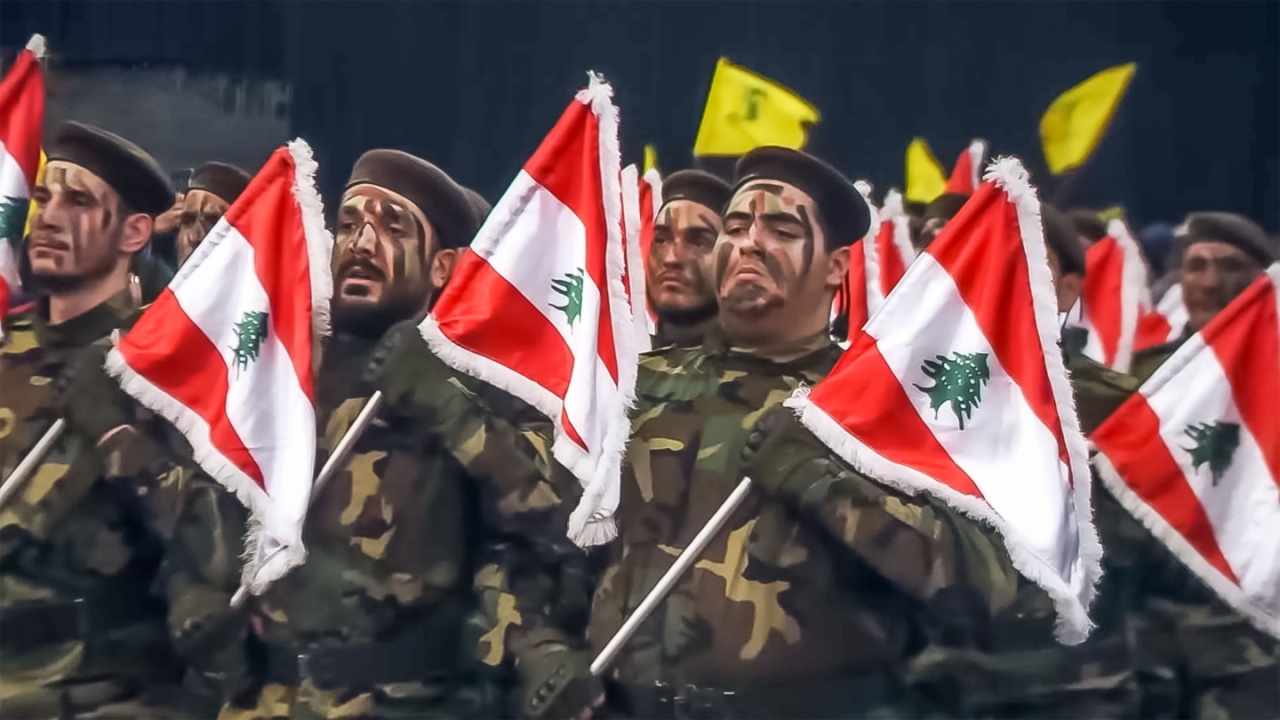
Lebanon may not be able to disarm Hezbollah fully. Still, the Israeli-American military campaign against Iran may now add momentum.
For over a year now, Lebanese President Joseph Aoun has been bluffing that he can disarm Hezbollah and remake the Armed Forces into a credible partner for ensuring the security and stability of Lebanon. He has exuded confidence, posturing as a man in control of his country’s fate, in the hopes that America might enter the fray with major financial, technical, and material support to dismantle Hezbollah’s military wing permanently. He may now get his wish, albeit indirectly, by way of the war in Iran.
Operation Epic Fury, America’s offensive against Iran that began on February 28, will likely lead to a transformation of the regime in Tehran, with the death of Supreme Leader Ali Khamenei and much of Iran’s senior defense and security leadership. Following the US-Israeli strikes on Iran’s nuclear missile sites last June, Iran’s nuclear facilities, missile program, military leadership, and civilian command and control will now be left in further disarray, and the remnants of the current regime will struggle to respond to the wave of protests that is likely to follow.
Iran was already losing influence in the region. Two and a half years of Israeli military campaigns all across the Levant, the Syrian transitional government’s decision to cut off Iranian access, and the diversion of Iranian drones and missiles to Russia for the Ukraine War have all contributed to the decline of Iran’s regional proxies. It should now be clear to all that Iran will not be able to return to its former status as a regional heavyweight for at least the foreseeable future.
Hezbollah’s Decline Has Left a Windfall for Lebanon
This couldn’t come at a better time for the Lebanese government, which had boxed itself into a corner, making promises it couldn’t keep. When Aoun assumed office in January 2025, he made disarmament of all militias a top priority, in accordance with the Taif Agreement, UNSCR 1701, and the November 2024 ceasefire terms negotiated between Hezbollah and Israel.
A series of bold pronouncements followed, in which Aoun intoned the rhetoric that the Trump administration wanted to hear, signaling his vision and resolve. US Special Envoy Tom Barrack has been clear and unequivocal since he first entered into consultations on disarming Hezbollah last summer that Lebanon must understand that the region is changing and develop a coherent vision for its place in that new regional order.
After one year in office, Aoun announced that Lebanon had secured the territory south of the Litani River—a state of affairs that seemed implausible. Israel decided to test that proposition with a series of targeted airstrikes on Hezbollah command posts and stockpiles in the south and along the Beka‘a Valley. The IDF has essentially proven over the last two months that if large quantities of weapons can still be destroyed, then the LAF has not yet done its job.
Matthew Levitt’s firsthand account in The National Interest of Hezbollah’s rearmament along the border with Israel paints a far more accurate picture of the realities on the ground than the Lebanese Government would want its Western partners to believe. And despite the fact that Hezbollah authorized Nabih Berri from the Amal Party to negotiate disarmament south of the Litani, Secretary General Na’im Qassim has openly boasted about his group’s refusal to disarm and launched a media campaign against Aoun, implying that his demands are a form of Israeli blackmail.
The government is nevertheless pushing forward with phase two, disarming Hezbollah north of the Litani River up to the Awali River just below Sidon, and proposing a leisurely timeline of four to eight months in the hopes that more international support will be forthcoming. An international donor conference for the LAF is planned for March 5 in Paris, where the Lebanese government will seek financial and material assistance to bolster its promise to double the number of troops deployed to the south.
Moreover, the Ministry of Interior has announced that parliamentary elections will be held on May 3, with Aoun’s approval. Lebanese commentators like Ragheb Jaber might be right that the war in Iran will lead all sides to postpone the elections. But it is just as possible that Aoun will use the opportunity to press his advantage in a showdown with Hezbollah for securing a popular mandate for his disarmament plans.
You have to admire the chutzpah. In truth, President Aoun and Prime Minister Nawaf Salam have little to show for their progress against Hezbollah, at a time when they hope to get more money from international partners and then enter into national elections. Lebanon just received $1 billion in aid at the 2024 Paris donor conference, including pledges of health care, fuel, and equipment for the LAF. And yet, those pledges barely made a dent in the most pressing of issues.
The average monthly salary for the LAF in terms of purchasing power before 2019 ranged between $800 and $1,200 (depending on rank and allowances), fell below $100 at the height of the financial crisis, and now stands at around $250 to $400. As for the elections, Hezbollah and its allies lost their majority in the 2022 election cycle, and signs of disorganization within the Free Patriotic Movement could once again hinder the parliamentary bloc. However, the Sunni factions are also in confusion about whether the Hariri family will participate and what alternatives they have should Sa‘ad Hariri stay on the sidelines.
How to Sustain the Momentum of Hezbollah’s Disarmament
Tehran is now sidelined. Any claims Hezbollah has made up until now regarding its ability to rearm and pose a credible long-term threat as the dominant military force in Lebanon should be examined. It is not just the group’s ability to exchange technical knowledge and receive advanced weaponry from Iran that will now be in question, but also a whole range of religious, educational, and social services that involved collaboration with counterparts in Iran.
Most of Hezbollah’s activities will surely continue to be sustained locally, with the help of international finance networks that can operate independently of Iran. These are not necessarily facts on the ground, but rather public perceptions. At the donor’s conference in Paris and at the polls in May, it might just be the broad perception of a Hezbollah that is weakened, isolated, and marginalized, without the hope of any significant external support, facing an unrelenting wave of Israeli airstrikes and the constant threat of renewed conflict, that matters most.
The United States will have to reassess its options for Lebanon. President Aoun will be hoping that America follows up its campaign in Iran with more forward-leaning statements about support for disarming Hezbollah, as a show of confidence in Aoun that the entire Lebanese public can see.
In turn, many of America’s Arab Gulf allies—as well as the dozens of Lebanese media commentators, policy advisors, and think tank experts resident in Washington, DC—will be pressuring the Trump administration to seize the moment and adopt a more proactive stance. The situation could quickly snowball, as policymakers listen to all of those voices and take to heart the notion that, without more robust American support, President Aoun has set himself up for failure.
The administration has the opportunity at the upcoming donor’s conference to signal its intentions without committing to a path that might involve more direct US involvement, such as deploying troops to Lebanon or transferring advanced equipment. That, and the ensuing chaos in Iran, may be enough of a push to get Aoun through to the finish line with the elections in May, if he can keep the process on track and actually convince his own people of his vision for Lebanon’s place in the new regional order. None of it is a solution for eliminating Hezbollah’s stockpiles of weapons in the short term. Still, it could set Lebanon on a new trajectory that increasingly peels away public support for the group.
About the Author: Joshua Yaphe
Joshua Yaphe is a senior fellow at the Center for the National Interest. He was previously a senior analyst for the Arabian Peninsula at the US State Department’s Bureau of Intelligence and Research and visiting faculty at the National Intelligence University. He has a PhD in History from American University in Washington, DC, and is the author of two books. Saudi Arabia and Iraq as Friends and Enemies: Borders, Tribes and a History Shared is available in paperback from the University of Liverpool Press, and Time and Narrative in Intelligence Analysis: A New Framework for the Production of Meaning is available in a free, open-access digital version at the Routledge website.
The opinions and characterizations in this piece are those of the author and do not necessarily represent those of the US government.