In Part 1, I discussed the transformation of the cross from a symbol of extreme cruelty to one of love. This radical shift prompts us to ask why God chose the cross and crucifixion as the central symbol and event, respectively, upon which Christian salvation rests. In Part 2, I will attempt to address the second question:
Why did God specifically choose the Roman Era to imbue the cross with a new meaning, and how did the Roman Empire’s extensive infrastructure facilitate the spread of this iconic symbol?
I begin the article with a key insight: God’s choice of the Roman cross includes full knowledge of the symbol’s future career. In other words, when God “chooses” the cross, He simultaneously sees the rough wood erected on top of Golgotha in AD 33, the carved crosses in the catacombs under Rome, the jeweled processional crosses of Byzantium, the simple wooden crosses found in rural chapels across the world, and even the gold pendants worn by modern-day believers in 2026. Because God perceives all history at once, He selected an execution method at one point in time that He knows will resonate visually and spiritually across all future cultures.
Indeed, this leads us to wonder why God, in the fullness of time, specifically chose the Roman Era to imbue the cross with a new meaning. The New Testament speaks of Christ’s coming “in the fullness of time” (Gal. 4:4). Theologians have long asked why this particular “fullness”—why first-century Roman Palestine? Two broad lines of explanation converge with this premise.
Historically speaking, the Roman Empire offered a unique combination. In terms of infrastructure, the Pax Romana (“Roman peace”) provided relatively safe travel and an extensive network of roads through which people from various backgrounds and locations traveled freely (Youvan, 2024). Koine Greek functioned as a common language across much of the Mediterranean, enabling swift missionary movement and the rapid spread of ideas—and symbols (Grokipedia, n.d.). However, such wealth and power also led to imperial brutality, as the same empire that built roads also built crosses. Crucifixion was a calculated strategy of public terror, reserved for rebels and enslaved people. It was designed to send a message: “This is what happens to those who challenge Rome!” (Hurtado, 2011).
From a providential standpoint, this intersection is quite striking: God chooses to reveal His kingdom under the height of pagan imperial power, at the very moment when the cross is a widely recognized symbol of Roman domination and fear. Ironically, the instrument that Rome uses as a public “billboard” of its power ultimately becomes the very object God uses as the universal “logo” of His mercy.
If Jesus lived during a more peaceful time or within a society that had a less violent culture, His death might not have had the same heightened paradox. This is because, at the height of the Roman Empire, crucifixion was deemed the ultimate form of social and political defeat, and to die on a cross meant being publicly cursed (echoing Deut. 21:23, later cited in Gal. 3:13). Thus, this kind of death would absolutely not be associated with divine favor or messianic success.
However, in allowing His only begotten Son, the Messiah, to be crucified, God ensures that any interpretation of Jesus’ mission as merely political is shattered. In other words, a Savior who dies through crucifixion cannot be mistaken for a mighty conqueror. Hence, the timing and method both expose the radical nature of the Kingdom of God—a kingdom whose victory comes not from killing its enemies, but from forgiving them.
God’s Victory in His “Upside-Down” Kingdom
To appreciate how shocking the cross was to Jesus’ contemporaries, we must recall what many first-century Jews expected from the Messiah.
During the Second Temple period, Jewish people lived under successive foreign powers—Babylonian, Persian, Greek, and Roman. Both scripture and tradition had nurtured the hope of the coming of a Messiah (the Anointed One) from the line of David, whom they hoped would restore Israel’s freedom, defeat its enemies, and establish a kingdom centered on Jerusalem, vindicating God’s people before the nations.
Apocalyptic writings of the era sometimes envision a warrior figure—a “Lion of Judah” who would overthrow oppressors and restore national glory. Under Roman occupation, which relied heavily on brutal crackdowns of its enemies and heavy taxation of its local populations, it was natural for many to expect a political liberator. Against that background, it made sense for people to think Jesus’ mission was to establish an earthly kingdom, punish Israel’s enemies, and shatter the heavy burden imposed upon them by the Roman empire. Indeed, people were waiting for a mighty general with a sword. Still, they were given a humble carpenter’s son who spoke of love and forgiveness through suffering—one who ultimately submitted to a crucifixion.
Jesus repeatedly confounds the people’s expectations by teaching that the Kingdom of God is like a hidden treasure—inciting images of a gentle, transformative presence rather than military upheaval. Jesus also warns the people that those who take the sword will perish by the sword. In fact, before Pilate, He even declares, “My kingdom is not of this world” (Jn. 18:36). However, this does not mean that His kingdom is purely private or internal. Instead, it means His kingship does not arise from the same logic as worldly power. It is not secured by violent conquest; it is revealed through self-giving love.
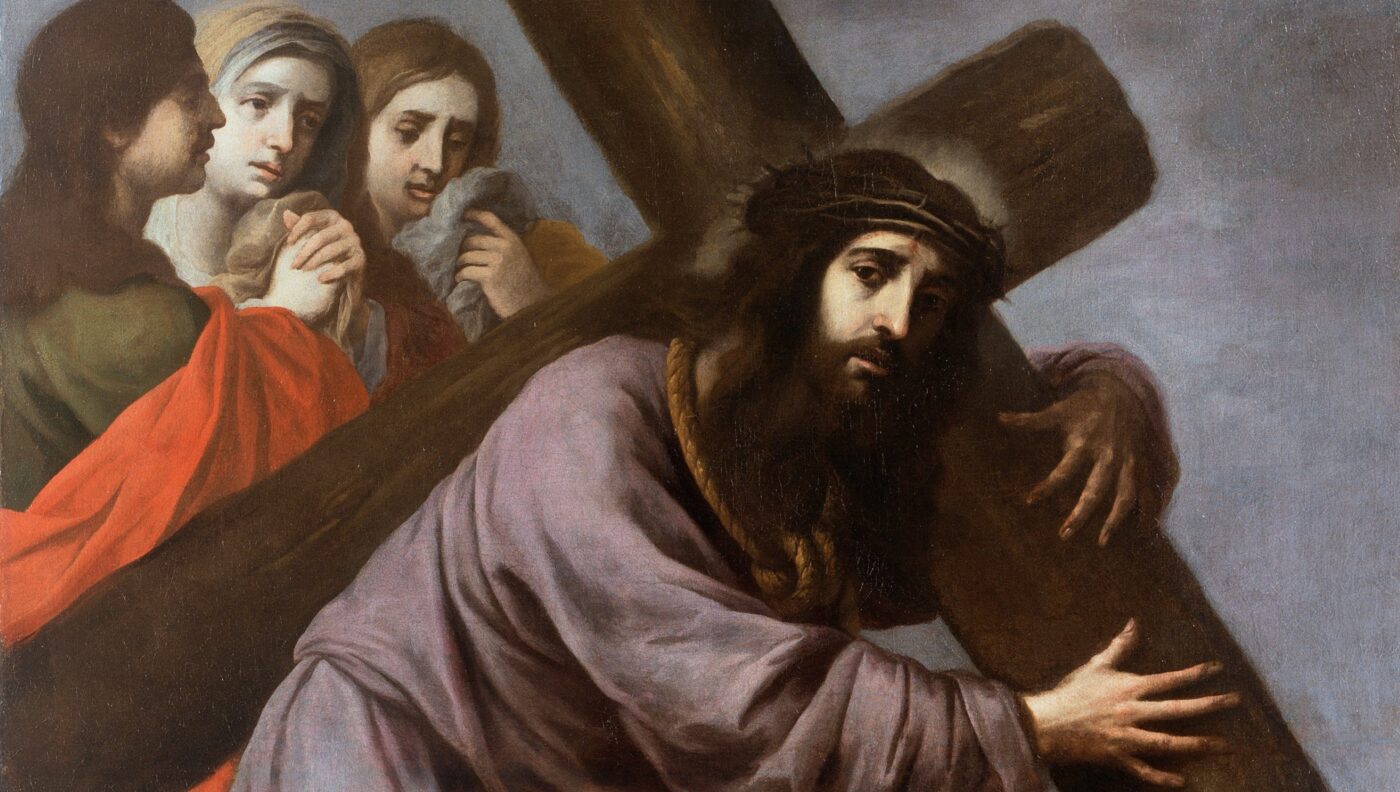
In many ways, the cross is the ultimate demonstration of that difference. Dying on a cross—a punishment reserved only for the most heinous criminals—might look like confirmation that Jesus was a failed messianic pretender. Instead, it became the very means by which God redeems His Kingship and triumph. Therefore, what appears to be total defeat becomes the representation of divine victory. The “Upside‑Down Kingdom” is thus unveiled, and Jesus’ crucifixion demonstrated that the most extraordinary power is the power to lay down one’s life, not to take others’ lives (Chapman, n.d.).
Such a dramatic reversal would have been less stark if Jesus had died by some less politically charged method. In this way, the Roman cross, attached to imperial authority and shame, becomes the perfect backdrop against which God’s radically different notion of power is displayed.
Many centuries later, we now recognize that Christianity spread throughout the Roman Empire, and the cross played an essential role in this dissemination. Today, as Christianity continues to spread worldwide, the cross has become inseparable from Christianity and Christian art. It has adorned buildings, manuscripts, clothing, and personal seals, and has even taken on countless cultural forms, such as Celtic, Coptic, and Latin crosses, while remaining immediately identifiable.
Having addressed the first two questions that this article has set out to answer, I have laid down the theological foundation of this article’s main argument through the ideas of St. Thomas Aquinas and St. Augustine, helping us view the cross as an expression of God’s power, providence, and eternal view of history. I have also addressed why God specifically chose the Roman Era as the period in which the cross would take on a new meaning and relevance for Christianity.
With this, I conclude Part 2 by reiterating what is perhaps the most stunning proof of the cross’s symbolic transformation: what was once a Roman “death machine” is now a universally recognized symbol of God’s love.
Editor’s Note: This is the second of three articles on The Cross, the Ultimate Symbol of the Faith: How a Torture Device Became a Global Symbol of Peace, Hope, and Redemption. Tune in next Friday to explore how the Cross became a universal symbol of Christianity.
Image from Wikimedia Commons