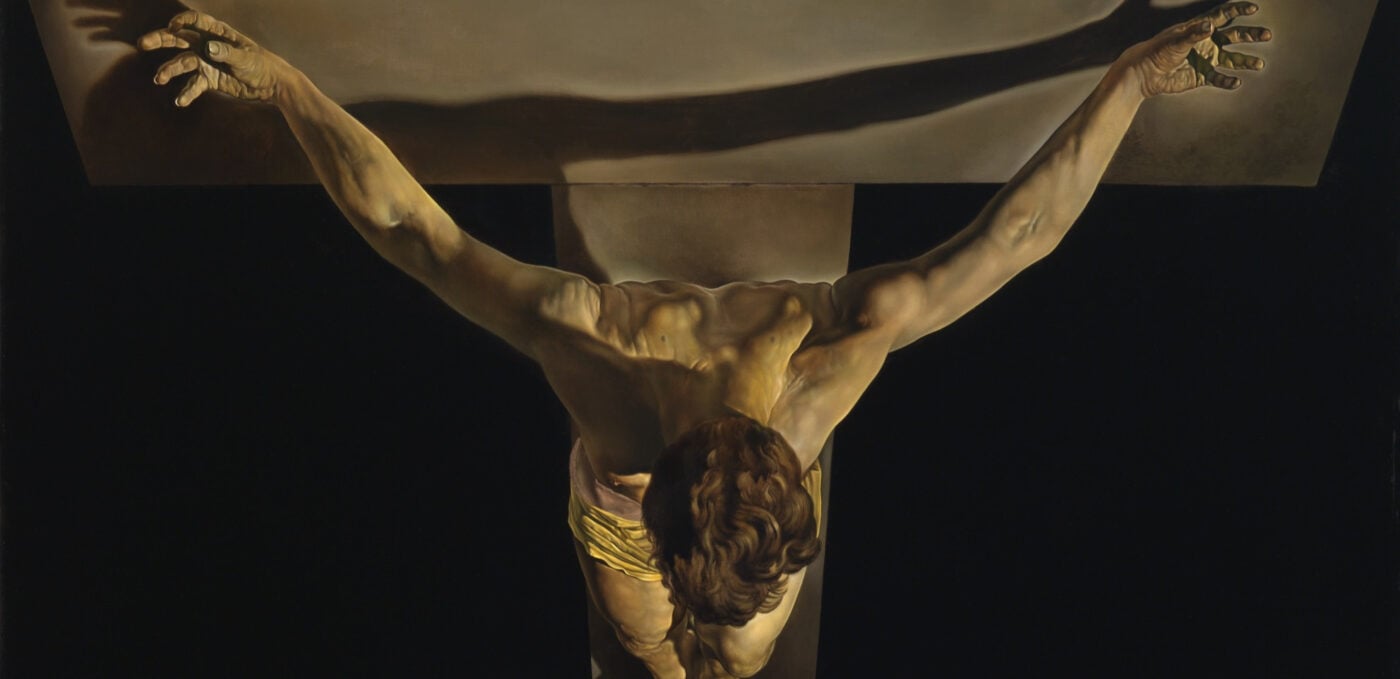
Among all symbols that have passed through human history, none is more paradoxical than the Christian cross. During the Roman Empire of the first century, the cross was not a religious emblem. It was an instrument of state-sanctioned terror—a humiliating form of death reserved only for the most despised of criminals. Furthermore, it was intended to break not just the body but also the human spirit, crushing all hope in the population.
Today, the cross is universally considered a religious icon, and its transformation from a symbol of extreme cruelty to one of love raises a profound theological and historical question: Why was the cross chosen? Of all the methods of execution known to man, including burning, beheading, stoning, hanging, the guillotine, the firing squad, and the modern electric chair, why did the central event of Christian salvation hinge upon this particular device—one of the most public and excruciating methods of execution possible?
To begin, let me focus on a specific claim advanced in this essay: that the transformation of the cross from an instrument of terror into a universal symbol of grace is an intentional act of Divine Providence, thereby emphasizing its role as a global emblem of faith, hope, and love. To trace this claim, I will follow a fourfold movement that answers the following questions:
- To lay down the theological foundation of this article’s main argument, how did philosophers such as St. Thomas Aquinas and St. Augustine help us view the cross as an expression of God’s power, providence, and eternal view of history?
- Why did God specifically choose the Roman Era to imbue the cross with a new meaning, and how did the Roman Empire’s extensive infrastructure facilitate the spread of this iconic symbol?
- Why did God choose the cross, and how has the cross functioned as a universal icon of Christianity, eventually growing into a worldwide symbol of hope, faith, and eternal redemption?
This article argues that underlying all of these ideas is the notion that God Himself chose the instrument of Jesus’ death, for it was the only method of execution in human history that could be transformed into a universal sign of peace and human salvation.
The Power of God As Revealed Through the Cross
In Part 1 of this article, I will examine aspects of the works of Sts. Aquinas and Augustine, as well as the Paradox of Divine Strength.
Any argument about why God “chose” the cross must begin with a discussion of the nature of God’s power and providence. The cross is not merely a historical accident that God made the best of. In classic Christian thought, the cross is the central instrument of salvation through which Divine Power manifests itself in human weakness.
For St. Thomas Aquinas, “the word of the cross is the power of God.” He takes his cue from St. Paul, who said, “The word of the cross…is the power of God” (1 Cor. 1:18). In the Summa Theologiae (especially Summa III, Q. 25 and Q. 46), St. Thomas explains that Christ’s crucifixion is not just the tragic end of a righteous life, but the means through which human sin and death are overcome in accordance with God’s divine wisdom. God’s omnipotence is most clearly expressed in His ordering of all things toward their ultimate good (Summa I, Q. 22). God’s power is so great that He can permit evil because He can draw from it a greater good that would not otherwise exist.
The cross is the most extreme example of this. Historically, crucifixion is among the most “deformed” inventions of human cruelty; it is drawn out, humiliating, and excruciating. Yet, despite its grotesque qualities, God did not abolish it from history; instead, He elevated it to what it is today by allowing His own Son to endure this specific kind of torture. With this very act, He has transformed the cross from a symbol of ultimate disgrace into a fundamental sign of victory and redemption.
St. Thomas Aquinas emphasizes that what the world previously perceived as shame and defeat has been “endowed with Divine power,” because it became the chosen instrument by which humanity is saved. The “weakness” of Christ on the cross is, in fact, the manifestation of God’s deepest strength: the power to conquer sin not by overcoming violence, but by subsuming oneself under its control through self-sacrificial love.
Thus, the cross is not an incidental background detail in the story of salvation; it is a deliberate, providentially chosen means—already foreseen, willed, and integrated into God’s eternal plan.
St. Augustine’s Confessions (Book VII, Chapter 8) brings another dimension to this discussion: the language of deformation and reformation. For St. Augustine, sin is not a mere legal misstep; rather, it is a deformation of the soul. This can be likened to the soul deviating from the path set by God, the trustworthy source of beauty and order. Therefore, God’s power is manifested not in destruction but in healing and recreating what has been deformed. In this sense, grace is the divine power that takes what is broken and restores it into a state of harmony.
Furthermore, the cross can be considered a symbol of this dynamic because crucifixion is a “deformed” reality—a grotesque misuse of human ingenuity. By making Jesus submit to it, God allows even this most twisted artifact of human violence to be “reformed” into an instrument of grace. Hence, the very instrument of maximum human cruelty becomes the instrument from which flows the healing of the world.
Furthermore, for St. Augustine (Book XIII, 17.20), God’s sovereignty extends so far that He also has the power to convert man’s worst evils into instruments of His purpose, and the use of the cross is the culminating example of this. Hence, through God’s Divine Providence, what is considered the most hideous device of death becomes the most beloved symbol of life.
Hence, the works of Aquinas and Augustine, together, support the premise that God’s power is revealed in turning the worst of human inventions—the cross—into the ultimate vessel of His grace and love for us.
God’s Eternal “Now”
As I have explained above, the transformation of the cross is not a historical accident. Along this line, I also argue that the timing of Christ’s crucifixion is not an accident either. But why did God choose the first-century Roman world, and not some earlier or later era? Here, Augustine’s meditation on time provides a crucial lens for addressing this question.
At this point, we can take a look at St. Augustine’s notion of the “Eternal Now.” In Confessions (Book XI, Chapter 13, Section 16), St. Augustine discusses the nature of time, focusing on how humans experience it linearly as past, present, and future. In other words, for us humans, the past no longer exists, the future does not yet exist, and the present is in the here and now. Thus, time, for us, is a succession. God, however, is not within this succession. As time itself is part of creation, God, as the Creator, exists beyond it. St. Augustine concludes that God inhabits an “ever-present now,” in which all moments of created history are simultaneously “present” to Him.
When applied to Christ’s crucifixion, the abovementioned notion means that God does not “wait” in anxiety to see what will happen on Good Friday. From God’s point of view, the entire span of history—from Abraham to the Roman Empire to the Middle Ages to our own century—is “eternally present.” Furthermore, when God wills His Son to take on a human form and be crucified at a particular historical moment, this decision is not reactive but eternally integrated into God’s single, timeless act.
Editor’s Note: This is the first of three articles on The Cross, the Ultimate Symbol of the Faith: How a Torture Device Became a Global Symbol of Peace, Hope, and Redemption. Tune in next Friday to explore how the Cross went from a murder device to a banner of peace.
Image from Wikimedia Commons