The B-1 Lancer program was curtailed in the 1970s as an unnecessary waste of taxpayer dollars. That changed when Ronald Reagan entered office.
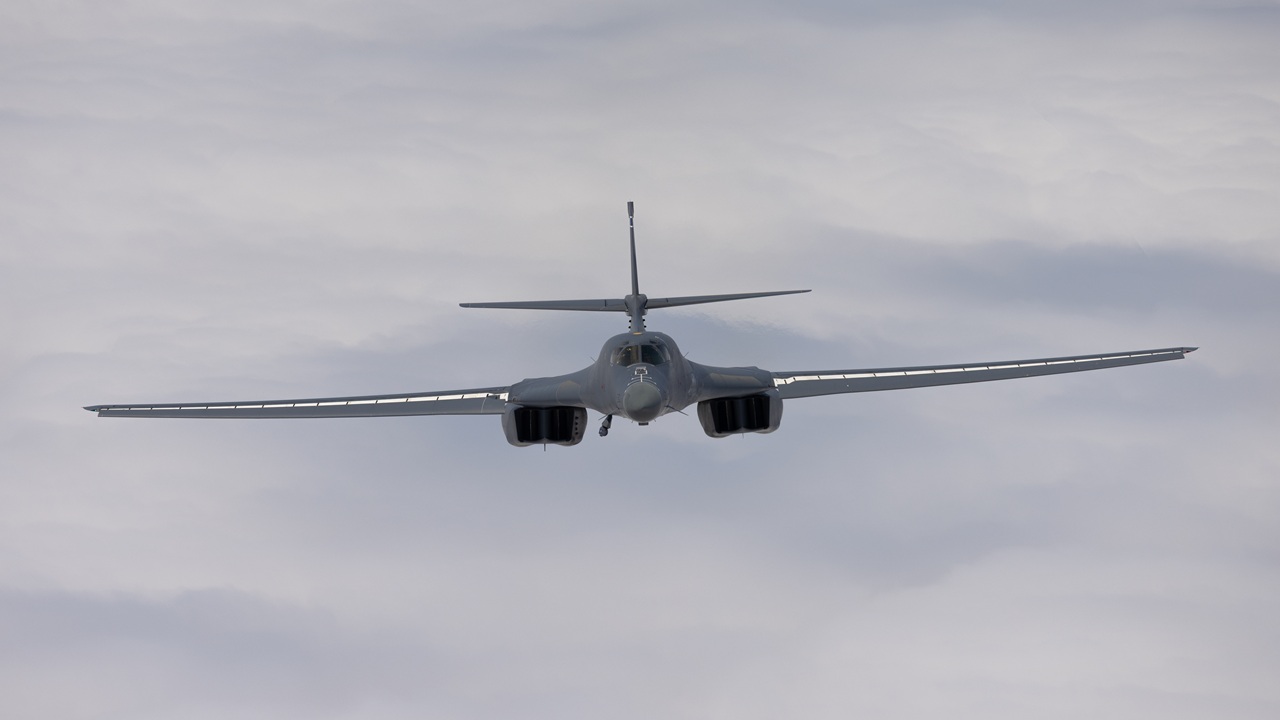
The B-1B Lancer was conceived as a key leg of America’s nuclear triad. Swept-swing and supersonic, the B-1B gave the US Air Force a deep penetration strike option designed to break behind Soviet lines. But today, the bomber flies only conventional missions. The transition—from a nuclear to a conventional platform—reflects a shift in arms control, global strategy, and post-Cold War realities.
Why Is It Called the “B-1B”?
The original B-1 program has its roots in the “fast bomber” movement of the 1960s. Conceived to penetrate Soviet air defenses at high speed and low altitude, the bomber was intended to carry nuclear gravity bombs and cruise missiles. The aircraft was designed with an emphasis on survivability through speed, terrain masking, and payload. Still, amid spiralling budgets and a financial crisis in the United States, the B-1A program was ultimately cancelled.
The Reagan administration revived the program as the B-1B in 1981 amid a broader defense spending increase. The updated B-1B bomber had a reduced radar cross-section (RCS) relative to the B-1A, but a lower top speed. The B-1B was optimized for low-level penetration, entering service alongside the B-52 (and was later joined by the emerging B-2).
When the Cold War ended, the US need for a standing nuclear force was dramatically reduced. The strategic environment shifted away from massive nuclear exchange. Simultaneously, advances in stealth technology made the B-2 the favorable platform for nuclear penetration. So maintaining multiple nuclear-capable bombers became redundant.
The B-1B Lancer’s Specifications
- Year Introduced: 1986
- Number Built: 104 (45 still in service)
- Length: ~146 ft (44.5 m)
- Wingspan: ~79 ft swept / ~137 ft extended (24 m / 41.8 m)
- Weight (MTOW): ~477,000 lb (216,400 kg)
- Engines: 4× General Electric F101-GE-102 turbofans
- Top Speed: ~Mach 1.25 (~830 mph / ~1,335 km/h) at altitude
- Combat Radius: ~3,000 mi (4,800 km)
- Range (Unrefueled): ~7,500 mi (12,000 km)
- Service Ceiling: ~60,000 ft (18,300 m)
- Payload (Internal): ~75,000 lb (34,000 kg
- Crew: 4
The B-1B Is a Great Bomber—Even Without Nuclear Weapons
In the 1990s, START-era arms control agreements reshaped bomber roles. Policy decisions removed nuclear wiring and certification from the B-1B so that the bomber would count as a conventional platform in adherence with the treaties. The conversion reduced the treaty burdens—but still preserved a useful strategic bomber, albeit in a more limited conventional role.
Technically speaking, the conversion featured the removal or disabling of nuclear-specific hardware. The weapons bays were reconfigured for conventional bombs, and later, precision-guided munitions. The software and avionics were updated to support conventional targeting. Still, the B-1B retained its massive payload capacity, which became entirely non-nuclear.
From a tactical perspective, the B-1B was converted into a “bomb truck” for precision strikes. It excelled at long loiter times, large mixed payloads, and close air support and dynamic targeting. The platform was used heavily in Afghanistan, Iraq, and Syria.
Strategically, the shift to conventional reflected US confidence in submarine-based nuclear deterrence and stealth bombers for nuclear penetration, allowing the B-1B to stay relevant in limited wars. The move demonstrated the flexibility of Cold War platforms in a post-Cold War conflict.
The B-1B’s conventional focus did increase airframe wear and tear, however, due to low-level flights and a higher operational tempo. The prestige of the program diminished, too, once the shift from nuclear penetrator to bomb truck was complete. The program’s overall strategy shifted, of course, from single, catastrophic strike planning to sustained, iterative strike campaigns with an emphasis on responsiveness, payload volume, and integration with joint forces. Today, the B-1B is used for standoff weapons and show-of-force missions—and is gradually being drawn down as the B-21 comes online.
In sum, the B-1B’s transition was the result of arms control and geopolitical shifts. And while the B-1B barely served in the capacity it was designed for, the platform evolved admirably, carving out a respectable service career through multiple theaters in the 21st century.
About the Author: Harrison Kass
Harrison Kass is a senior defense and national security writer at The National Interest. Kass is an attorney and former political candidate who joined the US Air Force as a pilot trainee before being medically discharged. He focuses on military strategy, aerospace, and global security affairs. He holds a JD from the University of Oregon and a master’s in Global Journalism and International Relations from NYU.
Image: Shutterstock / Ranchorunner.