Kazakhstan’s abundant energy resources and growing financial sector stand to gain from Israeli technology and increased investment from the GCC and the United States.
President Donald Trump announced the accession of Kazakhstan to the Abraham Accords after a call between Kazakhstan’s President Kassym-Jomart Toayev and Israeli Prime Minister Benjamin Netanyahu earlier this month.
The deal is of more geopolitical consequence than at first meets the eye. Even if, as some have maintained, on a political level, it is largely symbolic—the underlying fundamentals and logic remain strong. This agreement has the potential to have important economic and financial consequences.
Kazakhstan has perhaps the most vibrant economy in Central Asia. Over the years, it has become an important hub in a “New Silk Road” between China and Europe. The Trans-Caspian International Transport Route (TITR) or the Middle Corridor, which links China and Europe, moved 4.5 million tons of cargo last year and is set to transport 5.2 million tonsthis year.
Kazakhstan Takes the First Step Among Former Soviet States
For Kazakhstan, joining the Abraham Accords differentiates its foreign policy from that of other former Soviet nations. Azerbaijan has been rumored to be weighing joining the Abraham Accords, as has, to a lesser extent, Uzbekistan. Azerbaijan is already one of Israel’s closest friends in the Muslim world. Yet, Kazakhstan has already had a relatively normal relationship with Israel. There are tens of thousands of Israelis with close or personal ties to Kazakhstan.
Energy Implications from Kazakhstan Joining the Abraham Accords
The deal has important potential energy ramifications, however, and may serve as a closer catalyst between Kazakhstan, Israel, the Gulf Cooperation Council (GCC), and the United States on a number of economic issues. Kazakhstan is already vital to the “C5+1 framework,” designed to foster regional integration, trade, and climate resilience across the region.
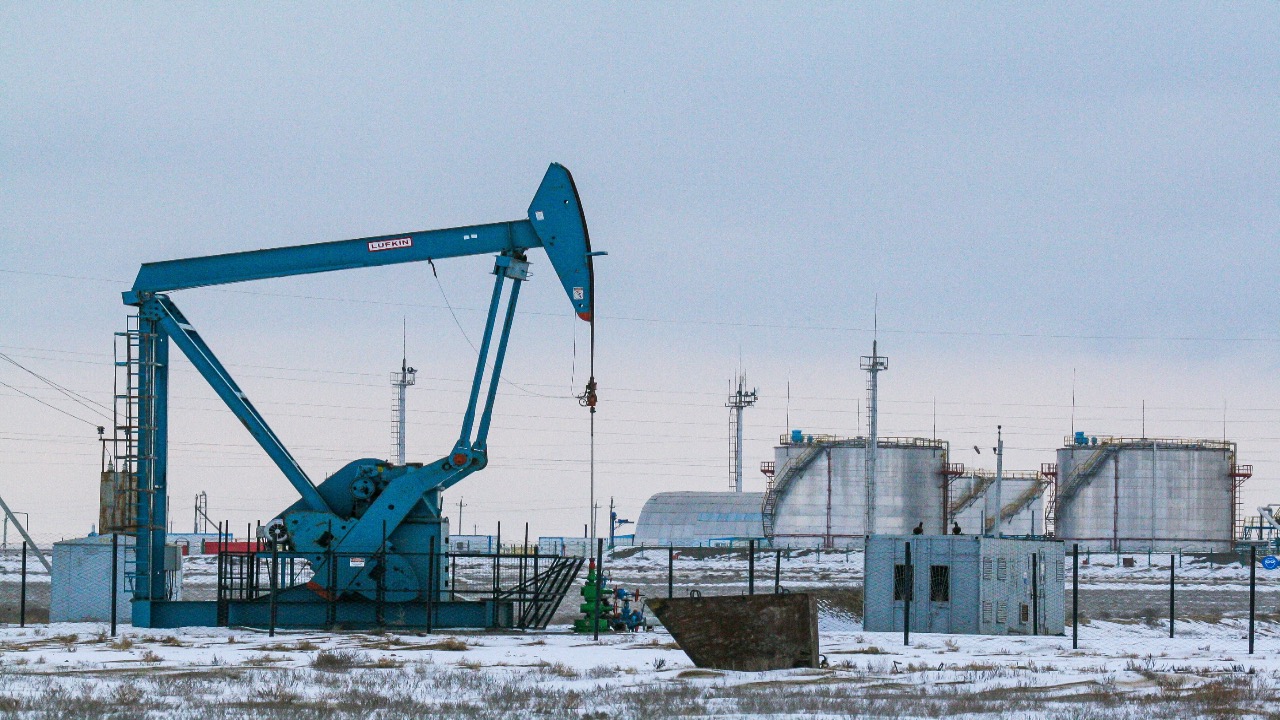
Like other Abraham Accords signatories, Kazakhstan is a major energy producer. However, Kazakhstan’s energy portfoliois more complete, including significant deposits of hydrocarbons (oil, gas, and coal) as well as the second-largest uranium reserves in the world, a vital element for nuclear fission. Kazakhstan’s uranium accounts for more than 40 percent of global production. Significantly, it supplies roughly 25 percent of US needs, a figure that could expand in the aftermath of the Abraham Accords.
The energy transition, for which Kazakhstan holds rare earths in abundance—with exports to China increasing five-fold—opens new opportunities for these crucial minerals to flow to the United States, Israel, and the GCC.
Participation in this new international grouping paves the way for closer access to Israeli technology, Gulf States capital, and potential investment from US companies. Chevron and ExxonMobil have been by far the largest investors since the 1990s. Having already invested over $60 billion in oil and gas, they are paving the way for further expansion.
Kazakhstan hopes that much of this will be directed toward the sustainable transition. The country has set targets of sourcing 15 percent of its energy from renewables by 2030 and 50 percent by 2050.
Kazakhstan Is an Emerging Financial Hub
Kazakhstan stands out as a large energy producer that has also developed Central Asia’s largest financial sector. The Astana International Finance Centre offers tax incentives that have attracted over 4,600 companies from over 80 countries, including more than 60 US firms. Though Kazakhstan already draws 80 percent of US investment in Central Asia, it can always aim for more.
Trump can also count the recent $4.2 billion locomotive deal between Wabtec and Kazakhstan Temir Zholy as a coup, a major agreement by any measure. Similar large deals with Israel may be in the offing. There is no doubt that Kazakhstan could learn a lot from Israeli dry irrigation.
A Broader Eurasian Reorientation Is Taking Place
Ultimately, Kazakhstan’s accession to the Abraham Accords underscores a deeper strategic realignment underway across Eurasia. Central Asia increasingly sees its future in diversified alliances rather than in inherited geopolitical dependencies from the Soviet era. Officials in many countries are showing an interest in the Middle East, Africa, and beyond. Such interests, a generation ago, were unnurtured.
The Abraham Accords offer more than handshakes and photo-ops. They open doors—to Israeli innovation, Gulf capital, and a more balanced partnership with Washington that plays to Kazakhstan’s strengths.
The Abraham Accords under President Trump have the potential to be one piece of an emerging architecture of peace, energy cooperation, and economic resilience stretching from the Gulf and now to the steppes of Central Asia.
About the Author: Joseph Hammond
Joseph Hammond is a journalist and former Fulbright public policy fellow with the government of Malawi. He has reported from four continents on topics ranging from the Arab Spring to the M23 rebellion in the Eastern Congo, with bylines in Newsweek, The Washington Post, Forbes, and more. He has contributed to The National Interest since 2016. Hammond has been a recipient of fellowships organized by several think tanks, including the National Endowment for Democracy, the Atlantic Council of the United States, the Heinrich Boll Stiftung North America Foundation, and the Policy Center for the New South’s Atlantic Dialogue.
Image: Pavel Mikheyev/shutterstock