If New Delhi cannot rely on Washington to balance against China, it will have to seek partnerships elsewhere.
President Donald Trump’s recently released National Security Strategy (NSS) has understandably set off alarm bells among American treaty allies. However, it has also caused concern in countries like India, which had become accustomed to a world order in which the United States was an engaged global power for the last 78 years. Ever since the end of World War II, American grand strategy has centered around preventing the rise of a peer competitor, first the Soviet Union and later China. This involved the creation of a lattice of global alliances and partnerships with the United States, providing a security underpinning and encouraging free trade.
For over two decades, successive American presidents have stated that the United States no longer seeks to be the global policeman. And yet, in every NSS, the strategy remained, by and large, the same. The latest NSS appears to reverse course on many of these long-held views. There is an inward orientation for rebuilding domestic industry (rather than friendshoring or offshoring). Instead of supporting globalization, the document advocates for the weaponization of commerce through tariffs and trade restrictions. In place of an America with global interests, it puts forth the vision of an America primarily focused on the Western Hemisphere.
In 1946, diplomat George Kennan sent his famous “Long Telegram” from Moscow, which provided the ideological basis of American strategy during the Cold War. At a time when the United States faces a similar peer competitor, China, a similar diagnosis is needed. However, the challenge from China is not portrayed as a clash of worldviews or ideologies. Instead, it is put forth in the context of rebalancing trade, preventing technology theft, and bringing back American capital. Interestingly, Chinese analysts appear to have interpreted the NSS not as retrenchment by the United States but simply as a reorganization so that the United States can rebuild its capabilities and then push back against China.
Every country’s priority is its own national interests, and it is understandable that the United States seeks to rebuild its domestic industry. Still, there are inherent limitations to this policy in today’s world, where it is difficult to live in splendid isolation. Finally, there is a difference between interference and involvement in the global order. Nature abhors a vacuum, so does the global order.
American security allies in Europe and Asia are understandably concerned about the ramifications of the NSS. However, even a non-treaty ally like India faces challenges. In the latest NSS, alliances and partnerships are no longer chess pieces positioned to contain the enemy; they are investments whose returns are constantly re-evaluated. Even a non-treaty ally, India, faces challenges. In the latest NSS, alliances and partnerships are no longer chess pieces positioned to contain the enemy; they are investments whose returns are constantly re-evaluated.
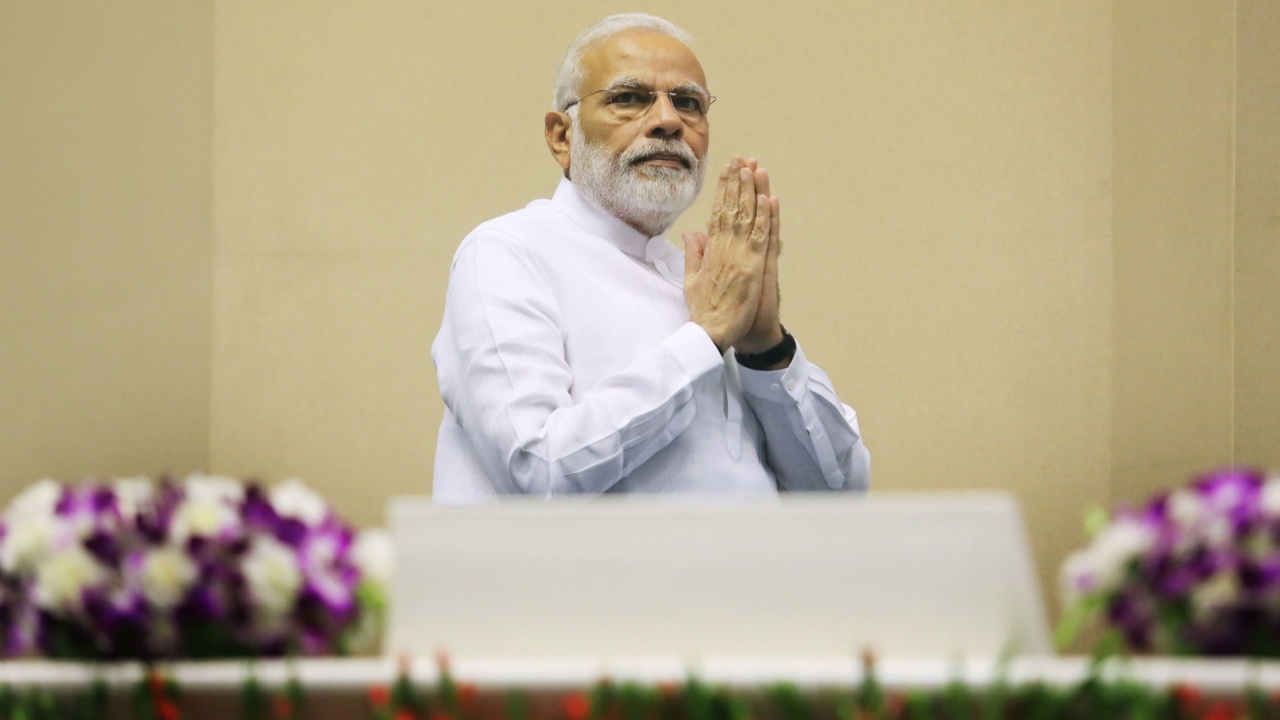
After three and a half decades of sustained American engagement in a strategic partnership with India, the era of strategic altruism appears to be over. The last five NSSs bet on India’s rise in the hope that it would serve as a counter to China, both in its neighborhood and beyond. The February summit between Prime Minister Narendra Modi and President Trump and announcements of high-sounding initiatives notwithstanding, tariffs and trade have dominated India-US relations over the past year.
The NSS outlines a smaller American presence in Asia. The United States will still respond to China’s rise, but mainly from a distance, using the First Island Chain and trade leverage. This creates challenges for Indian strategists who had hoped for continued American support in helping India deal with its China challenge. Ever since the 2020 Galwan Valley clashes between India and China, the United States has provided military and intelligence support to India. The United States-led Indo-Pacific strategy sought to provide similar support in the maritime realm. Moving forward, instead of support, the United States may expect India—and other partners—to address their challenges on their own as part of burden-sharing.
Something similar has become visible on India’s western border as well. The second Trump administration broke a two-and-a-half-decade tradition whereby, after any terror attack inside India, every American president supported India and applied pressure on Pakistan. The second Trump administration has feted the army chief and improved relations with Pakistan, instead of applying pressure on it. For India, this is a reversal of the Cold War, when the United States ignored Pakistan’s excesses and damaged relations with India.
Ever since the end of the Cold War, American policymakers have viewed India as a long-term investment: its size, location, democratic values, and economic and military potential would create a counterweight to China. The civil nuclear deal, India’s centrality to the Indo-Pacific strategy, the Quadrilateral grouping, and the co-production and co-development of civilian and defense technology are all reflections of this bet on India by successive American presidential administrations. The Trump 2.0 administration, however, has a more transactional perspective towards relationships, including with India.
Going back eight decades, the United States has historically supported multilateralism and multilateral institutions, whether the UN agencies or the Bretton Woods institutions. The first Trump administration was skeptical of multilateralism and preferred minilateral arrangements. That has continued under Trump 2.0 and is reflected in the NSS paper as well. The officially released version of the NSS does not refer to a new grouping of countries called “Core Five” that would comprise the United States along with China, Russia, Japan, and India. If that happens, it will reflect recognition of a multipolar world order in which India is one of the poles. Whether that happens and what this grouping would be expected to do is yet to be seen.
Notwithstanding the possibility of being part of a Core Five grouping, the geopolitical and geoeconomic events of 2025 have brought to the fore India’s challenges on multiple fronts.
For over a decade, Indian policymakers have feared a G-2—a bipolar global order where the United States and China have their own spheres of influence. In such a world, India falls under the Chinese sphere of influence, and that is anathema to Delhi.
After over two decades of gradual alignment with the United States, the actions of the second Trump administration have led India to revert to its default preference for strategic autonomy. The Indian prime minister’s attendance at the China-dominated Shanghai Cooperation Organization (SCO)’s Tianjin summit reflected India’s increased focus on multi-alignment, as did the high-level summit meetings with the Chinese and Russian presidents.
The tariff tensions with the United States, the US response to the India-Pakistan conflict, and the NSS will all have sent a message to Beijing that India is no longer the strategic partner that it was for over two and a half decades, and that will change how China views India. There are two paths China could take: improve relations with India at a time when it is under pressure from the United States on trade. We can see this in the increase in Indian exports to China in 2025. It could also result in a resumption of China’s salami-slicing policy along the India-China border if Beijing believes the United States will no longer be as involved elsewhere in the world.
After a gap of four years, Russian president Vladimir Putin visited India for the 23rd annual India-Russia summit. Considering that both sides wanted to send a message to the United States, the summit was remarkable for what was not announced. High rhetoric and symbolism aside, there were no big-ticket defense deals. The summit presented two narratives simultaneously, and neither succeeded in completely negating the other.
The India-Russia relationship has survived, and despite the US tariffs on India’s purchase of Russian oil, India is not going to break off a relationship with its continental balancer against China. However, the relationship remains primarily defense and energy-centric, and even though the Russians want to broaden the scope of commercial engagement, it will take time.
From India’s prism, therefore, this is a disconcerting world order. There is a disengaged, transactional, and semi-isolationist America, a weak Russia that remains beholden to India’s primary threat, and a powerful China. For the last few decades, Indian policymakers had hoped that, just as the United States had helped build China’s economic, military, and tech miracle, they would do the same for India. That appears unlikely right now, which means the responsibility for building India’s hard power capabilities rests entirely on Indian policymakers.
If India seeks to become an Asian and global power in the next two decades, it needs a new “Look East” and “Act East” policy whereby it seeks to build upon partnerships with Europe, the Middle East, Southeast Asia, and Northeast Asia. At a time when the major power that was sympathetic to India is scaling down its strategic commitment, it would behoove India to be truly autonomous in its strategy.
About the Authors: Aparna Pande and Vinay Kaura
Aparna Pande is director of the Initiative on the Future of India and South Asia at the Hudson Institute. She has contributed to The American Interest, The Hindustan Times, The Times of India, The Live Mint, Huffington Post, The Sunday Guardian, The Print, and RealClearWorld. Dr. Pande’s book’s include Explaining Pakistan’s Foreign Policy: Escaping India (Routledge, 2011), From Chanakya to Modi: Evolution of India’s Foreign Policy (Harper Collins, 2017), Routledge Handbook of Contemporary Pakistan (Routledge, August 2017), and Making India Great: The Promise of a Reluctant Global Power (Harper Collins, 2020).
Vinay Kaura is assistant professor in the Department of International Affairs and Security Studies at Sardar Patel University of Police, Security & Criminal Justice, Rajasthan, India. He is also an adjunct faculty on the Program on Terrorism and Security Studies at the George C. Marshall European Center for Security Studies in Germany and a non-resident scholar for Afghanistan and Pakistan Studies at the Middle East Institute in Washington, DC.
Image: Exposure Visuals / Shutterstock.com.