Rafael Mangual, Renu Mukherjee, and Santiago Vidal Calvo discuss New York City’s mayoral election and the demographic groups that propelled Mamdani to victory. They also examine the changing electorate and what the results could mean for progressive policies in other cities.
Finally, a reason to check your email.
Sign up for our free newsletter today.
Audio Transcript
Rafael Mangual: Hello and welcome to another episode of the City Journal Podcast. My name is Rafael Mangual. I am your host and I’m so happy to be joined by my wonderful colleagues, Renu Mukherjee and Santiago Vidal Calvo. Welcome to the show, guys. How are you?
Renu Mukherjee: Good, thanks for having us.
Santiago Vidal Calvo: Yes, thank you for having us.
Rafael Mangual: Always great to be with you guys. I am happy to finally be back in New York after getting stuck on a bunch of planes, trains, and automobiles this past week with some travel. Where are you guys? Are you both in D.C. now?
Renu Mukherjee: Well, I have moved to D.C. from New York, but right now I’m actually in Northern Massachusetts at my parents’ house because I was in Boston for a wedding this weekend and I also had air travel issues. My flight got canceled, so I will be taking an eight-hour long train ride from Boston to D.C. very late tomorrow.
Rafael Mangual: I am actually going to DC tomorrow. I am testifying before the House Oversight Committee on Wednesday and I have a bunch of meetings in the office tomorrow. So I’m going to go from New York down to D.C. tomorrow night and then testify Wednesday afternoon. What about you, Santiago? You’re in D.C., right?
Santiago Vidal Calvo: No, actually, I moved from D.C. to Texas like three months ago.
Rafael Mangual: Nice! Where in Texas? I’m a big fan of the Lone Star State.
Santiago Vidal Calvo: Oh yeah, College Station, Texas, House of A&M. I’m doing my PhD over here and while I do not have any travel plans, the city was collapsed this weekend because we had a game against, I think it was South Carolina and we are 10-0, which I believe is great. We haven’t been undefeated since like 1992. I became an Aggie fan now.
Rafael Mangual: Very cool, very cool. I’m actually a huge fan of the Texas A&M baseball program, which has one of my favorite college baseball traditions, which is when an opposing pitcher walks a batter, particularly on four straight pitches, for the rest of the time until he throws a strike, the crowd will count ball five and then ball six and then just keep going. And it’s one of like the worst experiences that particularly young and weak minded pitchers have when they play Texas A&M, which is kind of cool. Actually, I was just at A&M’s law school speaking a couple of weeks ago in Fort Worth, which was nice.
Well, I guess I’m the only one here in New York, which explains why I’m probably the saddest of the three of us at the moment, because I cannot stop thinking about the most recent mayoral election and having a hard time kind of understanding how it happened. I think lots of people who are, you know, unhappy with the result, have a lot of the same questions that I have, which is why I wanted to have the both of you on the show today, because I think that you both have really brilliant insights, particularly into the demographics behind Zohran Mamdani’s victory. And so maybe we can just kind of start down that road right now. I mean, one of the most interesting charts that I saw in the wake of the election result was that Mamdani overwhelmingly won people who had been in New York City for less than 10 years. And I think there are sort of two types of person that fit into that category. You have the like transplant, you know, from the Midwest or from the West or from the South, you know, who comes to New York City for college and stays or, you know, a job opportunity. But then you also have a pretty sizable portion of that population who is just not American, right? Who are here for less than 10 years because this is where they settled from some other part of the world. And that raises some interesting questions, which is that if that population has grown in New York City and has altered our politics in some significant kind of way, what does that mean for the future of electoral politics in New York and maybe even beyond?
So, Renu, I want to start with you because one of the other big stories of the election was that Mamdani turned out a huge number of people that just wouldn’t have otherwise voted, at least had in recent elections, particularly in the South Asian community, that seems to be the case. And you’ve done some really interesting writing about this. And so I just want to give you an opportunity to educate us on what exactly is going on.
Renu Mukherjee: Yeah, so Ralph, think South Asians touch both things that you just mentioned on how the electorate has changed in New York City drastically over the last few decades. And also the fact that you have immigrants, have recent arrivals, you have people that are low propensity voters typically really propelling him to victory in this most recent election. So the South Asian population in New York City has really sort of exploded over the last decade or so, the last five to 10 years.
Rafael Mangual: How big is it?
Renu Mukherjee: Right now, South Asians represent approximately 5 percent of New York City’s population. And so in the grand scheme of things, they’re a very small voter block within the city, or rather, you know, population block within the city, and even a smaller percentage of that 5 percent are eligible to vote. But in this most recent election, South Asian voters combined with other demographic groups that Santiago will get into as well, really propelled Zohran Mamdani to victory. And what’s so interesting about these voters is that it’s not like they had just arisen in this most recent election cycle despite being low propensity, but Mamdani had really been cultivating their votes from when he first ran for state assembly in 2020 and so he’s, this is effectively the results of five years of outreach that he and his team have engaged in that really seemed to pay off.
Rafael Mangual: Santiago, one of the other demographic groups that’s really kind of turned out pretty heavily in favor of Mamdani is the Hispanic community. But I’m thinking more about the immigration angle here because it does surprise me a bit. I mean, when I think about, you know, I’m the son of an immigrant, you when I think about my parents and their family and the risk that they took to come over here and start businesses and create lives. A lot of those characteristics are something that I’ve always just of grown up generally associating with the right. I mean, these are people who were chasing the free market and its opportunities, who didn’t ask for handouts, who sort of put their nose up to welfare and that whole idea of being dependent on the state. And yet here Zohran Mamdani comes who are pushing against the kind of cultural conservatism that often characterizes Latino households. I mean, try to talk to my 87-year-old grandma about transgenderism and I think her head might explode. And at the same time, kind of pushing a very left progressive anti-free market vision for the world, which makes me think that maybe all my assumptions were just wrong.
Santiago Vidal Calvo: To start, I think it’s very important to frame this idea of immigration in the national trend, which is most of the U.S. aging population is going to be decreasing across the time. So population across the U.S. is going to be decreasing, but the only part of U.S. growth population is actually coming from immigration. So if you think about it that way, most of the U.S. growth is actually coming from these groups that you were talking about. It’s this big mass of immigration that is coming to the U.S. in different types of visas and motives.
And at least in New York, you had big portions of a population that went there because they believed that New York City was the greatest city in the world. And because they believed that if they could make it there, they could make it anywhere, as you know, the phrase goes. So this group has grown so big that now, you know, New York has around 2.5 to 3.2 million Latinos, depending if you count, you know, different statistics of illegal populations. But you have big portions of that which are actually represented in the vote. 1.7 million Latinos are expected to vote or were expected to vote in the Mamdani election. This is a big group by all means. You’re talking about a fourth to a fifth of the city. All of this population has different motives behind it. And I think what we saw with the Mamdani vote is not necessarily a population that represented their truest political values, but that went for a candidate that really understood the issues that they were facing. And I think what a lot of immigration and a lot of immigrants happen to dislike about this part of immigration is that New York is a very expensive city. And to make it in New York is actually very hard.
And you can be a conservative, but you can still be with the same issues of affordability and the same issues of rent that every single other person has. And when somebody comes and sells you this great plan and idea that we’re going to fix your life up and down, and regardless of where you came from, the government is going to be there for you, then I think that regardless of where you were in conservative for liberals, a lot of people heard Mamdani because it appealed to their inner core problems. So the thing that kept them up at night whenever they were going to sleep. I think this is what happened with the Latino vote. Why the Latino vote essentially switched from being in the primary favoring Cuomo to now in the election, you know, being in favor of Mamdani. And I think that’s what happened.
Rafael Mangual: Yeah, I mean, it’s a switch from the primary. It’s also a switch from the last presidential election cycle, right? Where President Donald Trump won a much bigger share of the Hispanic vote than I think a lot of people would have predicted based on prior trends. And so, you know, I think that created a sense of skepticism of this idea that Mamdani was going to sweep the Latino vote in New York City because Donald Trump had done so much better with that demographic. But I think you’re right. I do think that this speaks to the problem of affordability. I just wish that we and other people who had been in the race did a better job of explaining why Zohran Mamdani’s ideas were probably not going to alleviate the affordability crisis that they found themselves in. And in fact, it was the ideas that he has championed in the past that actually caused it and exacerbated it.
I think the immigration angle does really bring up some interesting questions, right? Because there has been a lot of sort of fear mongering on the right in particular about this idea that, well, if we don’t severely restrict immigration, we are essentially inviting the left to run the country and its cities forever, right? Because immigrants are kind of seen as this block, right? That vote the same way that, you know, we’re kind of all leaning left. Is that right? I you know, I think a lot of people are going to be tempted to look at Zohran Mamdani’s election victory, see the outcome, see how much support he got from naturalized Americans and think that, well, this is just another sort of brick in that wall that we are so desperately trying to build.
Santiago Vidal Calvo: I don’t think it’s necessarily right to assume that more immigration is always going to lead to leftist government. I think a proof for this is Florida. I think a big portion of why Florida went to the right and now it’s a Republican state instead of being a purple state is because you had mass immigration from Cubans, Venezuelans and other populations that went there and do not believe on the Socialist or Democratic values or in some senses lies that they try to implement here in the United States. What really matters here is what type of immigration are you exporting to the world? If a lot of states and cities have benefited from immigration, that if you keep a loop where the government keeps assisting you, then they’re going to end up voting for them or they’re going to end up being rewarded by some sort of self-certification, government programs and endless retribution from Democratic candidates. The whole reason why, for example, Cubans have a faster green card process than almost any other immigrant around the world is because they realize that they vote more with the right. And I think that this is a type of immigration that we should be having within the U.S. is high skilled immigration that does not believe the lies of socialist candidates that have learned from other places around the world, that speaks English, and that it has a net value profit or positive for the fiscal burden of the country in the future. If you put those three things together, I’m almost positive that most immigration is going to be conservative because they know the value of hard work. They know the value of being in a big city and trying to get a living. And they also know the value that they don’t want to go back. They don’t want to be kicked out because they’re voting wrong or because they are taking wrong decisions. And I think that that type of immigration is the one that we should be encouraging here in the United States.
Renu Mukherjee: We also, I’ll just briefly add, we have data to show that if anything, the increase in the minority vote share of the United States has, from 2012 to 2024 at least, benefited Republicans to an extreme degree. I wrote a piece for City Journal’s substack last month titled, “Demographics Could Be Destiny for the GOP.” And in that…
Rafael Mangual: An excellent piece by the way, for those of watching who haven’t read it. Like, go take some time, read it, 100 percent worth your time. Sorry.
Renu Mukherjee: It was a lot of fun to put together because, you know, in looking at trends from 2012 to 2024, shifts from the Democratic Party to the Republicans among Black Americans, Latino Americans, and Asian Americans have just been so, so drastic. this notion that Santiago just outlined for us that increased immigration automatically means that racial minorities are going to en masse support the Democratic Party has actually been disproved by the data over the last 12 years or so. You know, we’re seeing some reversals in that trend throughout this most recent election cycle from about two weeks ago, which kind of shows the importance for the GOP of cultivating votes from Latinos and blacks and and Asians specifically, East Asians, Chinese American voters are very much in line with the Republican party’s agenda on a number of issues. But if anything, demographics have supported the GOP over the last several election cycles.
Rafael Mangual: That’s such an important insight and, for a couple of reasons, but one is that it raises a good question that we, I think, really need to be thinking hard about, which is like, what explains that shift from 2012 to 2024? Like, what were the issues that drove that shift and are there lessons to be learned there in terms of like, what we should be paying attention to and speaking to in future elections?
Renu Mukherjee: I mean, totally. I think like one of the main issues, of course, it was, you know, concerns about the economy and inflation under President Biden, the Democrats, especially when we saw massive swings from Black Americans, Latinos and Asians toward Trump in 2024. I mean, everybody said that their top issue or concern rather was affordability, was inflation, was the sort of messages that Mamdani ended up running on, but also, you know, more of more moderate Democrats, such as Abigail Spanberger in Virginia and Mikie Sherrill, I mean, they also ran on these messages while at the same time making Trump their foil. So when you have under Donald Trump now, increased inflation, kind of just Americans feeling as though the economy is not working for them, which was the sentiment that has been expressed both in national polls and in polls done by, for example, Quinnipiac University right before the mayoral election in New York City.
The same concerns that sort of made voters turn out in favor of Trump in 2024 caused the reversal of a lot of these trends, specifically among non-white voters in this most recent election cycle in New York City, in Virginia, in New Jersey, and elsewhere. So I think the economy is number one. And then of course, when we’re talking about what caused the shift among non-white voters from 2012 to 2024, identity politics is off putting, attacks on meritocracy are off putting. So if Republicans just can sort of stick to their core agenda that has really proven to be successful, I think they’ll be able to adhere to this multiracial coalition that propelled President Trump.
Rafael Mangual: I think that’s a really interesting point, particularly about the identity politics being such a turnoff because that was the one thing that was conspicuously absent from Zohran Mamdani’s heavy campaigning. Despite him being a sort of dyed in the wool, DSA, far leftist, you didn’t hear a lot of the typical identity politics shticks that you normally hear from people on that side of the aisle or on that end of the distribution. I think he understood that. One of the things that I think you have a hard time doing, particularly when you’re trying to voters from demographic groups of immigrants that are traditionally and culturally conservative, is that you have to leave that other stuff behind if you really want to connect with a lot of these people. I’m just thinking about the parents of my South Asian friends growing up, none of them would have gone for any of the sort of stuff that you typically find in a DSA pamphlet with respect to identity politics. Maybe that’s encouraging. Maybe we’re finally past that point. I doubt it.
The other thing though is the merit issue, which I think is really interesting because one of the things that Zohran Mamdani did run on, and he kind of reversed his position on some of these things. Initially, he was running against specialized high schools and against gifted and talented programs. He reversed course on specialized high schools, took a more moderate position on gifted and talented programs, although kind of still, I think, in a way that was somewhat discouraging, that is going to be discouraging to families who really care about their children’s education, especially if their children are particularly gifted academically. I just wonder how do you think that’s going to play out Santiago, particularly with the Latino vote in New York City beyond? What’s your sense of like, are progressives even capable of doing what Mamdani did, which I do think took some discipline to leave identity politics at the door when his door knockers were going to Latino households?
Santiago Vidal Calvo: Well, I think that at least in my perspective, I think there was an evolution of identity politics with Mandani. And while he did not come out as, you should vote for me because I’m X, Y and Z, he did grow to be a very significant voice within the circles of the major election as this voice of I’m the only candidate doing Latino ads or ads in Spanish, or I’m the only candidate doing ads in different languages, which I also thought that it was very important.
I also think that the identity politics part played him, I would say, contrary to what he was believing because there were scandals about his previous affiliations in his college applications, whether he was saying that he was a black person on a college application. So I don’t think that the identity card was especially there for him in that sense. But he was very prominent in saying he was an immigrant and he was a son of immigrants. I think that this is an evolution of the identity card. It is he knew the playground that he was playing. There was the only places where you see Latino ads in the country. It’s either in Florida, or where Biden was playing Despacito on a national television. And that didn’t play very well. So he knew that he was playing on a ground that was highly diverse, very immigrant related. A lot of immigrants have, you know, are present in New York. And he knew that his two cards were how do we evolution this step of vote for me, but connect with the voters on the idea of I know who you are and you can connect with me this way. And that’s the whole reason why he did ads in different languages, why he went to neighborhoods and places that nobody else went. It was because he knew what the stakes were and how to connect with people in that way. And I don’t think that the relationship is necessarily there that Mamdani was capturing these voters because of his identity. I think voters felt attracted to him because they saw something that they didn’t see in the other two. Sliwa wasn’t really connecting with candidates on both a policy level or either in a personal level. You know, people already knew of Cuomo and what he did to New York in the past. And some people had, a big portion of Latino electorate didn’t like Cuomo and already knew of him. So I think it was more than…
Rafael Mangual: Including this New Yorker. Not a fan.
Santiago Vidal Calvo: And I think it was more of an matter of they saw somebody new and they wanted to give it a shot. And really, they didn’t know the consequences of giving a shot to somebody that new and that young and that has policies that unintentionally are going to cause a lot of suffering in those populations. Because when you see something like the 30 minimum dollar wage that they want to start implementing…
Rafael Mangual: Why not make it a hundred, right? Yeah.
Santiago Vidal Calvo: Why not make it a hundred or a million or 10 million? But that is going to impact Latinos and blacks in, you know, and predominant way. It’s going to be something that most of those populations hold minimum wage jobs and lower jobs that they need those kind of jobs to grow in the job ladder and have more education. And if they don’t have them because they kind of get them, then we’re going to have big populations that are going to be left standing in New York. I think that a whole reason why Mandani won was because the other two candidates weren’t able to explain to those populations in the best way possible, here are the damages that are going to happen to you if you vote for them. But you had Mandani offer them, here is what could happen if you vote for me. And I think that that’s the whole reason why there was this big connection.
Rafael Mangual: Yeah, no, I think that’s right. I think that’s right. And I think both of you have kind of, you certainly convinced me a long time ago, but I think I hope you have convinced other people listening to this that, you know, demographics isn’t necessarily destiny on the political front, right? Like, you know, these groups are gettable for both people on the left and on the right. There is a lot of ideological diversity among these populations. But there is one group of immigrants that does continue to keep me up at night, and that is progressive transplants from around the country who come to New York to study and then stick around and bring their harebrained university leftist politics with them into adulthood. In part because a lot of them have what seems to be, at least to them, legitimate grievance, right? Which is like, well, hey, I’m highly educated. I graduated from Columbia or Barnard or NYU. I have a master’s degree and here I am slinging lattes at Starbucks and living with three roommates in an apartment I can barely afford and scavenging for quarters to do laundry. It’s not the glamorous lifestyle that I think a lot of them had in mind when they set off for New York City. They are a subpopulation of the city that is riddled with grievance that Mamdani spoke to incredibly effectively.
What’s to be done about that? Is New York kind of becoming the kind of city that is just always going to be governed by people who speak most effectively to that kind of population, right? To people who aren’t New Yorkers born and bred, who didn’t grow up here, whose family members didn’t grow up here, but who came to New York through that kind of university progressive pipeline.
Renu Mukherjee: I mean, I don’t think so. And the reason being is our colleague Charles Lehman had a phenomenal piece also on the City Journal Substack, so everybody should subscribe to that, last week on how, know, progressive such as Mamdani that are appealing to the types of, you know, young bourgeois transplants that you’re describing, Ralph, you know, who he appeals to, they’re in fact the establishment in New York City now. And so New York city centrists, moderate candidates, politicians, politicos, pundits, etc. And the city need to start acting like kind of being the out group. And, you know, I forget the exact title of Charles’s excellent piece, but it something like…
Rafael Mangual: Democrats need a new centrist party. New York needs a new centrist party.
Renu Mukherjee: Yes, exactly. I think what he out… Yeah. What he outlines there. And I think what responds to your point is that in this election, these transplants really, you know, they carried the day at the end of, you know, at the end of everything, their candidate won. But that’s because centrists, those who had been in New York City, you know, they all put their weight behind Cuomo, who wasn’t, who was an off-putting candidate to many. He didn’t effectively campaign at all. And so I don’t foresee, you know, the entire future of New York City politics going in the direction of these transplants of sort of the Jack, I’m probably going to mispronounce his name, Schlossberg. That his name, Jack?
Rafael Mangual: Schlossberg, yes, I was going to ask you about that.
Renu Mukherjee: Yeah, so I mean he is sort of the, you know, him and you know the people that he’s, I mean, of course he’s…
Rafael Mangual: For everyone who doesn’t know, Jack Schlossberg is the grandson, I believe, of JFK. The only living grandson of JFK, John F. Kennedy Jr., and is running for Jerry Nadler’s congressional seat in the Upper East and Upper West sides of Manhattan. So, very progressive, very kind of strange. It seems to be under the impression that Mamdani’s victory is a signal of a far-left progressive wave that he can kind of coast in on. And he might be right this time around, but I think you’re right in the long term that the appetite for this is much more limited than people might be thinking. But please continue on that because I’m very curious to hear your take on his whole thing.
Renu Mukherjee: Yeah, but I, you know, obviously this is someone who’s part of a political dynasty and is extremely affluent, but he recently, you know, he’s running for New York 12. He recently on his website released 12 bullet points of what he’s going to do for New Yorkers. And it’s extremely progressive and kind of plays into the rhetoric that Mamdani used while campaigning. But certainly, you know, during his victory speech, which was quite different in nature from the sort of happy talk unifying message he carried throughout the campaign was very much riddled with language of class warfare and very heavy on the identity politics and sort of grievance culture. But if New Yorkers have, you know, what Charles has outlined as more of a centrist party, if they start acting like the out group and needing to mobilize voters and effectively campaign and develop an extremely strong ground game going into future election cycles, then I don’t think that we’ve lost New York’s future to the sort of progressive transplant, Mamdani, Jack Schlossberg, you know, type of candidate.
Rafael Mangual: Yeah, I mean, what do you think about that, Santiago? I mean, we’ve got probably one of the most progressive candidates in now the most important political office on the East Coast by and large, except for the presidency, right? I mean, being mayor of New York City is not, it’s a big deal. I mean, is that a signal to our sort of future in terms of how progressive our politics are going to be? Is that something that you see limited to cities? Or is this a short-term fad that might fizzle out, especially if New York goes the way of Chicago under Brandon Johnson or Oakland under Sheng Thao or one of those other less cited examples of progressive governorship failing miserably?
Santiago Vidal Calvo: Yeah, well, I think that it’s a twofold effect when you think about it that way. You know, first, I think Mamdani’s win and electoral victory is going to showcase to the country that, some kind of this socialistic candidates can win in big cities. I think that that kind of is the first show. But I think that it’s also going to be a very short story. And the reason why is because if Mamdani were not to succeed, so if he doesn’t succeed in his agenda, and let’s say hypothetically that his mayorship is going to fail, which by my estimations could happen. So if it were to fail, I think it would also show voters that like, maybe there is we should not vote for these people anymore. But also, it’s also true that voters have very short memory with candidates. And it’s, it could happen that, you know, essentially, Mamdani fails. And then they say, we need to try it again, because that’s kind of the history of socialism. It’s kind of like…
Rafael Mangual: I was going to say, that’s the go-to line, right? Real socialism has never been tried.
Santiago Vidal Calvo: Yeah, Mamdani didn’t have it because the United States was intervening with this. You know, the federal government was intervening with his mayorship. So we need to try it again without the interventions and the sanctions. The reality is that I think that what we really need is competent candidates that run against the socialist. And essentially, the more socialists you are, the more competent we need to bring a candidate in. The less the candidate needs to have scandals, the less a candidate needs to have this poor agendas and essentially build up really good platforms, because at the end of the day, I am confident that if you throw there somebody as charismatic as Mamdani and he’s from the right or they’re from the right. And essentially they post a platform that is very good at trying to alleviate all of these pressures that people have. He will win elections or they will win elections. And you could see this by Lee Zeldin. Lee Zeldin was only points away from winning New York short. Yeah, it was super close.
Sure, there was a big portion of the electorate was upstate New York that was shifting the vote. But if Lee Zeldin had the same amount of vote that Trump got in Manhattan in the 2024 election, which he did not have, was about 12 points away from the 2022 election, he would probably have won the race or he would have been very, close. So it really doesn’t matter who you put there as long as they’re competent and they have a good platform there.
And I think that’s what kind of failed. I think what Mamdani really failed at having was real good competition. And if we were to bring up the stakes of very small races, I think that both parties need to lose the idea that there are places that are not worth fighting. I think every single place around the U.S., it’s worth fighting. I think that essentially when you go to say, we’re not going to run a candidate in the Upper West Side because we know they’re going to lose. Okay. I think that’s where the problem starts.
Rafael Mangual: I 100 percent agree with you. It’s one of the more frustrating things, right? I mean, look, I enjoy Curtis Sliwa’s radio show. He is a funny guy. He’s got a great history in the city of New York. But in my opinion, this was not going to be the next mayor, right? I mean, but that was the best that the New York Republican Party could produce as an option in part because no one’s really invested in this city. And it’s like, I understand that the odds are stacked against anyone with an R next to their name in a city like New York, but it’s worth fighting for, 100 percent worth fighting for. I mean, it is the biggest, most important city in the country, probably will be for the rest of my lifetime. Why not have someone who is genuinely competent be the face of that? If for no other reason than to sort of limit the damage that having a kind of subpar candidate might have. And again, I’m not trying to knock Curtis Sliwa here.
Santiago Vidal Calvo: Yeah, same with me.
Rafael Mangual: It’s important to have a proper showing of what the political alternative is. Speaking of political alternatives, I mean, there are still alternatives within the progressive left. And Renu, you’ve made this point, right? I mean, there are kind of two routes that someone like Zohran Mamdani can go. He can be like Brandon Johnson or he can be like Mayor Wu in Boston. I think that’s just an important point for people to take in. I just wonder if you could break it down for us a little bit.
Renu Mukherjee: No, totally. So Michelle Wu, mean, she was recently profiled by New York Magazine as like, I forget if they did 20 or 25 or so, but one of the, you know, most up and coming Democrats to watch within the party. She’s now as of the last 12 months really achieving national prominence. And of course, interview highlighted her as being very woke, very progressive on all sorts of identity politics affiliated issues. The reason that she holds above a 60 percent approval rating in Boston that she ran unopposed in the most recent mayoral election is because she is in fact what Santiago is describing is that she’s competent. She brags on her website and when she campaigns about how since taking office the first time around, she and her administration have filled 18,000 potholes. She talks about all the different street light outages that she solved, how many public parks she’s either cleaned up or cut the ribbon on since taking office. You know, on the one hand, she does speak about identity politics-related issues, you know, a lot of the fantasies of the left, but she balances that by showing Bostonians, I can actually make your city work for you.
Of course, some of her positions on affordable housing and all of that and red tape are not conducive to the sort of progress that we would like to see, that would in fact really lead to more affordable housing, et cetera. But at the end of the day, she is a competent mayor and even more important I think for politics matters, at the end of day politics is a game of perception, is that she’s perceived by her constituents as being effective in a way that Brandon Johnson is not. And so I think there’s a reason that Mamdani when asked and also, know, Brad Lander when asked during the first Democratic primary debate back in June, you know, who do you think is the most effective Democrat in this country? Neither of them said Barack Obama or Kamala Harris. They said Michelle Wu in Boston. And so I think if you can just convince voters that you’re competent, you can get things done, they are going to vote for you at the end of the day.
Rafael Mangual: Yeah, no, I think that’s right. But I do think it also just requires kind of putting aside some of these crazy projects that Zohran Mamdani is pre-committed to, which I do think is going to sort of spell the difference and puts him on a track that is likely to be closer in terms of outcomes to what we see in Chicago with Brandon Johnson. I think he’s just over-promised and has set himself up to under-deliver by a lot.
Excuse me, sorry, I’m still losing my voice a little bit. So one other question that I wanted to ask you guys is just if you had to sort of advise a future candidate for office in a city like New York in the wake of everything that we’ve seen happen and what we’ve learned through this most recent election cycle, particularly in New York City with Zoran Mamdani winning by such a large margin despite the fact that he is probably the furthest to the left that we’ve ever seen in terms of a major party mayoral candidate, what does that alternative look like? Is it just speaking to competence or is there a lane for the more traditional conservative takes on things like running the economy and the housing market and cutting regulatory red tape and pushing harder on public safety, which is something that I think, obviously for obvious reasons, is just not getting anywhere near enough attention? Santiago, I’ll start with you.
Santiago Vidal Calvo: Sure. So I think that if I were to advise somebody, I would give them a couple of opinions or different suggestions. But the first one is federal government is your friend. And I think picking up this fight with the federal government is going to be bad both for your finances of the administration, but also for everybody in the city. I think that in reality, I saw a poll last week that it’s still most Americans believe that illegal immigration, criminal illegal immigration is bad and should be removed from the country. This trend kind of goes down whenever you see, for example, just illegal immigration. If you ask them whether illegal immigration should be removed from the country, the amount of people that respond yes is lower. So those are things that you can negotiate with the federal government is let’s keep some places in New York City this way, but let’s agree on kicking criminal illegal immigration. I think most Americans still believe in that. And those are things that you can benefit from having those relationships with the federal government and try to solve the other areas in lower ways. Because you, I think what happens a lot of the cases is that candidates forget about perspective. And I think that, yes, for example, one of the things that we can champion on is that crime is down. It’s not relatively down lower than before 2020, but still it’s down from the last couple of years. But one very salient case could derail perspective completely. I think this is what we are forgetting. The first one is don’t pick fights with federal government that you don’t necessarily need to pick on. The second one is we need to think about perspective and how things look.
I think that for a lot of these populations like Latinos or black, they ride the subway every day. And you know, having a woman burn to death last year in the subway was not a good look for both perspective or for these populations. They grow tired and scared of places like the subway. So cleaning up the subway from crime is one of the things that any mayor could do. And it’s a fairly conservative thing that we could do. And, you know, that could be a solution to a lot of the problems. You know, transit is the place that gets you to work every day. And if you don’t feel safe going to work, then are you going to feel safe going home or going out or anything X, Y, and Z? Clean up the streets from trash. Those are things that you can do and are popular regardless of the aisle. And if you have very strong takes on those kinds of basic bread and butter issues that most New Yorkers live, the very, you know, other more niche takes that you can take, whether it’s rent-stabilizing the city or removing the rent-stabilize, people are not going to care as much if you have all the other things, you know, really taken care of. And if you have all the other basic life necessities taken care of. Like Renu was saying, if you have potholes fixed in the city, believe me, people are not going to care about whether you support, you know, having all gender bathrooms or no gender bathrooms in the city. Those of things are not going to matter if you are very competent at your daily job task. And I think Mamdani is going to have a very, if I were to give one recommendation to Mamdani, he’s going to have a very difficult first six months. And I wrote a piece in City Journal about this. It’s the World Cup is coming to New York, along with 250th anniversary of the U.S. Those are two major events that for a group as young as Mamdani’s campaign and the group that he’s going to put in office…
Rafael Mangual: And the 25th anniversary of 9/11.
Santiago Vidal Calvo: Yeah, the 25th. So three things combined over, you know, a space of three months. So he’s going to have the first very six difficult months that he’s going to be negotiating with the federal government, negotiating with New Jersey, because people forget that the New York-New Jersey-New York relationship is very important. OK. And then you’re going to have a billion other things that he wants to do. There is a phrase in Spanish that is whenever you have too many chickens on the fire, one of them is going to burn. And this is what is going to happen. He’s going to have very, you know, a couple of chickens burning in the fire if he continues this way.
Rafael Mangual: Yeah, I mean, I think the one thing that we really need to think about is how to connect with the groups that Zohran Mamdani clearly connected with. Unfortunately, I think there are a lot of people on the right who are moving in the exact wrong direction on some of this stuff. But I hope that that’s temporary and cabined to a few extreme crazy people that we don’t really need to listen to.
Yeah, I mean, just give me your take on this. I mean, like, what’s the best way for conservatives and even centrist Democrats to think about, like, running in opposition to this kind of far leftism in future elections in places like New York City, where obviously they’re going to have to connect with some of these populations and becoming more politically relevant?
Renu Mukherjee: Well, I would say, you know, everything that Santiago just mentioned, the issues based on polling data are on your side, you know, both within the national electorate and among registered New York City voters, you know, in polls leading up to the mayoral election. Voters are concerned about crime, are in favor of meritocracy, oppose racial preferences. So, you know, and also so long as you’re furthering affordability, you know, if you simply explain your plan to do so from like a centrist conservative standpoint, again, the voters are on your side. What does have to be done, which is something that Andrew Cuomo very much failed to do and Mamdani succeeded in doing is actually campaigning and mobilizing both high propensity and low propensity voters in a place like New York City.
An idea that I’ve been thinking about the last two or three weeks is that, in my opinion, ethnic politics is not necessarily any more synonymous with identity politics. I think that’s something that Mamdani was aware of in this most recent election. He engaged in ethnic politics and that he recognized New York City is quite diverse, quite heterogeneous, and he went and he appealed to particular voting blocks and communities. So how he campaigned with Bangladeshis was different from how he campaigned with Pakistanis. How he campaigned with Puerto Ricans was different from how he campaigned with Dominicans, with various West African origin groups, et cetera. That’s something that he has recognized in terms of mobilizing various voters that I think I really haven’t seen a lot in either party. So that’s what I would recommend to, you know, both centrists and Republicans running in New York City, but also to the Republican Party, you know, generally. Mikie Sherrill in New Jersey, I mean, I have a piece coming out, I believe next week in City Journal about Indian voters and just how much she went into Edison, New Jersey, for example, and campaigned on opposing tariffs placed on Indian imports, defending the H-1B visa. Nowhere in any of her campaigning did she utilize grievance identity-based politics for Indians. She simply went into the community and said, “I oppose these tariffs and I support the H-1B visa program.” That’s doing ethnic politics that’s divorced from doing identity politics. And I think if the Republican Party catches on to that, that’s going to be a recipe for success.
Rafael Mangual: I think you’re exactly right and I hope that the people who are listening and watching take that advice to heart, take it to their elected representatives and the people who are thinking about running for office. Unfortunately, we’re going to have to leave the conversation there, but I just want to say thank you to both of you for just incredible insights. I know I feel better already about our future here in New York, here in the United States of America. Really appreciate just the great commentary.
For those of you who are watching, please do us a favor. Hit the like button, leave us a comment, make sure you’re subscribed, ring the bell, do all the things. We really appreciate the great feedback that we’ve been getting. We want more of it. We’re looking forward to bringing you more incredible episodes with great, thoughtful commentary like some of what you just heard. And that is going to come to you every single week, every Wednesday. Until next time, you have been listening to the City Journal Podcast. Thank you.
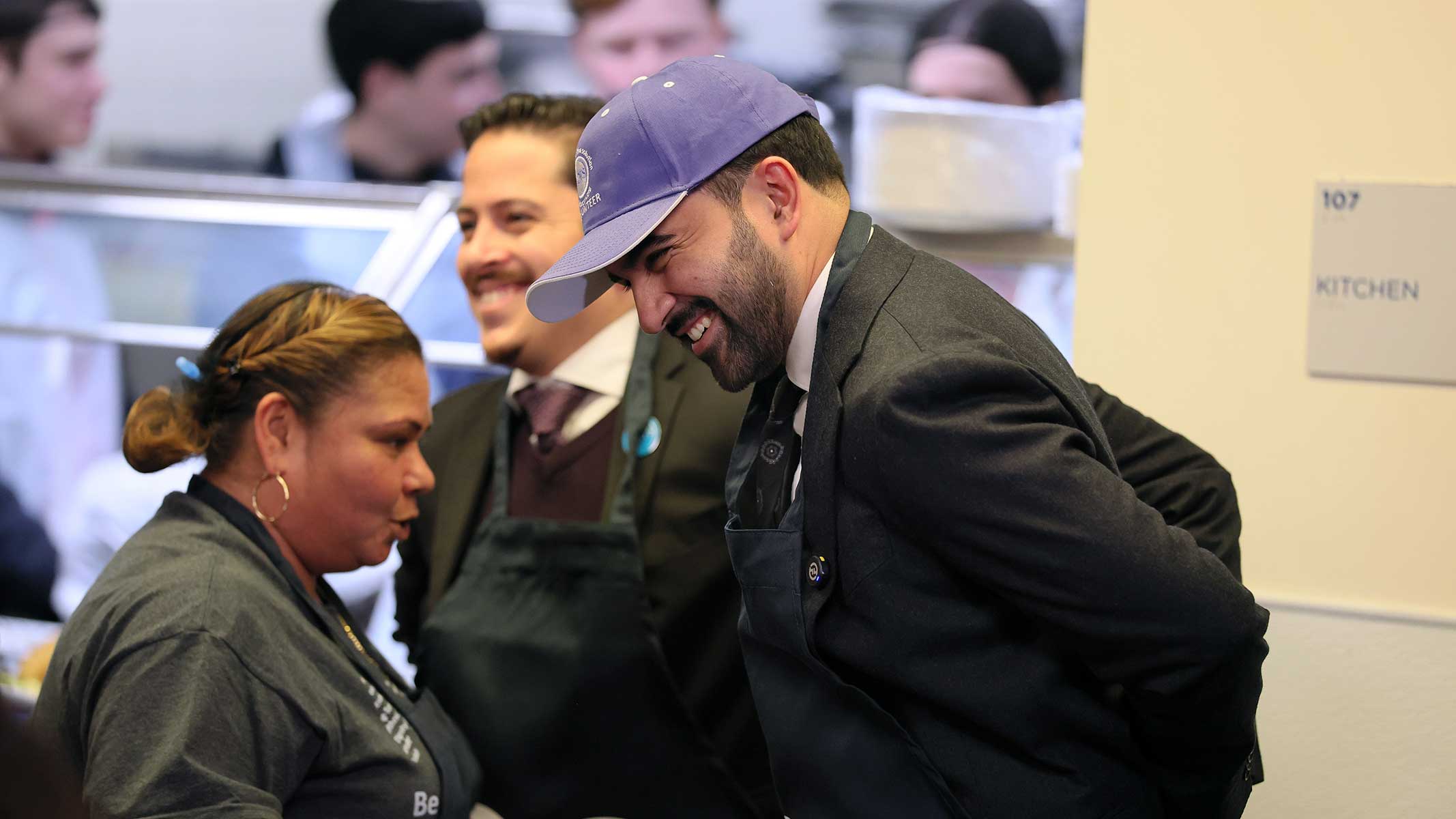
Photo by Michael M. Santiago/Getty Images
Source link