There is overwhelming evidence that the United States and Israel have thoroughly penetrated Iran’s security services.
On Saturday morning, the conflict that was brewing around Iran for weeks finally exploded. The United States and Israel launched strikes across Iran. This is not the first time the three countries have gone to war in recent months. Last summer, Iran and the US conducted precision strikes against Iran’s military and nuclear facilities. Iran responded with salvoes of missiles and kamikaze drones across the Middle East.
But the scale of the ongoing strikes, as well as the objective of the US—regime change—are unprecedented.
Trump Is Trying Regime Change from the Air
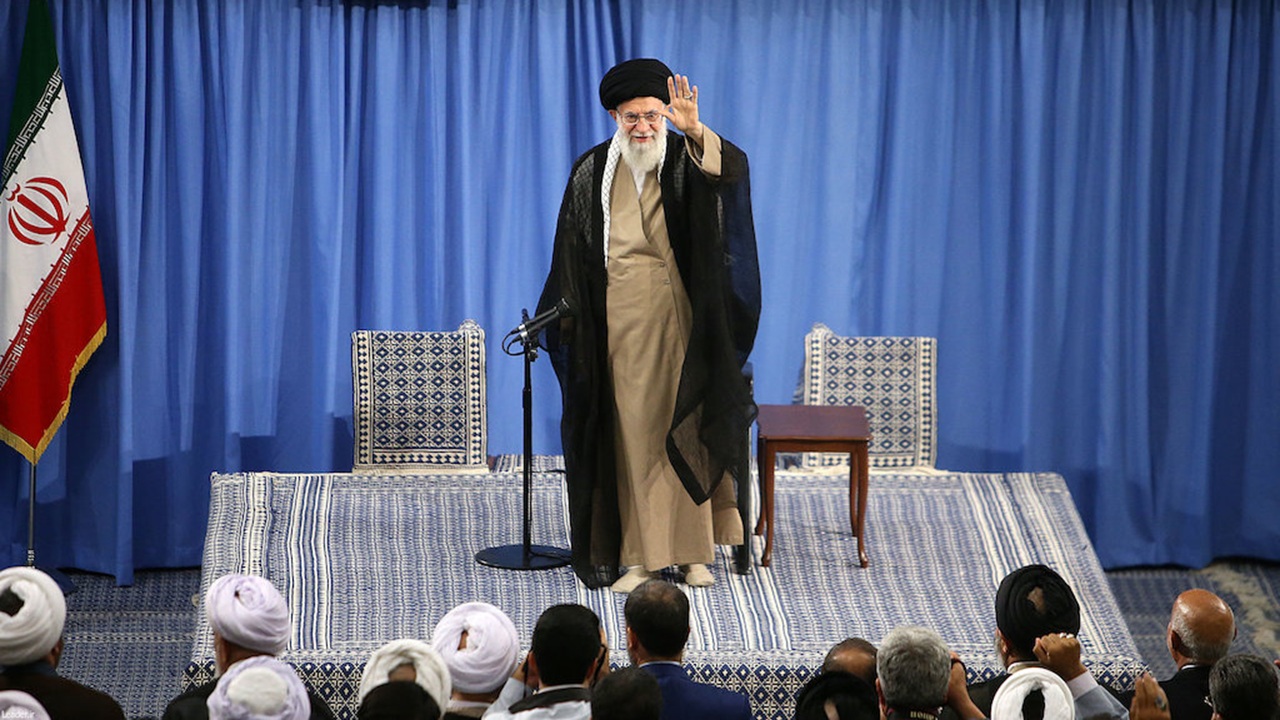
President Donald Trump verified reports that Iran’s Supreme Leader Ali Khamenei had been killed in the air strikes. Khamenei had been leading Iran’s theocracy since 1989 following the death of Ruhollah Khomeini, the man who overthrew the Shah and established the Islamic Republic of Iran.
But the death of Iran’s head of state is only a name in a long list of senior Iranian officials killed by the US and Israeli strikes.
The Israeli Defence Forces also claimed to have taken out the entire senior military leadership of Iran, including the minister of defense, national security advisor, commander of the Islamic Revolutionary Guard Corps, and intelligence chief. All told, dozens of senior Iranian military, political, and intelligence leaders have been killed. Choosing which targets are first is not simple.
How Did the US and Israel Pick Their Bombing Targets?
The intelligence process that led to this leadership decapitation took years. One does not simply take out a nation’s head of state and senior political and military leadership without knowing all the players and their location.
The US and Israel used human, signals, electronic, and other means of intelligence gathering to map out Iran’s organizational structure and prioritize their targeting based on the operation’s objective.
Both Washington and Jerusalem have evidently penetrated Iran’s political, military, and intelligence apparatus, and can act on human intelligence—the most precious form of information. In previous strikes against Iran, the targeting process had been restricted. But now, with the objective of regime change, no target was off-limits.
Reports indicate that the US and Israel knew that Khamenei and up to 10 of Iran’s senior leaders would be meeting in the supreme leader’s residence on Saturday morning. It seems that the original plan was to conduct strikes later in the day, preferably under the cover of darkness. However, intelligence of the meeting precipitated the attack and accelerated the timeline of the operation. That is why the strikes began in broad daylight—an unusual practice for the US military, which has unparalleled abilities to operate in the dark.
The US military and intelligence services honed their skills in the dark arts of targeting during the Global War on Terrorism, mainly in Iraq, Afghanistan, and Syria. Dismantling terrorist and insurgent organizations, where the structure is fluid and people are easily replaceable, is not an easy feat. It takes time and patience to map out the organizational structure of an adversary and decide which are the weak points that will bring it down like a shaky Jenga.
This process takes hard work, but the end result is clear: today, Iran’s theocracy seems more ready to fall than at any point since 1979.
About the Author: Stavros Atlamazoglou
Stavros Atlamazoglou is a seasoned defense journalist specializing in special operations and a Hellenic Army veteran (national service with the 575th Marine Battalion and Army HQ). He holds a BA from the Johns Hopkins University and an MA from the Johns Hopkins’ School of Advanced International Studies (SAIS). His work has been featured in Business Insider, Sandboxx, and SOFREP.