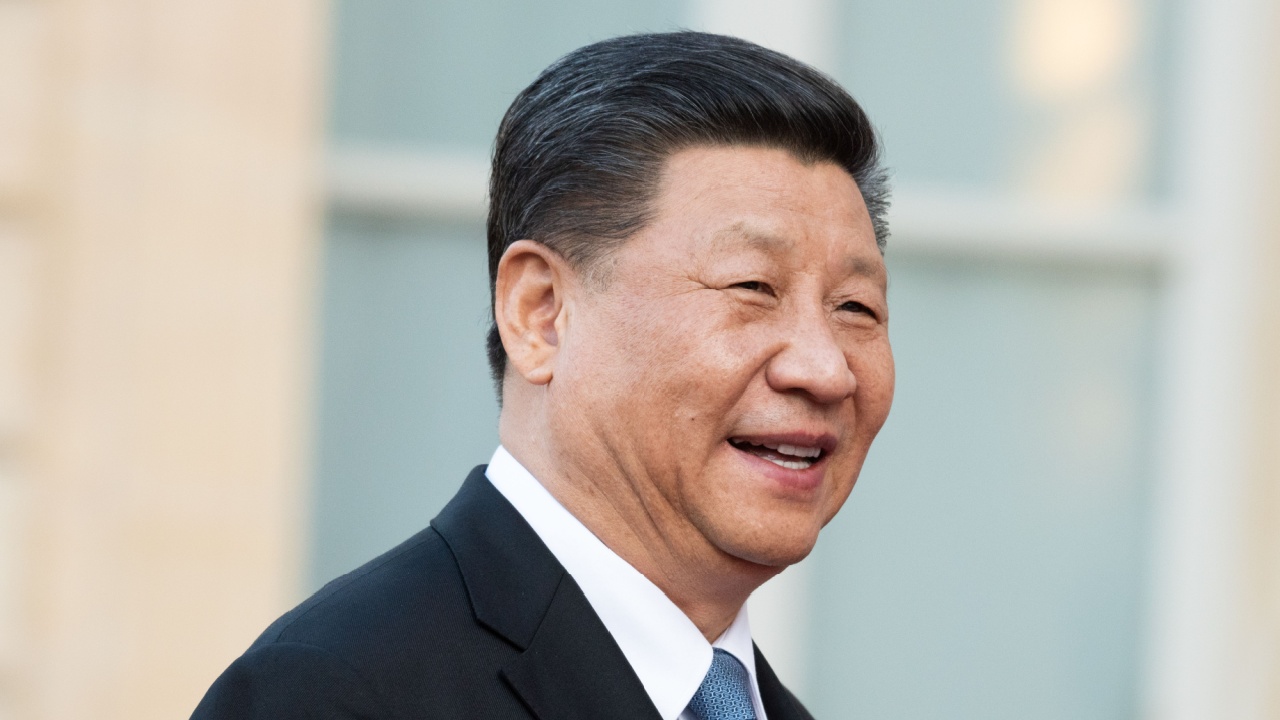
China’s inroads in the Middle East demonstrate how the region is still a critical front in the era of US-China competition.
The 2025 US National Security Strategy signals the most significant shift in Middle East policy since the Iraq War. The new framework aims to reallocate resources toward great-power competition, emphasizing cost reduction and burden-sharing with regional partners. Core interests remain: energy security, freedom of navigation through the Strait of Hormuz and Red Sea, countering Iran, and ensuring Israel’s security through the Abraham Accords architecture.
This recalibration is overdue. For more than a decade, American policy treated the Middle East as a democracy-building project. The Arab Spring seemed to vindicate this assumption. When protests swept the region in 2011, Washington oscillated between supporting protesters and accommodating authoritarian allies, generating confusion and undermining credibility with all sides.
In Egypt, the United States appeared to abandon Mubarak. In Bahrain, it stood aside as Gulf allies crushed dissent. In Libya, it toppled Gaddafi without a plan for what would follow. In Syria, it declared that “Assad must go” while doing little to make that happen.
The confusion imposed lasting costs. Weak states and protracted conflicts forced the United States into reactive crisis management while narrowing its strategic focus. This period coincided with China’s emergence as the principal challenger to American power. Washington remained consumed by the consequences of a policy it had helped unleash. While America was distracted, its adversaries moved.
Iran seized the opportunity first. The weakening of Arab states created openings for expansion through proxies. Iraq, Syria, Lebanon, and Yemen became central nodes in Tehran’s regional strategy. Hezbollah evolved into a parallel military force with an arsenal of 100,000 rockets and thousands of missiles. The Houthis transformed Yemen into a platform for regional coercion, and after October 2023, expanded attacks into maritime routes carrying 12 to 15 percent of global trade. Tehran’s model is optimized for state weakness. Its proxies thrive where central authority cannot monopolize force, and borders are porous. The Arab Spring delivered these precise conditions.
China exploited the same vacuum differently. As US credibility declined amid inconsistent interventions, Beijing presented itself as a non-ideological alternative emphasizing sovereignty, stability, and economic engagement without political conditionality. Regional governments, disillusioned with American democracy promotion, increasingly viewed China as predictable and transactional.
China expanded methodically. In energy markets, it became the indispensable customer, absorbing most of Iran’s oil exports and providing Tehran an economic lifeline that dilutes American sanctions. Across the Gulf, Chinese firms secured stakes in refineries and LNG facilities. The Belt and Road Initiative extended into ports from the Mediterranean to the Arabian Sea. Huawei built 5G networks and sold surveillance systems, creating dependencies extending into the digital architecture of regional states.
By the early 2020s, bilateral trade between China and the Middle East exceeded $500 billion annually, surpassing US trade with the region. Beijing assumed none of the security burdens this economic predominance might suggest. It benefited from the order American power still underwrote while accumulating leverage for future use.
These two dynamics converge in an emerging China-Iran axis that directly undermines American strategy. China sustains Iran economically and strengthens it militarily. On the economic front, Chinese purchases of Iranian oil, often conducted through opaque shipping networks and discounted transactions, generate billions in annual revenue that keeps the regime solvent despite maximum pressure sanctions.
On the military front, Chinese technology has enhanced Iranian drone and missile capabilities, the same systems now proliferating to Hezbollah, the Houthis, and Russian forces in Ukraine. In this sense, Beijing and Tehran are not allies but complementary partners, with China supplying economic and diplomatic cover while Iran generates strategic disruption that advances both of their interests at relatively low cost to Beijing.
For these reasons, the 2025 NSS is justified in reframing the Middle East in terms of great-power competition rather than democracy promotion. But executing this shift requires understanding why the region matters in the contest with China. Three factors are decisive.
First, energy leverage remains decisive. The Middle East holds nearly half of the world’s proven oil reserves. American allies in Europe, Japan, and South Korea remain dependent on these hydrocarbons. China imports over 40 percent of its oil, more than half of which transits chokepoints that American naval power has historically secured. Beijing is working to mitigate this vulnerability through upstream acquisitions and supplier relationships across the Gulf. If China secures reliable energy flows while diversifying from sea lanes that the US Navy dominates, it reduces one of America’s most significant structural advantages.
Second, geography makes the Middle East the linchpin connecting Asia, Europe, and Africa. The Bab el-Mandeb connects the Red Sea to the Indian Ocean. These corridors are irreplaceable. Chinese port investments from Piraeus to Gwadar to Djibouti form a network supporting commercial logistics today and potentially military access tomorrow. The United States cannot cede this geography without accepting permanent constraints on global power projection.
Third, the regional order emerging from post-Arab Spring fragmentation will either reinforce or undermine the American-led international system. The Abraham Accords established security cooperation between Israel and Gulf states, including intelligence sharing and integrated missile defense, consolidating US partners and constraining Iranian expansion. By contrast, Beijing’s growing proximity to Tehran has allowed China to position itself as a broker capable of mitigating conflicts rather than deterring them, most visibly in the Saudi-Iran normalization mediated in Beijing.
If the Abraham Accords deepen, the American partnership model will remain strategically superior. If they fracture, China’s model of economic engagement, paired with diplomatic mediation but absent security commitments, becomes increasingly attractive to regional actors seeking short-term de-escalation without long-term alignment.
October 7, 2023, tested this architecture. Hamas’s attack triggered coordinated pressure from Iran-aligned actors across multiple fronts. Hezbollah launched thousands of rockets into northern Israel. The Houthis struck Red Sea shipping, disrupting a corridor essential to global commerce. Militias hit American positions in Iraq and Syria.
The China-Iran axis operated in the background. Chinese oil purchases financed the Iranian military apparatus that arms and trains these proxies. When the US State Department accused Chang Guang Satellite Technology, a firm linked to China’s military, of providing the Houthis with satellite imagery to target American warships and international vessels in the Red Sea, it revealed how directly Beijing’s support translates into attacks on US forces.
When Iran launched over 300 drones and missiles in April 2024, coordinated American, Israeli, Jordanian, and regional defenses neutralized the threat. The Abraham Accords partners held. The architecture proved its value under fire.
But resilience is not the same as consolidation. President Donald Trump’s task extends beyond recalibrating relationships with Middle Eastern states or repairing damage from the previous decade. The strategic imperative is to transform the Abraham Accords from a series of bilateral normalizations into an integrated, American-led security framework capable of shaping regional order for a generation. This means deepening defense industrial cooperation, formalizing intelligence-sharing arrangements, and expanding the circle to include Saudi Arabia.
The immediate test is Syria. The fall of Assad removed Iran’s most crucial Arab client but created a vacuum where Washington’s partners find themselves on opposing sides. Turkey and Israel hold conflicting visions for Syria’s future, with Ankara backing factions that Jerusalem views as threats and both pursuing independent military operations in Syrian territory. Managing this tension while preventing a new Iranian foothold or a collapse into renewed civil war will measure whether Washington can translate the Abraham Accords concept into effective regional leadership.
The 2025 NSS seeks to view the Middle East as it exists, rather than as it was imagined in 2011. Success depends on Washington’s willingness to invest in partners rather than projects, to compete where it can win, and to recognize that the Middle East is not a distraction from great-power rivalry but one of its decisive theaters.
About the Author: Zineb Riboua
Zineb Riboua is the research fellow and program manager at the Center for Peace and Security in the Middle East at the Hudson Institute. She specializes in Chinese and Russian involvement in the Middle East, the Sahel, and North Africa, great power competition in the region, and Israeli-Arab relations. Prior to joining Hudson Institute, Ms. Riboua was a research assistant at the Center for Jewish Civilization at Georgetown University. Ms. Riboua’s pieces and commentary have been published in The Wall Street Journal, Foreign Policy, The National Interest, The Jerusalem Post, Tablet, and other outlets. Follow her on X: @zriboua.
Image: Frederic le Grand – COMEO / Shutterstock.com.