Though aid dollars to Afghanistan are intended to improve the humanitarian situation on the ground, in practice they have worked to stabilize the Taliban—and indirectly help Iran evade international sanctions.
The Taliban seized control of Afghanistan as the United States withdrew its forces under the Doha Agreement, which was initially billed as a framework for a responsible transition of power in Afghanistan. Under the terms of that deal, the Taliban promised to cut ties with global jihadists like Al-Qaeda, allow space for political pluralism, and participate in a state-building process. Four years on, none of these goals have been met. Apparently vindicated by their victory in Afghanistan’s civil war, the group no longer feels bound by the constraints of the Doha Agreement, and has ruled for the past four years through fear, ethnic division, and brutality against disfavored groups—all while steadfastly keeping ties with the terrorist organizations that prompted America’s intervention in the first place.
Yet all is not well for the insurgents-turned-rulers. Deep rifts inside the Taliban’s leadership, centred on Kandahar, have paralysed the basic decision making system, and the group is more divided than it has ever been. Afghanistan’s governing authorities today do not resemble a government so much as a closed armed faction with a flag, creating a hotspot for chaos that feeds every regional crisis around it—including the one now playing out with Pakistan—and creating an opportunity for countries like Iran to bypass international sanctions.
How Iran Uses Afghanistan for Sanctions Evasion
Since the collapse of the Islamic Republic of Afghanistan, the flow of tens of millions of dollars in cash each week through Kabul airport has been constant, by the International community, including the United States. On paper, this money is intended to stabilize Afghanistan’s collapsed banking system and prevent a complete social breakdown. In reality, once those dollars enter the Taliban-controlled economy, they functionally disappear. Shipments of money quickly move across Afghanistan’s porous borders. They also enter the hawala network, where they are virtually impossible to trace, and other trade routes in ways that no one can really follow. The main beneficiary of this arrangement is the Taliban—but a secondary beneficiary has been the Islamic Republic of Iran, which has used money for Afghanistan to address its deep dollar shortage at home.
To understand how this situation arose, it is important to first understand the breakdown of the Taliban-Pakistan relationship. For decades, Pakistan’s security establishment treated the Afghan Taliban as a strategic asset by giving them sanctuary, training, and diplomatic cover, even when the United Nations was calling for states to end support for the Taliban. Islamabad hoped that a Pakistan-friendly Taliban would provide “strategic depth” against India and help it shape regional politics at a low cost.
However, after the Taliban returned to power in 2021, this 30-year-long project has turned against Pakistan. During this time, Pakistan has faced a sharp rise in attacks by Tehreek-e-Taliban Pakistan (TTP), better known as the Pakistani Taliban. Islamabad accuses the Taliban of sheltering the group and refusing to act against it. The Taliban deny this, but many reports, including from the UN, indicate that TTP commanders move, recruit, and rest on Afghan soil. Pakistan has answered with airstrikes and cross border operations, resulting in civilian deaths on both sides of the border. In 2024 and 2025, such clashes also erupted repeatedly on a small scale when Pakistani forces tried to build new border posts.
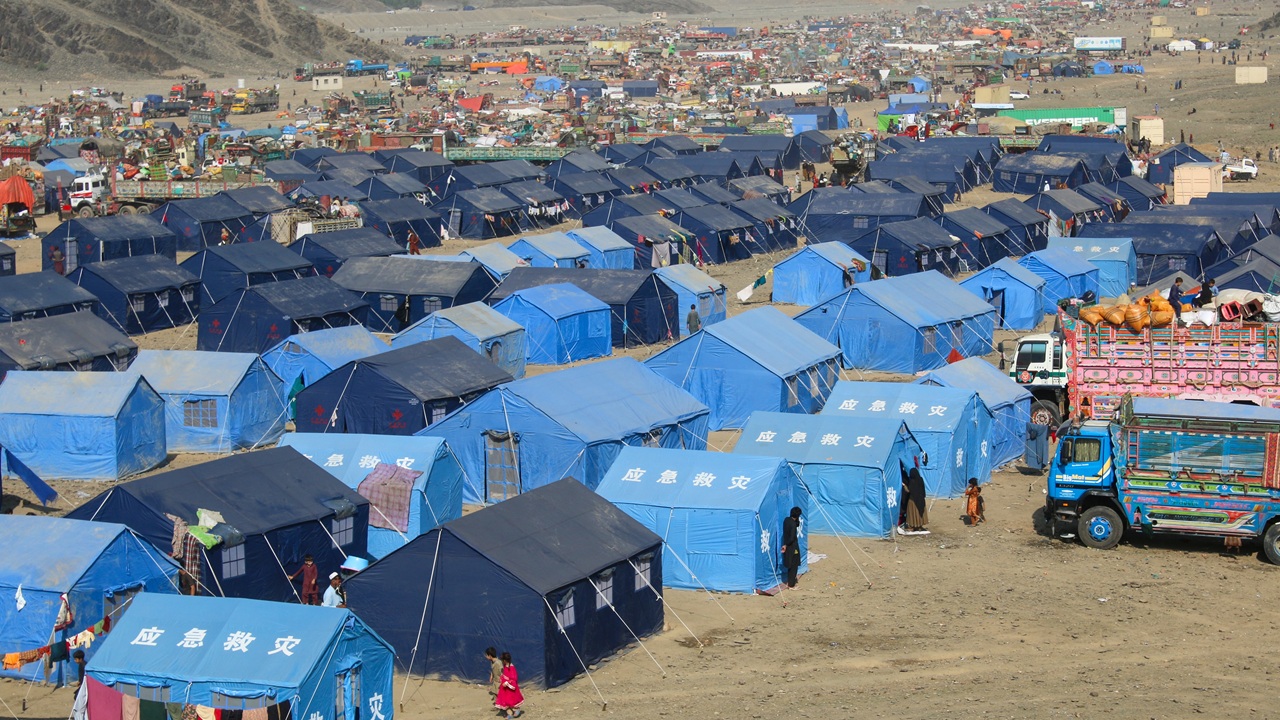
The relationship that Islamabad once saw as a controlled asset has now become a constant security headache. As a result, Pakistan has used the deportation of Afghan refugees and the closure of border crossings as bargaining tools. During this time, as tensions have risen, thousands of families have been pushed back over the border, businesses have suddenly lost access to markets, trucks are stopped for days, and goods are spoiled before reaching their target markets. Earlier this month, when I asked a business owner who exports fruit from Afghanistan to Pakistan about the situation, while he was worried that his goods would spoil while waiting at the border, his response was: “The sponsor of decades of jihad in the region is now facing the backlash of its false policy from the same networks it nurtured, and they are the ones paying the price.”
Many countries in the region, including Qatar and Turkey, have attempted to de-escalate the situation, but the two sides have not agreed on a settlement. As a result, borders are repeatedly closed, trade has become a weapon, and what started as a security dispute has turned into a trade war that has really damaged the business in both countries.
The main beneficiary from this chaos has been Iran. Whenever Pakistan closes its crossings, Taliban authorities and business owners look for other routes. If the routes to the east are closed, they will instead look west, towards Tehran.
Iran is one of neighboring countries that has long sought greater influence in Afghanistan. The current situation has helped Tehran reach that goal. Trade has now shifted to move from Iranian routes and ports, which Iran has welcomed as it easing some of its own isolation. The United States has given a limited sanctions waiver for use of the Iranian port of Chabahar—specifically to move goods to and from Afghanistan. At the same time, Iranian companies are exporting fuel, electricity, food and other goods into Afghanistan and being paid in hard currency. Iran’s foreign minister has publicly described the trade surplus with Afghanistan as being on the scale of Iran’s trade with Europe.
Afghanistan under Taliban control runs a large trade deficit as it imports more than it exports, meaning that much of the cash that comes in for aid eventually leaves the country again to pay for those imports. Now that under the current situation, the main supplier has become Iran, portions of those humanitarian dollars end up helping Iranian exporters, Iranian banks and the Iranian state. The core paradox here is that while Washington is tightening sanctions on Iran—attempting to cut Tehran off from the international financial system, limit its oil income, and trigger a shortage of hard currency—it also regularly makes shipments of dollars into an economy now heavily tied to Iran. As the US Treasury spends an inordinate amount of energy tracking every Iranian bank transfer, it turns a blind eye to how physical cash, once inside Afghanistan, moves informally into neighbouring states.
This all reveals that Afghanistan, under Taliban rule, is becoming a new space for Iran to sell goods, earn dollars, and gain political leverage. In return for their cooperation, the Taliban have gained an alternative partner and guidance for an Iran-like model of how to survive under sanctions while still keeping power.
Iran Has Always Sought Accommodations with the Taliban
The nuanced Iran-Taliban relationship dates back long before the group conquered Afghanistan in 2021. During the United States’ 20-year conflict in the country, Tehran, like Islamabad, played a double game. Officially, Iran opposed the Taliban and announced it was ready to cooperate with the United States and the new Afghanistan government in 2001. However, as the US military presence expanded over time, Iran came to view its presence as a threat, and quietly opened channels to Taliban commanders in the west and south of Afghanistan. The United States and UN reported finding cases of Iranian-made explosives, small arms, and training reaching Taliban units. The aim was to keep the Taliban relevant in its regional game, in the same way Pakistan did.
In spite of the obvious differences between Iran and the Taliban—one a fundamentalist Shia movement, the other virulently anti-Shia in its outlook—Iran sees the Taliban as a useful tool, and the Taliban view Iran as a model for survival. After all, the Islamic Republic has lasted more than four decades under extreme sanctions, diplomatic isolation, war with Iraq, internal uprisings and constant economic crisis. It has done this with a system in which a supreme leader, backed by a fanatical and all-pervasive security force, has the final word, while elected institutions are kept weak and controlled by the mentioned agencies. Inside the Taliban leadership circle, there are visible efforts to build a similar parallel theocratic state where real power lies with an unelected religious leader, supported by a loyal armed movement. The civil institutions and ministries associated with Afghanistan’s republican government continue to exist and provide vital services to the nation’s people, but they are secondary. As in Iran, religious authority, not elections or public opinion, are the true source of legitimacy.
Iran no doubt welcomes this interest by the Taliban to copy its structure for many reasons. Most important of all, it now has a like-minded but far weaker regime on its eastern border. Although problems may arise with Afghanistan—including a string of border clashes since 2021—Iran will never need to fear an invasion from the east, as it dramatically experienced from the west in 1980. If pressure intensifies from Israel, the Gulf, Europe or the United States, Tehran knows it has a neighbor whose rulers share a similar worldview, who are also the subject of international sanctions, and who depend on Iran for trade and diplomacy. This way, Afghanistan becomes not just a market, but also a rear area for logistics, political coordination, and informal financial flows. If anything serious happens to Iran, the leadership can hope that it has depth to its east, in the form of a friendly regime that will not host hostile forces against it and may even quietly help.
For the rest of the world, the idea of an Islamic sister state to Iran, sitting in the heart of Central and South Asia, should be alarming. A Taliban system that learns how to survive sanctions the Iranian way—e.g. through smuggling networks, regional currency arrangements, and proxy relationships—will be much more dangerous. Of course, women’s rights, minority protections, and any path to democracy and modern inclusive governance will become even more impossible. And most importantly, a tighter link between these two regimes also makes it easier to move global jihadists, weapons, drugs, and money across the region and to bridge and expand the “axis of resistance” throughout West, Central, and South Asia.
Good Intentions Are Fueling Bad Policy in Afghanistan
All of this brings us back to the American cash dollars landing in Taliban’s Afghanistan, which started with the stated intentions to keep people of Afghanistan from starving and to keep hospitals, schools, and aid programmes running. The intentions are laudable. The people of Afghanistan did not choose the Taliban; punishing them further for the Taliban’s crimes is not an ethical policy. But whenever those dollars arrive, the Taliban authorities, not NGOs or international organizations, decide how they are used. Currently, those dollars are put to use in service of two regimes that put their own interests first and the well-being of their people second.
The people of Afghanistan urgently need support. The question is what kind of political and regional order is being financed, unintentionally, by these weekly cash shipments. As of now, the West’s policy has created the conditions for Taliban to become a second entrenched Islamist system that is hostile to human rights and resistant to pressure, while transforming itself into an Iran-esque theocracy.
If Western governments want to avoid that transformation, they must stop treating the cash flights as a narrow technical issue and start seeing them as part of a regional power structure. They must find ways to support ordinary people of Afghanistan that do not harden the Taliban’s grip or feed the dollar networks that help regional countries manage their own crisis. That means much tighter oversight of where cash goes, and more use of direct support to people outside Taliban control.
About the Author: Natiq Malikzada
Natiq Malikzada is a journalist and human rights advocate from Afghanistan. He holds an MA in International Relations and an LLM in International Human Rights Law from the University of Essex, which he attended as a Chevening Scholar. Since 2013, he has focused on countering religious extremism and promoting democracy and pluralism. In 2020, he co-founded Better Afghanistan, an organization dedicated to fighting extremism, supporting education, documenting human rights violations, and empowering civil society. The organization also provides a platform for Afghan women’s rights activists to mobilize, engage in dialogue, and advocate for freedom and justice under increasingly repressive conditions.
Image: Shutterstock / Umair Utmaan.