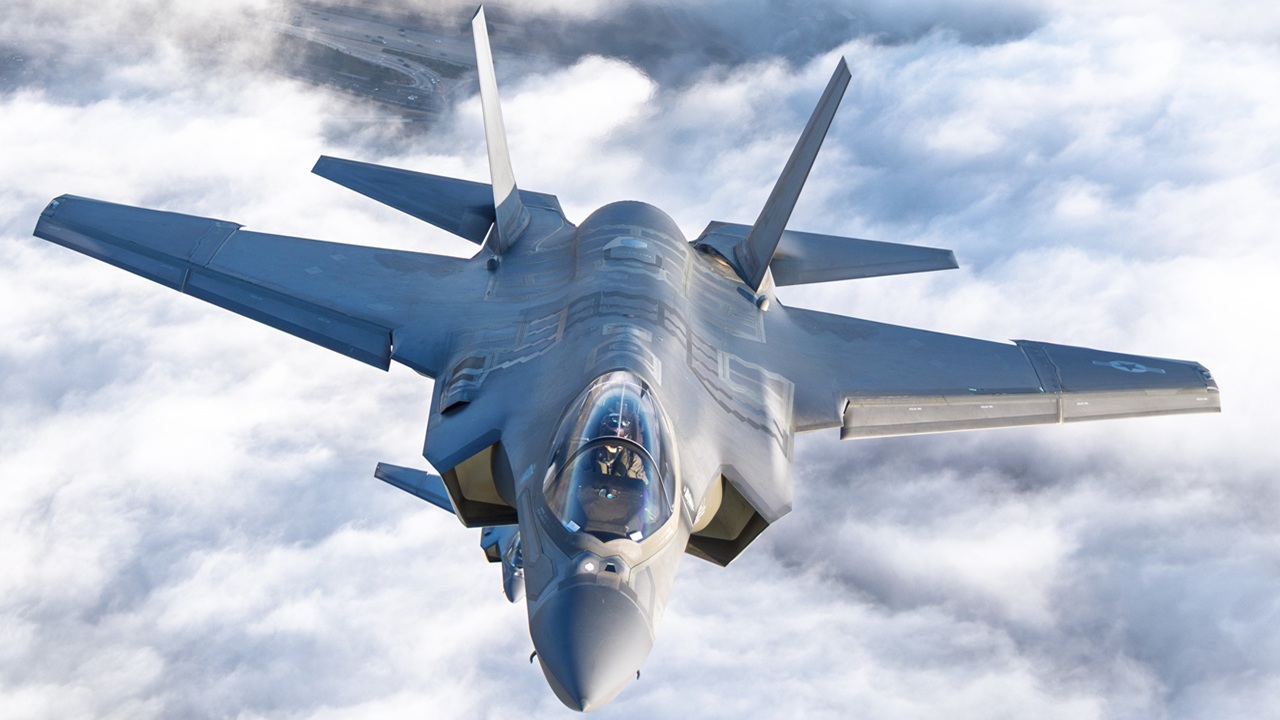
Today, aircraft wings are increasingly designed to prioritize stealth characteristics over raw speed—giving them a smooth, unbroken connection to the aircraft’s main fuselage.
The wing of a fighter jet is one of the most influential design elements in the entire aircraft, exerting deep influence over speed and maneuverability and stealth—and just about every other metric of kinetic performance. Over the past 80 years, fighter wing designs have evolved through distinct technological eras—each shaped by mission demands and available engineering, culminating in the contemporary era of fifth-generation technology.
How Fighter Jets Got Distinctive Wings
From the dawn of flight until the 1940s, most aircraft—both cargo planes and propeller-driven fighter aircraft—typically employed the classic straight wing, derived from propeller-era aerodynamic profiles. These wings were good at low speeds, but poor at high subsonic/transonic speeds—and could not delay shockwaves as jets approached the sound barrier. Swept wings were introduced as a result; borrowed from German World War II research, sweeping the wing backward delayed the shock formation, which allowed for higher transonic performance, becoming standard in the 1950s as jet-powered fighter aircraft became the norm within the world’s strongest air forces.
In the 1950s and 1960s, the triangular-shaped delta wing emerged. Offering high structural strength, capable of withstanding supersonic pressures, the delta wing offered excellent performance at high speeds and high altitudes. The drawback was poor low-speed handling and long takeoff/landing rolls. But the delta wing still dominated Cold War interceptors because it allowed the aircraft to climb quickly, sprint fast, and fire missiles at altitudes—perfect attributes for the long-range missile duels that increasingly defined air-to-air engagements.
Wing design took a major step forward with the fourth-generation of aircraft. New varieties cropped up, all tailored to specific mission envelopes. Blended wings, as found on the F-16 and F/A-18, combined delta-like lift with the control authority of a tailplane. The result was high maneuverability and excellent dogfighting performance.
Variable-geometry wings—wings that swept in and out, optimized speed and lift for different phases of flight—were introduced with the F-111 and made most famous on the iconic F-14 Tomcat. Ultimately abandoned due to their weight, cost, and complexity (and hence their onerous maintenance requirements), the variable wing was ingenious, if impractical. And broad, flattened wings, like those found on the F-15, offered expansive wing area for optimizing payload, range, and maneuverability. These were ideal wings for air superiority fighters that needed energy retention.
Today, Wings Are Increasingly Designed for Stealth
As fighter jet design has evolved to prioritize stealth as a prerequisite feature, so too has the wing evolved. Blended low-observable wings, found on the F-22 and F-35, feature wings that merge smoothly into the fuselage, with no sharp junctions to reflect radar. With planform alignment, all the edges are angled to scatter radar energy. The design here emphasizes the stealth-based priority shift—the elimination of wing-placed external pylons (in favor of a stealthy internal weapons bay) and a reduced radar cross-section. The result, performance-wise, of blended low-observable wings, is agility, stealth, and range.
And, worth mentioning in an article about aircraft wings, is the flying-wing bombers, i.e. the B-2 and B-21. These are pure flying wings, without discernible fuselage or tail section—just a large wing with an integrated cockpit, essentially. These are not used for fighters due to maneuverability and control challenges—but they maximize stealth and lift efficiency.
Throughout the eras of aircraft wing design, the different archetypes have reflected mission profile—long-range stealth strike or air superiority or interceptor. The wing design deeply affects fuel consumption and maneuverability and top speed, all of which must be calibrated specifically for various missions.
About the Author: Harrison Kass
Harrison Kass is a senior defense and national security writer at The National Interest. Kass is an attorney and former political candidate who joined the US Air Force as a pilot trainee before being medically discharged. He focuses on military strategy, aerospace, and global security affairs. He holds a JD from the University of Oregon and a master’s in Global Journalism and International Relations from NYU.
Image: Shutterstock / ranchorunner.