Among the other saints and blesseds given for March 7th in the Matyrologium Romanum, one finds the following brief entry:
At Florence in Tuscany, the commemoration of Saint Teresa Margaret Redi, virgin, who, having entered the Discalced Carmelite Order, trod the difficult path of perfection, until she was cut down by an untimely death.
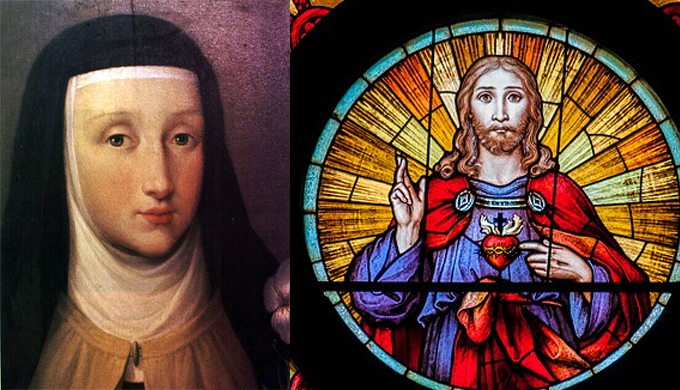
Saint Teresa Margaret is one of only six Discalced Carmelite nuns who have been canonized, excluding martyrs, but she is hardly known even among Carmelites, much less to the wider Church. Yet, like all the saints, her life is a gift of God to the entire world.
“What is God?”
The woman who would become Sister Teresa Margaret was born on July 15, 1747, to a pious family among the minor Tuscan nobility, and was baptized Anna Maria on the next day. This marks one of a few strange acts of Providence in her life, for the date of her baptism is also the Feast of Our Lady of Mount Carmel. She was well-loved by all who knew her, but was the special favorite of her father, Ignatius Redi.
Very early on, Anna Maria showed an inclination to piety that would mark her whole life. Yet this was not a saccharine religiosity. She truly wanted to know God more and more and serve Him and her neighbor as best she could. Several witnesses for her later cause of canonization testified that at age six, she would practically pester her family with the question: “What is God?” She was not so much interested in an abstract definition of what God is. She wanted to know who God is, and she was not satisfied until her mother gave her the answer, “God is love.” But that raised in her mind the next pressing question, “What must I do to please Him?”
She set about shaping her whole life in answer to that question.
At age nine, her father sent Anna Maria to a Benedictine convent in nearby Florence for her education. In most respects, the girl thrived in this new environment, getting along well with the sisters and her fellow students and performing her chores well, though she sometimes had difficulty in her studies, especially in math and Latin. By age ten, and likely with the help of her father, she came up with a manner of ordering her actions that would wind up shaping her whole life. She resolved to strive for radical holiness, but to do so in such a way that did not call attention to herself or otherwise distinguish her from her fellow students.
She came to this plan of action both from the Gospel warnings against performing one’s acts of piety to be seen by men but also by the model of the Holy Family, who, to outward appearances, seemed no different from any other family in Nazareth. (She succeeded in this desire to such an extent that several of her former classmates testified in her canonization process that, while she was a good and pleasant enough girl, she didn’t seem in any way remarkable to them.)
Her love of God understandably grew in the atmosphere of the convent school. Watching her older classmates receive their first Communion ignited a desire in her heart that burned so brightly that even the sisters noticed. They permitted Anna Maria to make her own first communion at age eleven, a year earlier than was customary at the time, on the Feast of the Assumption. She knew she needed direction in her growing spiritual life, but she knew that spending longer in the confessional than the other students would make her stand out. A local priest who had given a retreat at the convent school came to her aid here, giving her advice on her path to holiness and suggesting spiritual reading.
“I want you among my daughters…”
At age sixteen, her time at the convent was coming to an end, and Anna Maria seemed uncertain as to which path she should follow beyond its walls. While she was trying to decide, as Providence would have it, an older acquaintance about to become a nun with the Florentine Carmelites was making her goodbyes before entering the convent. While Anna Maria visited with this young woman, she heard a female voice inside her say, “I am Teresa of Jesus, and I want you among my daughters.”
Confused, she went to pray in front of the Blessed Sacrament, where she heard the same voice repeat the words. This is one of the very few mystical experiences recorded in the future saint’s biography. Though she still sought out the advice of her spiritual director and her father to confirm the matter, Anna Maria resolved from that day to join the Carmelite order. She entered on September 1, 1764, less than two months after her seventeenth birthday, and would receive the name Teresa Margaret Marianne of the Sacred Heart.
Her novice mistress was strict with her, as was the custom at the time, in order to test her capability to live the rigors of religious life. She performed all of her duties well and kept the resolution that she had made at school, that she would strive not to appear out of the ordinary compared to her religious sisters. She was convinced that the Carmelites she lived among were living saints, and at times she expressed to her spiritual director her conviction that she was unworthy to live in the same convent with them. No chore was too menial for her, and she would often help others complete their work as well as do her own. She found special joy in working in the convent infirmary, tending to the sick and aged members of the convent with special care.
She found little, unseen ways to show her love for God and neighbor during her time in the convent. It was the custom among that convent at the time that newly professed sisters would not receive a new habit but instead would wear an old habit that had once belonged to a sister now deceased. Teresa Margaret chose the oldest she could find. She resolved not to waste anything, even the smallest scrap of paper. She began her religious life practicing penances such as wearing a hair shirt, sleeping on the floor, and keeping her window open in the winter and closed in the summer, but she came to realize that a more penance more pleasing to God was to accept things just as they came from God’s hand without expressing personal preference one way or the other.
One day, while praying the Liturgy of the Hours with her fellow nuns, the readings included the phrase from the first letter of St John, “God is love.” This was the definition of who God is she had received as a child, yet the phrase struck her more powerfully than ever before. She went about her duties in the convent the next few days with the phrase always on her lips and in her heart. “God is love.” The evidence later given by her spiritual director seems to indicate that while at communal prayer, she had received a mystical experience of the Triune Love that is God, and that experience called her to new heights of sanctity.
At the same time, this experience caused uncertainty in her prayer. She had a greater awareness of who God is, but she also had a corresponding awareness of how unworthily she had responded to that Love. She threw herself more earnestly into her prayers and worked more ardently at her duties in the infirmary, but she was always plagued by a sense of unworthiness. She lived the rest of her brief life in this tension between her certainty of the love of God and her knowledge that she could never respond adequately to that love. This tension drove her to seek to love God even more, and to love her sisters, especially the sick she took care of, even more for the love of God.
On March 4, 1770, Teresa Margaret asked her spiritual director to make a general confession of her whole life and to receive Communion as if it would be her last communion. She received permission and went about her duties. But on the evening of March 6, she collapsed to the floor on returning to her room from working in the infirmary. She was put in a bed in the infirmary, and a doctor was called. At first, she seemed to improve, but her condition quickly took a turn for the worse. The doctor still hoped for an improvement, so a priest was not called until the very end of the day. For hours, Teresa Margaret suffered in silence, holding a crucifix, and when she was able, calling on the names of Jesus and Mary. Whatever caused her illness (modern specialists conjecture it was a hernia that led to an infection in her organs) led to severe swelling and a blue-black cast to her skin. A priest was called, but he had hardly applied the Sacrament of Anointing when Teresa Margaret died early on March 7. She was six months shy of her twenty-third birthday and had not been a Carmelite for six years.
Given how her rapid illness had disfigured her, the sisters of her community worried that her body would begin to decay before they could have her funeral, but as they went to move her body, they discovered something astounding. The swelling had subsided, and the discoloration had reversed to the point that Teresa Margaret looked not as she had died, but as if she had simply fallen asleep. This condition continued to the point that word got out to the city of Florence, and doctors and even the bishop of the city came to investigate. Many of those who came to see her body detected a flowery aroma coming from it. Pious Christians began to report miracles after asking the young sister to intercede for them.
Eventually, the Carmelites moved Teresa Margaret’s body to the main church of the convent. Over two hundred and fifty years later, the body has not decayed as a corpse would naturally. She is considered one of the Church’s incorruptibles.
Canonized in 1934
Pope Pius XI, the same pope who beatified St. Therese of Lisieux, beatified Teresa Margaret in 1929 and canonized her in 1934 (on the Feast of St Joseph). Due to the other feasts celebrated on the date of her death (the feast of St Thomas Aquinas and later the Feast of Saints Perpetua and Felicity), the Carmelites celebrate her feast day on September 1, the anniversary of her entry into the order.
St. Teresa Margaret of the Sacred Heart is fascinating for many reasons. There are points at which her thought and life comes close to the later teachings of St Therese of Lisieux and St Elizabeth of the Trinity, as if she were living in advance what her sisters in Carmel would later teach in their writings. One of the reasons why St Teresa Margaret may not be as well known as the other Carmelite saints is that she has not left a large body of writings, only a few personal notes, resolutions, and a few letters to her spiritual director. Yet her life is full of meaning, even for the laity.
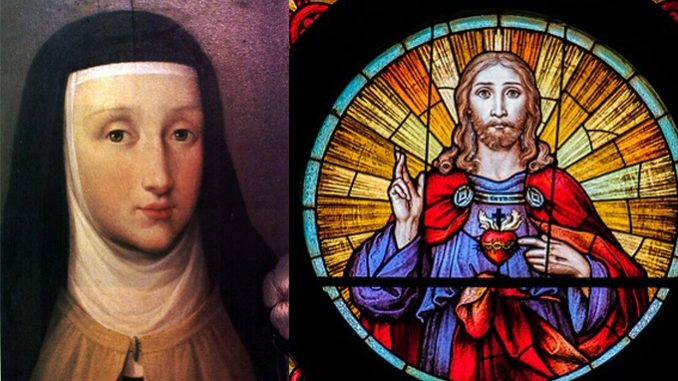
She was a young woman who became completely enchanted by the love of God, the love for the world shown in the Sacred Heart of Jesus, and the Love that is the Triune God, Father, Son, and Spirit. Her realization that she could live out her vocation in imitation of the lives of the Holy Family in their daily endeavors in Nazareth displays a profound, scripturally informed spiritual intuition that all of us can follow regardless of our individual vocations. Her concern for the welfare of the sick in her community can inspire our own zeal to show the works of mercy to our own neighbors. Few may receive interior locutions or have mystical experiences in our prayers. Yet all of us can strive to love God and our fellow men in a way that is as unassuming as it is supernatural.
On her feast, the Carmelites pray the following prayer, which might serve as a good summary of her message to us:
Father,
you enabled Saint Teresa Margaret Redi
to draw untold resources of humility and charity
from the fountainhead, our Savior.
Through her prayers
may we never be separated from the love of Christ.
Grant this through our Lord Jesus Christ, your Son,
who lives and reigns with you and the Holy Spirit,
one God, forever and ever. Amen.
If you value the news and views Catholic World Report provides, please consider donating to support our efforts. Your contribution will help us continue to make CWR available to all readers worldwide for free, without a subscription. Thank you for your generosity!
Click here for more information on donating to CWR. Click here to sign up for our newsletter.