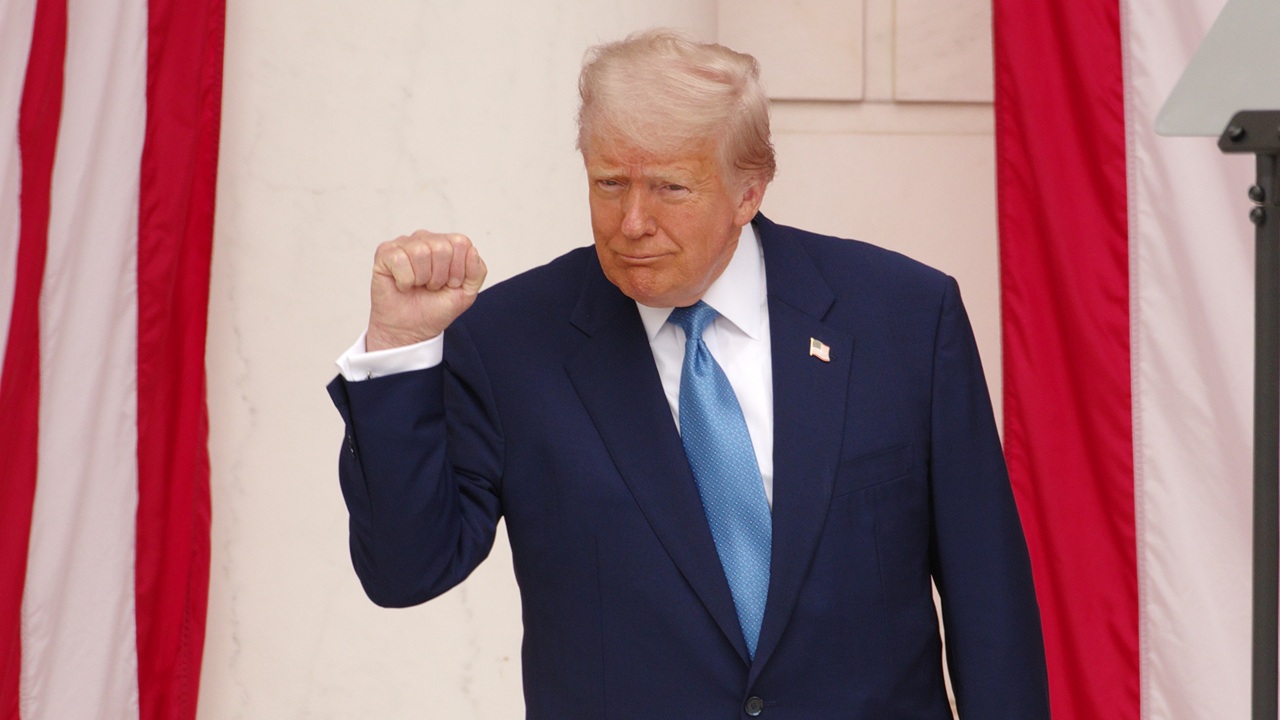
Although he has proclaimed himself the “President of Peace,” Donald Trump has aggressively pursued military force abroad throughout his second term.
The current US-Israel attack on Iran is the ninth time US forces have gone to war during President Donald Trump’s second term in the Oval Office, and the second time in as many months in 2026. It is undeniably the largest and most significant operation of them all.
The US military has achieved significant successes under the two Trump administrations. In 2019, for example, Delta Force operators killed Abu Bakr al-Baghdadi, the leader of the so-called Islamic State of Iraq and Syria (ISIS).
However, during his 2024 presidential campaign, Trump pivoted away from advocating military force, arguing that his experience at making deals made him a peacemaker by nature. He promised that he would end the Ukraine War within “24 hours” if re-elected, and vowed not to start any other “forever wars” once in the Oval Office.
Since he took office for the second time in January 2025, Trump has attempted to burnish his reputation as a peacemaker. He has dubiously claimed to have ended eight separate foreign wars, campaigning for the Nobel Peace Prize for that accomplishment. Although he lost out on the 2025 Nobel Peace Prize, the winner, Venezuelan opposition leader Maria Corina Machado, ultimately gave him her medal and endorsed him for the prize the following year. Trump also won the inaugural “FIFA Peace Prize,” created by the international soccer federation to “recognize exceptional acts for peace and unity.”
Most recently—on January 22, 2026, only a month before the most recent strikes on Iran—Trump set up his “Board of Peace,” a multinational body established to oversee the peace process in Gaza and potentially other conflicts. Perhaps ironically, the charter signing ceremony took place in the headquarters of the now-defunct United States Institute of Peace, a publicly-funded think tank which fell victim to DOGE cuts in early 2025.
Overall, in spite of Trump’s public messaging, the data suggest that the White House is keen on using military force to resolve foreign policy issues. The nature of military action has ranged from counterterrorism to law enforcement to conventional conflict operations. In many of the cases, the military action is part of a long campaign that transcends administrations.
Somalia (February 2025 – present)
From February 2025 onward, the US military has launched more than 100 strikes in Somalia, targeting ISIS and al-Shabaab terrorist targets. America’s ongoing involvement in Somalia has received relatively little public attention, in part because it has overwhelmingly been fought with drones rather than human troops.
US forces have operated in Somalia for more than 15 years. The Trump administration has justified continued involvement by citing Congress’ 2001 Authorization for Use of Military Force (AUMF), which authorized the president to pursue military force against targets involved in the terrorist attacks of September 11, 2001. The 2001 AUMF’s detractors have argued that it has morphed into an open-ended justification for any war against any perceived enemy in the Middle East—even those with no connection to 9/11—but attempts to repeal it have been unsuccessful.
Yemen (March 2025 – May 2025)
In March 2025, the US military launched “Operation Rough Rider,” a series of naval and air strikes intended to deter the Houthi rebels in Yemen from attacking commercial shipping and warships in the Red Sea. The strikes were intended to reduce the Houthis’ ability to target and strike international maritime lanes. The United States signed a ceasefire with the Houthis in May 2025.
The Trump administration never sought to offer a coherent legal basis for Operation Rough Rider. However, Trump’s strikes on the Houthis mirrored the Biden administration’s “Operation Prosperity Guardian,” which had justified its strikes on the basis of Article 51 of the UN Charter’s right to self-defense. Indeed, the Houthis had attacked US ships in the months leading up to Operation Rough Rider, so the issue was not significantly debated in the United States.
Iraq (March 2025)
Last March, the US military conducted a precision strike in the al-Anbar province of Iraq, killing ISIS’s second-in-command, Abdallah “Abu Khadijah” Malli Muslih al-Rifai. Although the terrorist group has suffered significant setbacks in recent years, it still has a presence in Iraq and Syria, and the United States has been actively involved in combating it to prevent its resurgence.
Like the Trump administration’s actions in Somalia, the ongoing US military campaign in Iraq has been justified under the 2001 AUMF.
Iran (June 2025)
The first military operation against Iran in Trump’s second term in office was Operation Midnight Hammer, targeting Tehran’s nuclear weapons program, in June 2025.
During Operation Midnight Hammer, several B-2 Spirit strategic stealth bombers dropped 14 GBU-57 Massive Ordnance Penetrator (MOP) 30,000-pound bombs on the Fordow and Natanz underground nuclear weapons facilities. At the same time, a Navy guided-missile submarine launched dozens of Tomahawk cruise missiles against a third location.
The Trump administration justified the strikes on Iran through the 1973 War Powers Resolution, which gives the president wide latitude to launch military force without receiving the support of Congress. However, the law’s application has been controversial, and critics accused Trump of failing to apply it properly. Multiple members of Congress introduced legislation that would have forcibly terminated the campaign, but these resolutions failed to move forward.
The Caribbean (September 2025 – Present)
Prior to Operation Epic Fury, the Trump administration’s most controversial foreign military operation was its campaign in the Caribbean leading up to the capture of Venezuelan leader Nicolas Maduro.
Codenamed “Operation Southern Spear,” the United States began to strike at “narcoterrorists” in the Caribbean in September 2025. In the months since, US forces have destroyed dozens of drug trafficking boats in over 45 strikes. The US military has used fighter jets, helicopters, warships, and special operations forces in an attempt to stem the influx of drugs in the US.
The attacks have triggered a heated debate over their legality—both the overarching campaign and the specific kinetic actions within it. Critics have accused US forces of war crimes during the campaign, including killing targets who had already been disabled by an earlier strike. In addition, Congress has questioned the statutory basis for the campaign, citing the Trump administration’s evasive justifications for the use of force.
Nigeria (December 2025)
On Christmas Day 2025, the US military conducted strikes against ISIS affiliates and militants in the northwestern part of Nigeria. The US forces worked with the local military to target and strike at the terrorists.
The Trump administration has repeatedly criticized the treatment of Nigerian Christians in the country’s majority-Muslim north, and has threatened to intervene in their defense. The Christmas strikes were launched in coordination with the Nigerian government. However, the Trump administration did not offer any specific legal basis for the strikes.
Syria (December 2025)
Also in December, the US military struck targets in Syria in retaliation for the killings of two US soldiers and a translator in Palmyra. The assailant was a Syrian government employee who was fired for extremist views.
The strikes were part of the US military’s larger campaign in Syria, authorized under the 2001 AUMF.
Venezuela (January 2026)
On January 3, 2026, the US military launched Operation Absolute Resolve against Venezuela. In a special operation, Delta Force operators, accompanied by FBI Hostage Rescue Team (HRT) operators, arrested Venezuelan President Nicolas Maduro and his wife. They are now awaiting trial in Manhattan. A Night Stalker special operations aviator received the Congressional Medal of Honor, the military’s highest award for valor under fire, for his actions that night.
The legal justification for Maduro’s capture stemmed from his criminal charges in the United States. In 2020, Maduro was indicted on drug trafficking charges in the Southern District of New York, and a judge issued a warrant for his arrest. For the next five years, the United States sought his capture, eventually issuing a $50 million reward for information leading to his arrest. The America First Policy Institute, a pro-Trump think tank, noted that Operation Absolute Resolve was framed as a “law enforcement action” rather than a military one.
Iran, Again (February 2026 – present)
On February 28, after weeks of buildup, Trump launched “Operation Epic Fury” against Iran, the largest military operation of his presidency to date. On Saturday morning, the air campaign struck Iranian military sites and leadership targets, killing Supreme Leader Ali Khamenei and a handful of other senior officials. The attack was framed both as a preemptive strike to prevent Iran from attacking the United States and as retribution for past Iranian attacks—as well as Iran’s massacre of protesters in the street the previous month.
Though few Americans mourned Khamenei, some in Congress have criticized Trump’s actions, insisting that he lacked the legal authorization to strike Iran. As with Operation Midnight Hammer, Trump has claimed that the War Powers Resolution justifies his campaign. Separately from the legal issue, many have also criticized Trump’s strategy, noting that the air campaign is open-ended and has no real conditions for victory. Only time will tell if Trump prevails over his critics.
About the Author: Stavros Atlamazoglou
Stavros Atlamazoglou is a seasoned defense journalist specializing in special operations and a Hellenic Army veteran (national service with the 575th Marine Battalion and Army HQ). He holds a BA from the Johns Hopkins University and an MA from the Johns Hopkins’ School of Advanced International Studies (SAIS). His work has been featured in Business Insider, Sandboxx, and SOFREP.