Today, George Frideric Handel is most famous for his oratorio Messiah, which is a mainstay of the Christmas repertoire across the Western world.But well before Messiah premiered in Dublin in 1742, Handel was already an international sensation. During his so-called Italian period (1706–10), the young composer immersed himself in the Italian oratorio style, as he proved with Il trionfo del tempo e del disinganno (1707), promptly followed by La resurrezione (1708)—a youthful masterpiece that, according to the late Handel scholar Anthony Hicks, “deserves more frequent hearings.” Following Hicks’s cue, the London Handel Festival concluded its 2022 spring event with La resurrezione, performed on Easter Monday at St Martin-in-the-Fields. Despite a “full audience crammed into the wooden pews,” however, the oratorio still “hasn’t quite become an Easter favorite,” noted one critic.
This year, audiences across Israel got a taste of Handel’s early genius in February when the Israeli Baroque collective Barrocada opened their two-week tour of La resurrezione at the historic St John’s Anglican Church in Haifa, before filling packed venues in Tel Aviv, Kfar Shmaryahu, and Abu Gosh.
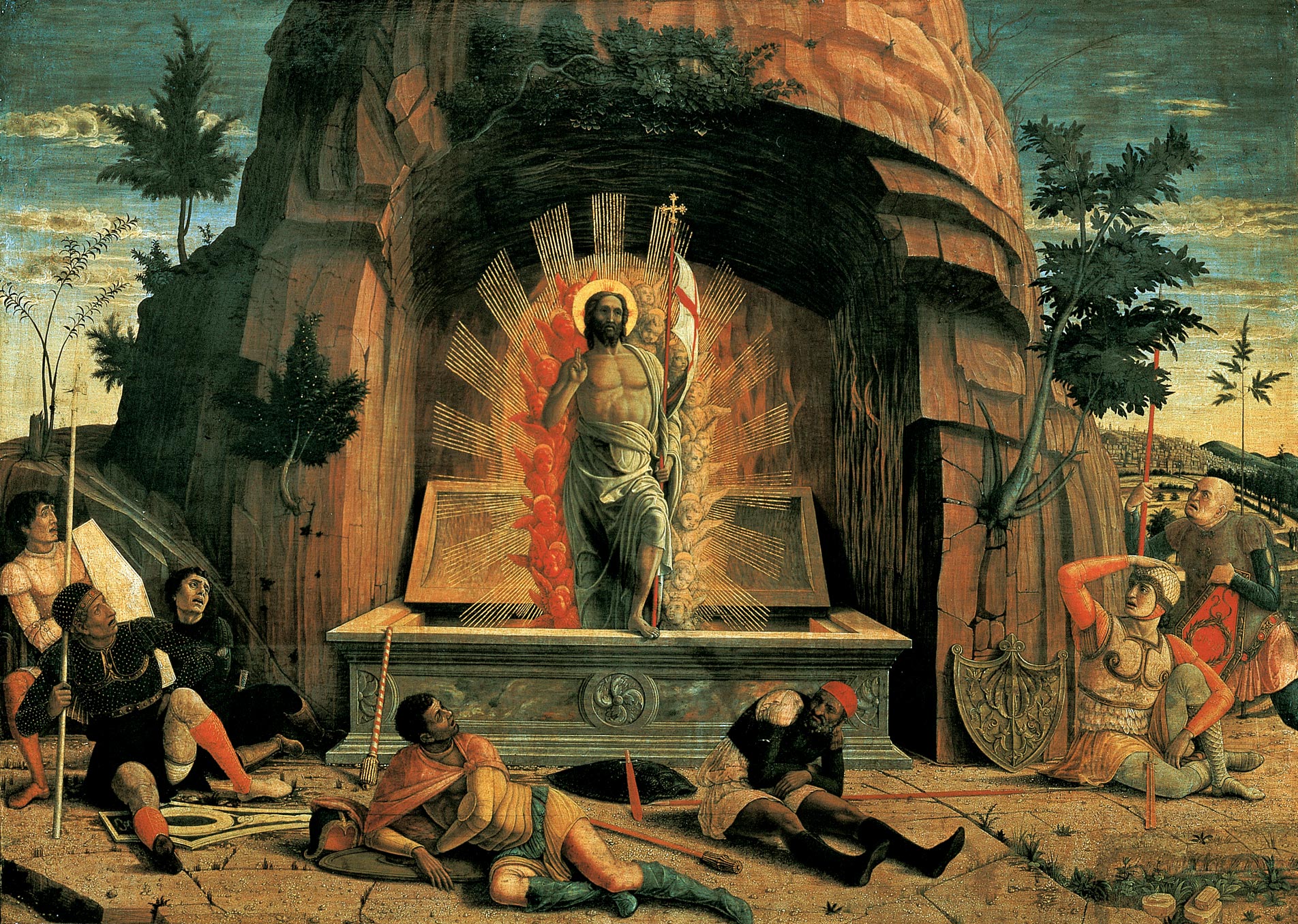
The libretto by the Italian dramatist Carlo Sigismondo Capece tells the Easter story through a cast of earthly and spiritual characters. In the underworld, a heavenly angel prepares the way for Christ’s victory over death and engages Lucifer in battle. Above ground in Jerusalem, Mary Magdalene, Mary Cleophas, and Saint John the Evangelist mourn the death of Christ and later celebrate as the Angel announces the triumphant resurrection on Easter morning.
The Roman premiere of La resurrezione was a private event held at the palazzo of Francesco Marescotti Ruspoli on Easter Sunday in 1708. It called for a relatively large orchestra: thirty-nine stringed instruments, a solo viola da gamba, a trombone, two trumpets, and four oboes. While the papacy at the time had banned opera, Handel’s oratorio took on a distinct theatrical manner—perhaps testing the Vatican’s limits—with lavish set designs reminiscent of an opera production.
While Barrocada’s orchestra was somewhat scaled down compared to that of the Roman premiere, the players exhibited an understanding of Handel’s style. The orchestra consisted of eight strings, oboe, flute, bassoon, two trumpets, and—as is the group’s trademark—a large and varied basso continuo section consisting of a harpsichord, organ, viola da gamba, double bass, and theorbo. All were reproductions of period instruments, and most were made by the group’s music director, Amit Tiefenbrunn, who specializes in building them. While Barrocada usually performs without a conductor, as is the Baroque manner, La resurrezione was played vibrantly under the able baton of the early-music expert Andres Mustonen.
Although the five principals in the Israeli production didn’t quite deliver the same theatrical fervor as was documented in the Roman debut, their performance exuded a compelling operatic quality that sustained a powerful energy throughout the two-hour production. Arias were crisp and resplendent. Choruses (sung by the principals) and duets elevated the dramatic intensity through gripping dialogues and melodic exchanges. The recitatives never seemed lacking as they transitioned between drama and reflection, accompanied by a pulsating and textured continuo—this was Handel’s signature at the time—backed by the celestial rhythms of the fourteen-string theorbo.
The stars of the show were the Estonian-born, Ukrainian-trained soprano Veronika Brook, singing the part of the Angel, and Alvar Tiisler, the baritone from the Estonian National Opera and a veteran singer of Lucifer. Brook’s striking aria “Disserratevi, o porte d’Averno”opened the concert on a brimming high note as the Angel approaches the gates of Hell to prepare for Christ’s victory. She is soon met by Lucifer, and their colloquy unfolds through sparring arias and recitatives. Tiisler’s booming voice delivered an amusing Lucifer. He introduced the Devil as something of a musical caricature in his first aria, “Caddi, è ver,” before quickly transforming his character into a majestically formidable power, summoning underworld minions to wage war on the angelic hosts in “O voi dell’Erebo.”The drama in the underworld resolves when the Angel frees the saints from their purgatorial dungeons (to the chorus “Il nume vincitor”), banishes Lucifer to the abyss, and ascends to the earthly realm to proclaim the risen Lord.
The events of Easter morning in Jerusalem are then told through several delightful arias and duets from Saint John, Mary Magdalene, and Cleophas. The Estonian tenor Anto Õnnis’s Saint John supported the two Marys with an eloquent voice, especially at the end of Part I, as his introspective aria “Così la Tortorella” comforts those mourning the death of Jesus. The Israeli countertenor Alon Harari delivered a gentle yet brilliant Cleophas, whose bravura conveyed the full range of emotions when he mourns the deceased Christ in “Piangete, sì, piangete” and later celebrates the good news of the resurrection in “Augelletti, ruscelletti!” The Israeli soprano Yael Ender sang an excellent Mary Magdalene. Still at the beginning of her career, Ender possesses a captivating voice, and her aria, “Per me già di morire,” struck at the emotional core of the concert, as Mary Magdalene radiated confidence in the salvation to come through Christ’s resurrection. Barrocada’s splendid production points to a growing commitment among select Israeli chamber and choral ensembles to deliver a repertoire of seventeenth- and eighteenth-century music beyond the usual Baroque standards. While Barrocada’s spring lineup of Bach cantatas, motets, and a tribute to Italian maestros will certainly not disappoint, one hopes that La resurrezione too will be revived in future productions.