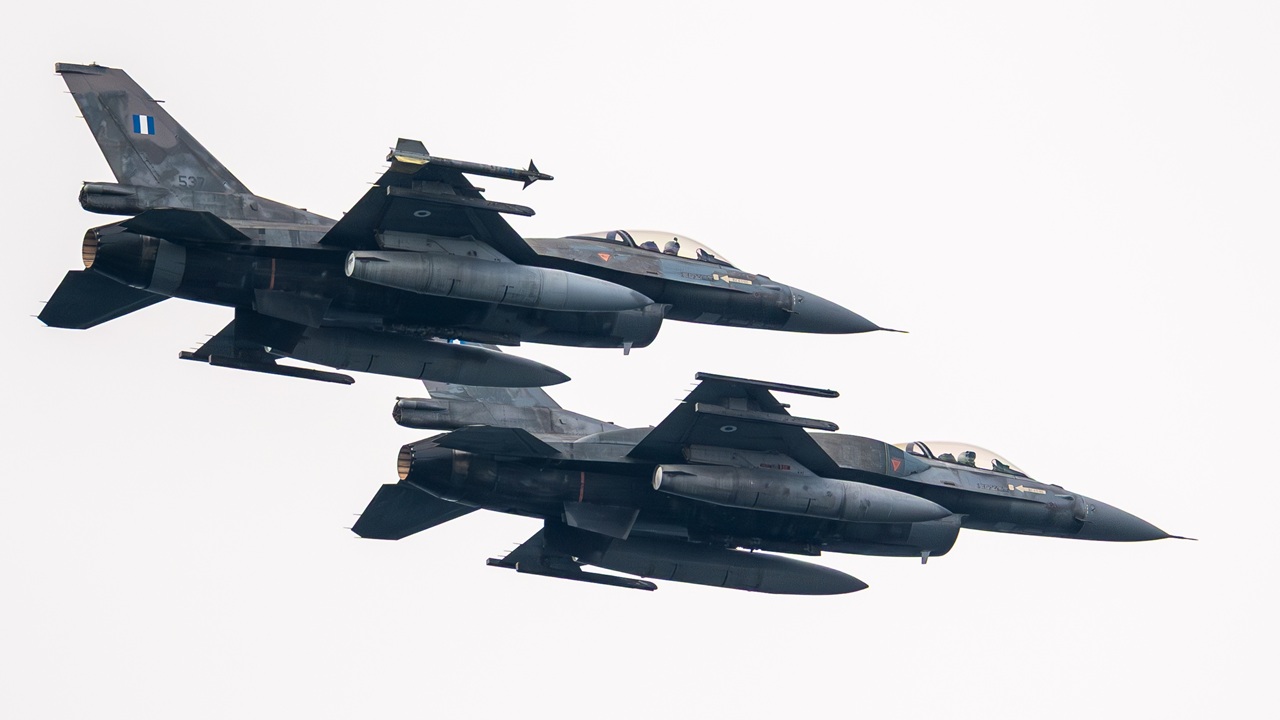
Greece is one of the largest non-American operators of the F-16 Fighting Falcon, with around 150 of the aircraft from various generations.
Greece recently approved plans to upgrade the Hellenic Air Force’s fleet of 38F-16 Fighting Falcons. At the same time, the NATO member will also purchase a multi-layered air and drone defense system from Israel. The total cost was reported to be around €4 billion ($4.6 billion), with approximately €3 billion ($3.4 billion) directed to the so-called “Achilles Shield,” which is heavily inspired by and modeled on Israel’s Iron Dome.
The proposed air defense system would protect Greek territory, including land and sea, from a diverse range of aerial threats, including drones, rockets, and aircraft. It is also part of a broader Greek military modernization.
According to a Reuters report, Athens has pledged to spend around €28 billion ($32.3 billion) over the next decade to modernize its armed forces. Greece faced a nearly decade-long debt crisis from 2009 to 2018 and is now seeking to keep pace with its regional rival, Turkey, despite both countries being NATO members.
Greece Wants to Keep Its F-16 Fighting Falcons Flying
Greece is one of the largest foreign operators of the US-made F-16 Fighting Falcon, with approximately 150 currently in service with the Hellenic Air Force. The single-engine multirole fighters serve as the backbone of the HAF’s air superiority force. However, the aircraft were acquired over several decades and have varying capabilities. Greece has an eclectic mix of F-16 Block 30, Block 50, Block 52+, and Block 52+ Advanced variants.
Athens had previously approved upgrading 84 aircraft to the Viper standard by 2027, which would see the Fighting Falcons outfitted with active electronically scanned array (AESA) radar and other improved systems.
The newly approved plans will see an additional 38 of the Block 50 models, which Greece acquired in the 1990s, updated to the Viper version.
Achilles Shields Up
Beyond the F-16 purchase, the HAF is also on track to receive at least 20 Lockheed Martin F-35 Lightning II fighter jets, with an option for 20 additional aircraft. It also acquired two dozen French Dassault Rafale fighters, which greatly increased its capabilities even as it awaits deliveries of the fifth-generation stealth fighter.
Athens is further investing in advanced drone and cyber systems, but the Achilles Shield is the centerpiece of the defense upgrades.
“It includes a $3.5 billion investment in Israeli-made Spyder for short-range interceptions, Barak MX for medium-range threats, and David’s Sling for ballistic missile interceptions,” The Jerusalem Post wrote. The various systems will be produced by Rafael Advanced Defense Systems and Israel Aerospace Industries (IAI), and are part of a government-to-government agreement.
Athens has strengthened ties with Israel in recent years, and the Achilles Shield will likely further deepen those ties. Greece has sought to develop a more robust air defense network as it replaces its aging American-made and Russian-supplied platforms.
As Maya Carlin previously wrote for The National Interest, “Athens’ desire to beef up its air and missile defense capabilities is certainly influenced by its conflict with Ankara. While the details surrounding the Achilles Dome initiative remain unclear, this modernization push is expected to cost over $25 billion over the next decade or so.”
The current timeline calls for the five-tiered Achilles Shield to be largely operational by the end of 2027, and then expanded accordingly.
About the Author: Peter Suciu
Peter Suciu has contributed to dozens of newspapers, magazines and websites over a 30-year career in journalism. He regularly writes about military hardware, firearms history, cybersecurity, politics, and international affairs. Peter is also a contributing writer for Forbes and Clearance Jobs. He is based in Michigan. You can follow him on Twitter: @PeterSuciu. You can email the author: [email protected].