The White House has nominated a Delta Force officer to lead the National Security Agency (NSA) and Cyber Command.
The two organizations are some of the most important in the entire US Intelligence Community and military.
A Commando in Charge of NSA
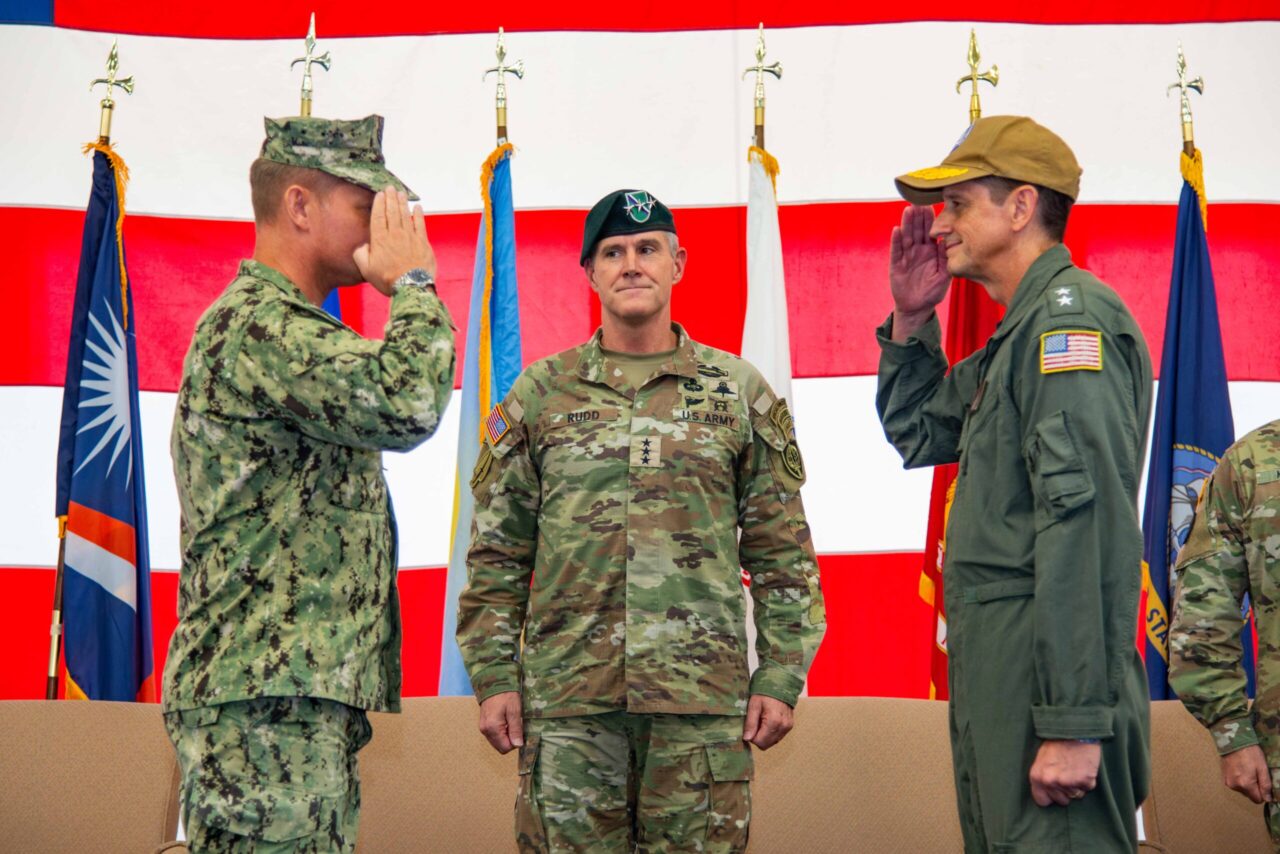
On Monday, Congress announced the referral of Army Lieutenant General Joshua Rudd for nomination to an unspecified position. Then, on Thursday, Defense Secretary Pete Hegseth officially announced that Rudd had been tapped to lead the NSA and US Cyber Command (CYBERCOM) as their dual-hatted commander.
“I look forward to reviewing Lt. Gen. Rudd’s nomination and evaluating his qualifications to lead the NSA and US Cyber Command at a moment of unprecedented cyber and national security threats,” Senator Mark Warner, vice chairman of the Senate Intelligence Committee, told the DefenseScoop news outlet on Wednesday.
Rudd served in and subsequently commanded the Army’s elite Delta Force special missions unit. He saw combat in Afghanistan and Iraq. The Army officer has also held senior positions in the 25th Infantry Division, 1st Special Forces Command, and Special Operations Command Pacific.
The special operator is not the classic pick for the “technical” NSA and CYBERCOM. However, The National Interest understands that Rudd has a reputation for exceptional leadership capabilities among the US special operations community.
“That said, it should never have taken this long to nominate someone to this critical post,” the Democratic senator from Virginia added. “At a time when China, Russia, Iran, and criminal actors are constantly probing our defenses, this kind of chaos and vacancy at the top makes America less safe.”
In April, the White House dismissed Air Force General Timothy Haugh, the previous NSA director and CYBERCOM commanding general, and his NSA deputy director, Wendy Noble.
America Is Focused on China
Rudd currently serves as the deputy commander for US Indo-Pacific Command, perhaps the most important combatant command in the entire US military right now.
The US national security apparatus turned its focus on China in earnest during the pivot to the Indo-Pacific under the Obama administration. Today, despite the nearly four-year conflict in Ukraine and Russia’s open aggression against NATO, China represents the number one threat to US national security. Beijing seeks to redraw the international balance and dispute the United States’ global supremacy through economic, political, diplomatic, and military means.
Rudd’s likely appointment to the NSA and CYBERCOM is particularly meaningful considering the signals intelligence, cyberattack, and cyber espionage threat coming out of China.
For example, according to the US National Counterintelligence and Security Center, China steals between $200 billion and $600 billion worth of intellectual property from the United States every year. And Beijing has been doing so for several years, causing potential damage in the trillions of dollars.
There are concerns, moreover, that in a potential hot incident or full-blown war with China, Beijing would use its offensive cyber capabilities to hit US critical infrastructure and create serious disruptions in the United States.
Rudd’s likely appointment as the next NSA and CYBERCOM leader will bring him into one of the most important positions in the US national security apparatus. But great power comes with great responsibility.
About the Author: Stavros Atlamazoglou
Stavros Atlamazoglou is a seasoned defense journalist specializing in special operations and a Hellenic Army veteran (national service with the 575th Marine Battalion and Army HQ). He holds a BA from the Johns Hopkins University and an MA from the Johns Hopkins’ School of Advanced International Studies (SAIS). His work has been featured in Business Insider, Sandboxx, and SOFREP.
Image: DVIDS.