Even the most optimistic estimates suggest that Britain and France could only scrape together 15,000 troops for deployment in Ukraine—far too few to deter a future Russian invasion.
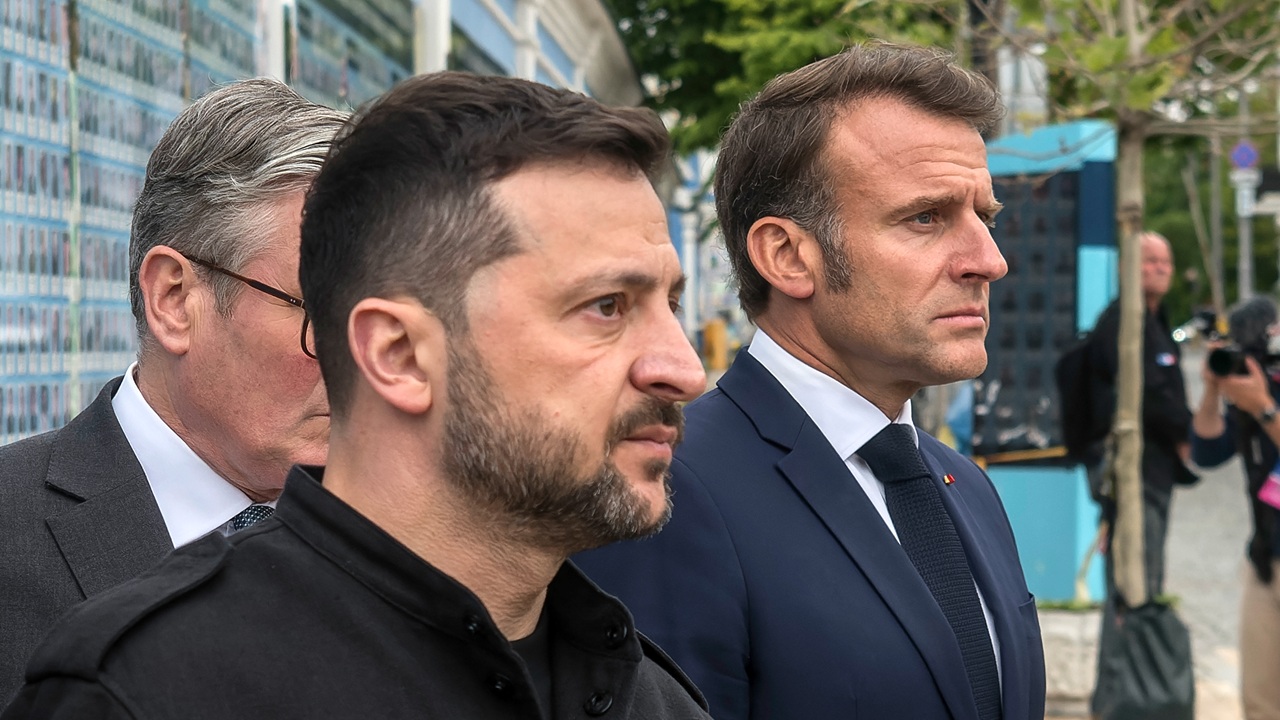
If and when a ceasefire is ever reached to end the hostilities in Ukraine, two NATO members have pledged to deploy military forces to ensure a lasting peace. This month, the governments of the UK and France signed a declaration of intent on deploying troops to Ukraine.
During the meeting of the “Coalition of the Willing,” both countries announced they would “establish military hubs across Ukraine” intended to deter future invasions.
However, Moscow has repeatedly warned that any foreign troops in Ukraine would be seen as “legitimate combat targets”—a point it reaffirmed on Thursday, indicating that even the Kremlin doesn’t believe that a formal end to the war may be possible.
“The deployment of Western military units, military facilities, depots, and other infrastructure on Ukrainian territory will be classified as foreign intervention, posing a direct threat to the security of not only Russia but also other European countries,” the Russian government said in a statement on Thursday.
“All such units and facilities will be considered legitimate combat targets of the Russian Armed Forces,” the Kremlin added. “The fresh militaristic declarations of the so-called coalition of the willing and the Kyiv regime constitute a veritable ‘axis of war.’”
The “Coalition of the Willing” Is Not an Invasion Force
The combined Anglo-French “peacekeeping force” would be limited to 15,000, a number far smaller than the 64,000-strong “Coalition of the Willing” unit some officials have deemed necessary for any significant impact.
The UK originally proposed sending 10,000 personnel to Ukraine on its own, but that number was “deemed unsustainable inside the Ministry of Defence given the current size of the British Army,” The Times reported.
The British paper of record noted that the British Army had only 71,000 trained personnel, and could only be stretched to send 7,500 troops to support peacekeeping operations. The burden would fall on France, but it is also constrained by the personnel available. Estonia said it could provide several hundred soldiers for a peacekeeping role, meaning even a total force of 15,000 would be “optimistic.”
There is a fear among some officials that if the coalition can’t raise 64,000 troops—which would still be dwarfed by the 800,000 Russian soldiers now in service—it would signal weakness.
Historical European Invasions of Russia Have Been Far Larger
Even if a force of 15,000 can be pulled together, it would be far smaller than the roughly 60,000 allied forces, made up of French, British, and Turkish personnel, which took part in the initial landings in Crimea in September 1854 when the three nations—later joined by the Kingdom of Sardinia in western Italy—went to war with Russia. Total troop deployment during the Crimean War included more than 310,000 French soldiers and more than 111,300 British soldiers.
That wasn’t the last time Western forces took part in operations within Russia. During the Russian Civil War, French, British, American, and Japanese troops, as well as troops from other nations, were deployed to support the White (anti-Bolshevik) forces. More than 200,000 Allied troops participated in multiple military expeditions over nearly seven and a half years, from November 1917 to May 1925.
The original mission was to secure munitions and supply depots from falling to Germany’s forces during World War I, but the intervention continued after the November 1918 armistice. The Allies then attempted to support the White forces, but withdrew after the Bolsheviks’ victory in the Russian Civil War.
The Franco-British Coalition Needs Clear Rules of Engagement
Any modern deployment of forces wouldn’t be to aid Ukraine in achieving victory against Russia, as the British and French intervention in the Crimea War was. Nor would it be to take sides, as the Allies did from 1917. Instead, it would be to ensure that Russia doesn’t use a ceasefire to regroup and carry on the war against Kyiv. That mission would be far more straightforward than past engagements against Russia, but it would not be without considerable challenges.
“Anybody who believes that Russia will live up to any agreement is not being realistic,” General Ben Hodges, US Army (Retired), told the Guardian.
However, Hodges warned that any deployment of troops must be ready to respond to Russian aggression, stating that “Russia will immediately test their responsiveness.” The troops will need to be able to respond accordingly.
“The coalition of the willing has to have real force and rules of engagement that allow it to immediately react and respond to any violations,” Hodges explained. “Captains can’t be having to call back to Paris or London to find out how to deal with a Russian drone.”
About the Author: Peter Suciu
Peter Suciu has contributed over 3,200 published pieces to more than four dozen magazines and websites over a 30-year career in journalism. He regularly writes about military hardware, firearms history, cybersecurity, politics, and international affairs. Peter is also a contributing writer for Forbes and Clearance Jobs. He is based in Michigan. You can follow him on Twitter: @PeterSuciu. You can email the author: [email protected].
Image: Shutterstock / paparazzza.