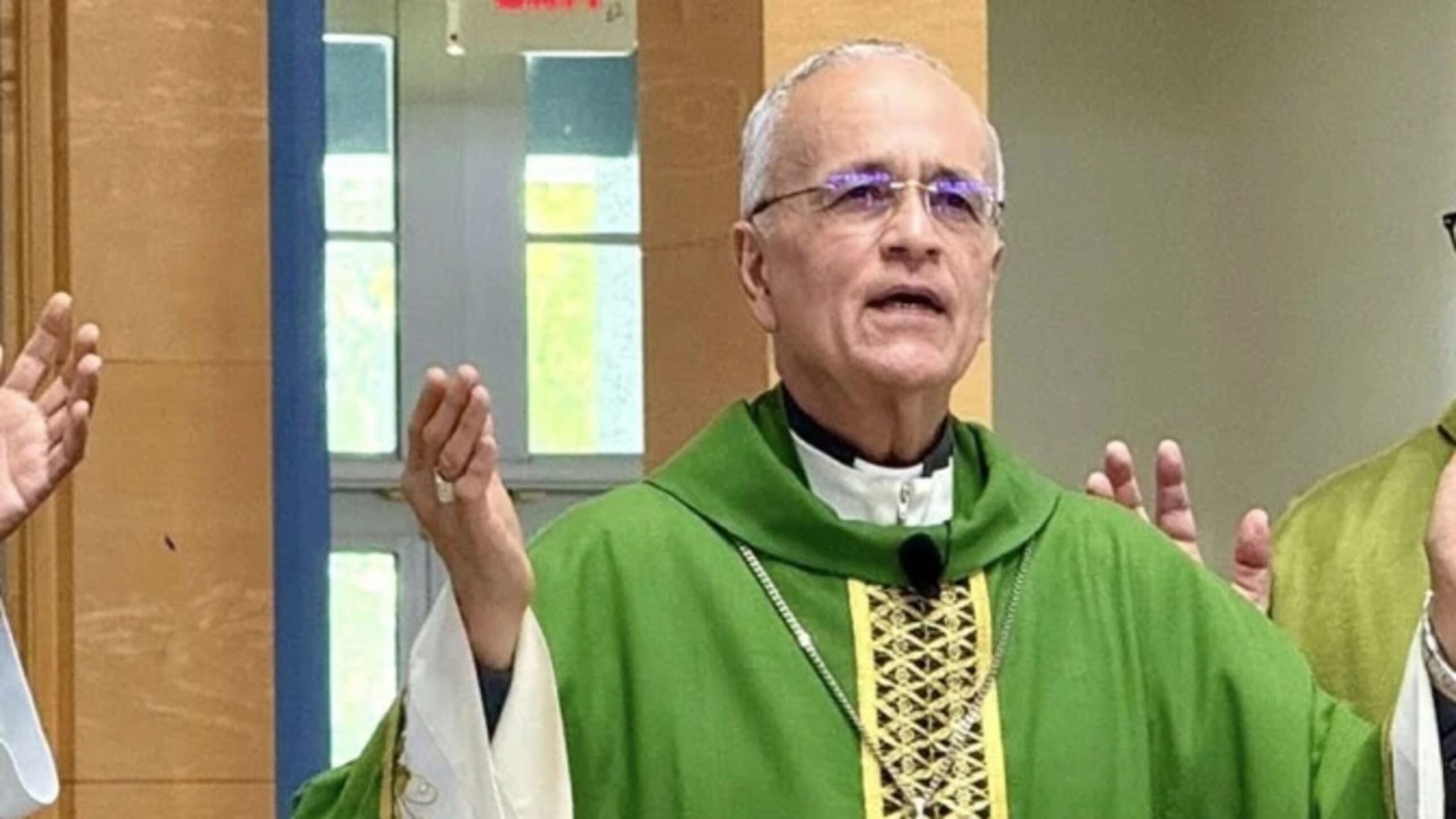
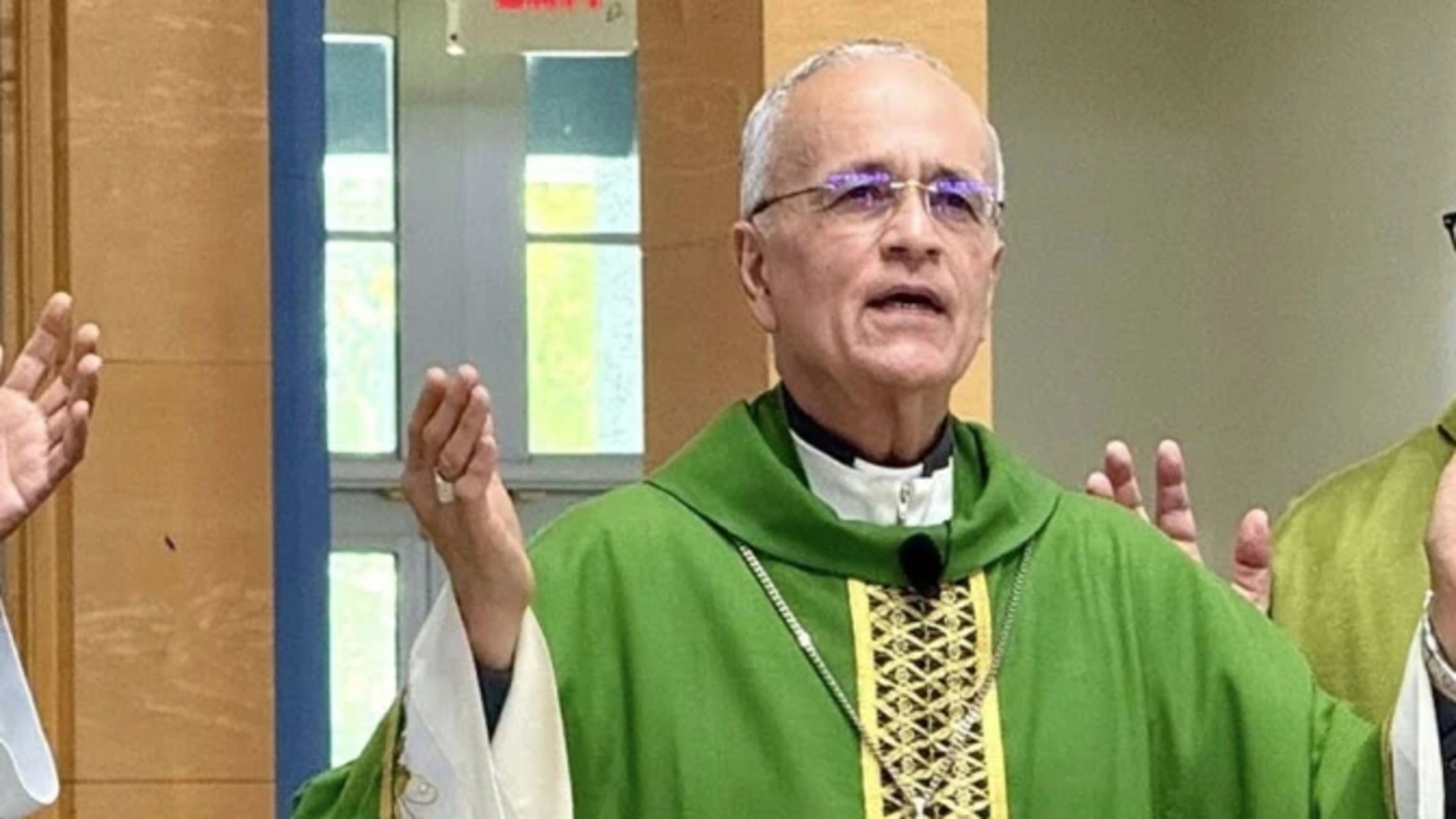
Silvio Báez, the exiled auxiliary bishop of Managua, Nicaragua, said in a homily on Jan. 25 that “freedom and democratization are getting closer and closer” in Latin America and that “for the Church, this is not a time for silence.”
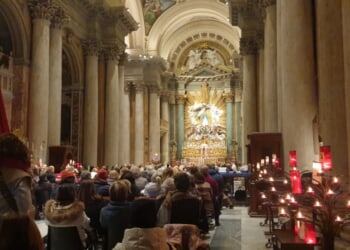
“In many of our countries, we are experiencing moments of uncertainty and painful experiences of arbitrary powers that threaten, repress, and imprison. This is not the time to be silent or to lose heart,” Báez said during the homily for the Mass he celebrated at St. Agatha Church in Miami.
The bishop has been in exile since 2019 due to credible threats against his life for criticizing the Nicaraguan dictatorship, led by President Daniel Ortega and his wife and “co-president,” Rosario Murillo.
“The time has come to speak out to illuminate the darkness of the moment, to nourish the people’s hope, and to denounce the oppressive structures that have prevailed until now but which are about to disappear,” the prelate emphasized.
Báez said it is time for political leaders to address the people and empower and encourage them, keeping in mind that “God speaks to us through what happens. People may be silenced, but great ideals endure.”
Reflecting on John the Baptist’s arrest in the day’s Gospel reading, which represented the silencing of a prophet, as has happened with bishops, priests, and nuns in Nicaragua who are suffering fierce persecution under the dictatorship, Báez emphasized that “Jesus teaches us that when everything seems to be stopped, it is the perfect moment to recalibrate our inner compass and be docile to God’s ways, to look to the future with hope, and to move forward.”
“Problems and obstacles are opportunities to discover new strength hidden within ourselves. Taking up challenges without becoming discouraged or broken is what strengthens us and leads us to always find creative solutions,” he continued.
“We must learn to read history, the events of life, because the Lord’s strength and love are present in every difficulty we face,” the bishop explained.
The call to conversion
In his homily, the prelate said that “God has drawn near to us, with all his saving power. We are not alone, entangled and overwhelmed by our problems, weaknesses, and sufferings. When announcing the nearness of the kingdom of heaven, Jesus adds, ‘Repent.’”
“To convert is to remove the obstacles to God’s closeness,” he explained, adding that “to convert is to allow ourselves to be transformed by the renewing power of God’s love.”
“It is a call to go beyond personal interests and self-satisfaction to build relationships based on compassion and solidarity, fundamental pillars for building a new humanity.”
The bishop emphasized that “we are now living through a decisive moment in which global geopolitics seems to be reconfigured through the use of force, the negation of law, and the contempt and mistreatment of the most vulnerable human groups” and that “economic relations and wealth have been elevated to a level of power that governs the world, forgetting the value and dignity of peoples and individuals. It is time to steer history in a new direction.”
In this regard, he encouraged everyone to remember what Pope Leo XIV said at the Mass inaugurating his pontificate on May 18, 2025: “Brothers and sisters, this is the hour for love! The heart of the Gospel is the love of God that makes us brothers and sisters.”
This story was first published by ACI Prensa, the Spanish-language sister service of EWTN News. It has been translated and adapted by EWTN News English.