Canada was long expected to buy the F-35 Lightning II to replace its aging CF-18 fighters—but political tensions with America, and a surprising offer from Sweden, have upended these assumptions.
Canada’s fighter replacement decision has become a subject of international drama. The core dilemma facing Ottawa is whether to continue efforts to buy the American F-35 Joint Strike Fighter—imperiled by the recent political spat between the United States and Canada—or to switch to Sweden’s Saab JAS 39 Gripen.
Saab, smelling blood in the water, is continuing its push for the Canadian market, with promises of local job growth and affordability. Conversely, the US is threatening to patrol Canadian skies with American jets, should the F-35 purchase fall apart. For Canada, the choice is less about choosing the “better” jet, and more about how Canada sees its role and dependencies in the greater geopolitical context.
Canada Urgently Needs a New Fighter Jet
Canada’s CF-18 fleet is aging; a replacement is overdue. The purchase requirements will be shaped by Canada’s NORAD commitments, NATO obligations, and Arctic defense. The F-35 has long been the presumed procurement target—but the politics of that procurement have recently become rather complicated, with the Gripen emerging as the principal non-US alternative.
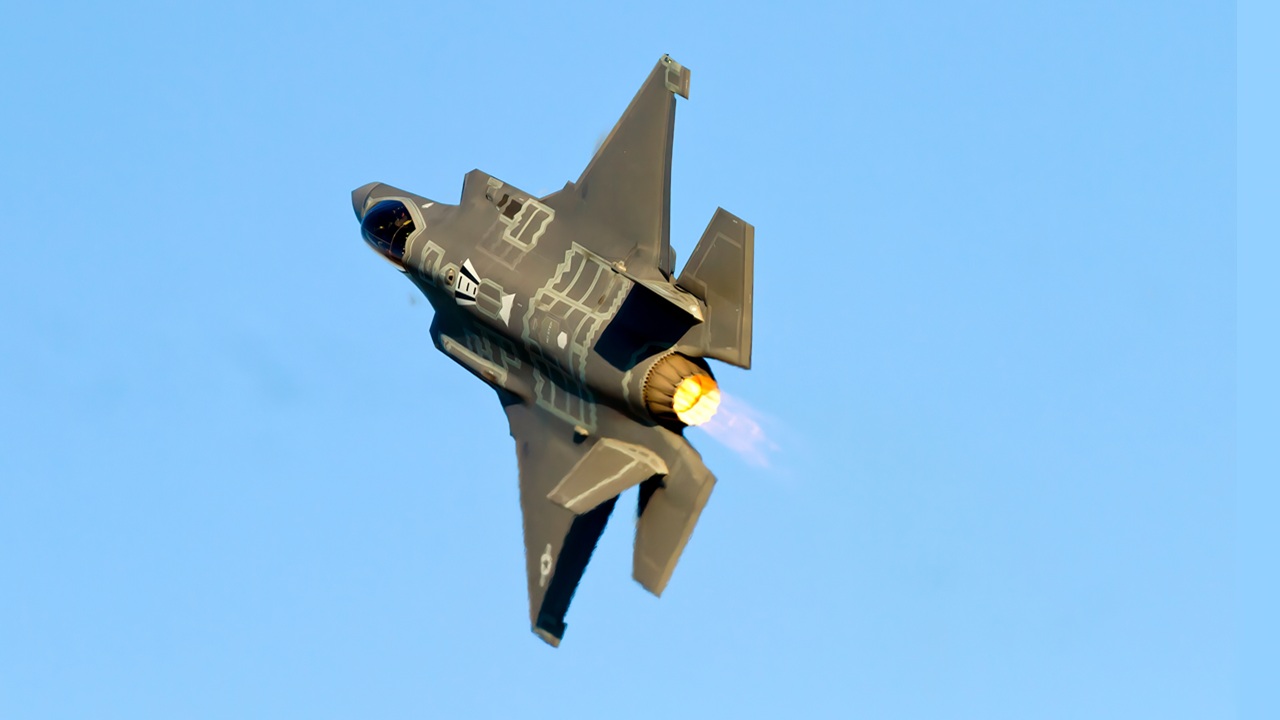
The F-35 is a fifth-generation stealth multirole fighter designed for first-day-of-war penetration, world-class sensor fusion, and networked warfare. The F-35 already enjoys deep integration with US and NATO forces, making the jet a convenient option capable of surviving in high-threat environments.
Conversely, the Gripen is a fourth-generation-plus multirole fighter designed for dispersed operations, ease of maintenance, and national sovereignty. The Gripe is not stealthy but highly agile and sensor-capable, optimized for small air forces with limited budgets.
From a technical perspective, the two jets are quite different. The F-35 is built around stealth-first design choices. Its weapons bays are internal. The maneuverability is relatively limited, with a high reliance on software, sensors, and data fusion. The F-35 costs more per aircraft, and far more per flight hour, than the Swedish competitor. The Gripen was designed around aerial combat, not stealth shaping; it features external stores, plus excellent electronic warfare capabilities, and an agile performance envelope. The Gripen benefits from faster turnaround times and simpler logistics, with lower acquisition and operating costs.
F-35 Lightning II vs. JAS 39 Gripen: A Head-to-Head Comparison
| Fighter Jet | F-35 Lightning II (USA) | JAS 39 Gripen (Sweden) |
| Year Introduced | 2016 | 2019 |
| Number Built | ~1,300 (all variants) | ~300 |
| Length | ~51.4 ft (15.7 m) | ~50.6 ft (15.4 m) |
| Wingspan | ~35.0 ft (10.7 m) | ~27.6 ft (8.4 m) |
| Weight (MTOW) | ~70,000 lb (31,800 kg) | ~36,500 lb (16,500 kg) |
| Engine(s) | One Pratt & Whitney F135 turbofan | One GE F414-GE-39 turbofan |
| Top Speed | Mach 1.6 (~1,200 mph / ~1,930 km/h) | Mach 2.0 (~1,320 mph / ~2,125 km/h) |
| Combat Radius | ~670 mi (1,080 km) | ~800 mi (1,300 km) |
| Service Ceiling | ~50,000 ft (15,240 m) | ~50,000 ft (15,240 m) |
| Loadout | One GAU-22 rotary cannon; internal bays, external hardpoints, 18,000 lb (8,200 kg) payload capacity | One Mauser BK27 revolver cannon; 8 external hardpoints, 11,700 lb (5,300 kg) payload capacity |
| Aircrew | 1 | 1 |
The F-35 and the Gripen Have Different Strengths
For Canada’s primary needs—arctic patrols, NORAD integration, NATO/expeditionary operations—the two jets would offer different capabilities. In part due to its Swedish origins, the Gripen is well-suited to austere, dispersed operations, facilitating Arctic patrol. The aircraft is interoperable with NATO but less embedded in US systems. Abroad, the Gripen is effective in permissive or medium-threat operations, but would struggle in denied airspace—like that over an adversary nation or an A2/AD bubble, as found near China’s shores.
The F-35 would be capable in Arctic patrols, but is arguably overkill for routine patrol missions. The jet would integrate seamlessly with US command-and-control, making NORAD integration easy. Abroad, the F-35 enjoys a clear advantage in contested environments.
But the Gripen offers lower lifecycle costs, greater domestic industrial participation, and more control over software and upgrades. The F-35, meanwhile, offers massive economies of scale and access to a global sustainment ecosystem.
So Which Fighter Jet Would Be Better for Canada?
It’s hard to say—and it depends on what Canada’s top strategic objectives are.
Geopolitically, choosing the F-35 would reinforce US alignment and simplify NORAD and NATO integration. The purchase would also signal a reliance on American security guarantees. Choosing the Gripen would be inflammatory for Ottawa’s relationship with Washington. The choice would signal strategic autonomy while strengthening ties with Europe. But would the fallout be worth the autonomy?
The decision Canada makes here will ultimately be about identity and posture, not about performance metrics. Both aircraft can perform the roles Canada needs. The real question is about how closely Canada wants to bind itself to the United States, in light of recent events.
About the Author: Harrison Kass
Harrison Kass is a senior defense and national security writer at The National Interest. Kass is an attorney and former political candidate who joined the US Air Force as a pilot trainee before being medically discharged. He focuses on military strategy, aerospace, and global security affairs. He holds a JD from the University of Oregon and a master’s in Global Journalism and International Relations from NYU.
Image: Shutterstock / A. Michael Brown.