Intro to a New Series
Pope Leo XIV’s prayer intention for this month of January is “for prayer with the word of God.” This provides a graced opportunity for us to enter into this 8-week series of 8 essays, where we will ponder together the coming Sunday Mass readings, particularly from the angle of how we can pray the word of God more deeply and fruitfully.
I personally have had a devoted spirituality of the Word for the past 25 years, since my days in college—and still, new ways of praying with the Scriptures have begun to open up for me just over these past couple years! (I say “new,” but they are actually a fresh re-appropriation of ancient ways of praying the Bible, as practiced by the medieval monks and the Church Fathers.)
This series will approach each Sunday’s readings practically, offering concrete advice on how to practice these traditional ways of praying the Word. For those eager to dive deeper into the theology and foundations of this mysticism of the Word, I have shared a variety of talks on this theme and written a substantial essay on how this all shows up in the spirituality of the great contemplative St. John of the Cross.
And so, let us begin…
“Rise up in splendor, Jerusalem! Your light has come.”
“The mystery was made known to me by revelation.”
“When you have found Him, bring me word.”
These snippets from our three readings for this Sunday direct us to the word of testimony as an epiphany (or manifestation) of Jesus bringing us light, raising us up, and immersing us in mystery.
We might at first think that we need the word of witness to Jesus because He lived 2,000 years ago, and there is this distance between us and Him. But no, even the present reality of Jesus needs to be witnessed to, or people will miss Him, whether as the little Baby sleeping in a crib or the little Host resting on the altar.
Luke’s account of the Nativity (2:15-20) makes this point strongly by highlighting seven times hearing the message as told or being made known through the word. In Sunday’s Gospel, the saying ironically comes from the lips of Herod but contains truth: “bring me word, that I too may go and do Him homage.” In the Epiphany, we see the word is needed to manifest the mystery of Jesus Christ who has come in such a humble appearance, so we and the whole world can come and adore the God who has come so close to us in the Baby and in the Eucharist.
The most sublime mystery that satisfies the human heart is found in every tabernacle spread throughout the world. So many walk by without knowing this or appreciating this reality. Our word of testimony is necessary for others to experience a present-day Epiphany of Jesus in their lives. And it is through our pondering and praying the Word of God that we ourselves savor and enter more deeply into this mystery.
Jesus comes to us most profoundly in Word and Sacrament. We need the Word of God to open up to us the mystery of Jesus in the Eucharist. For instance, we need the letters of St. Paul to make known to us what has been poured into our souls through Baptism and the potencies that are available to us in Christ, with His life pulsating through us.
A traditional way the Church has helped us unfold the mystery of the Word of God are through the four senses of Scripture—the literal and the three spiritual. Throughout this series, we will be especially attentive to this way of reading the Bible. The literal sense of Scripture contains a plethora of meaning that is opened up through the three spiritual senses, which help us penetrate the full riches of the Word of God (Col. 1:25-2:8). The three spiritual senses are the allegorical (Christological), moral (tropological), and anagogical (eschatological) (CCC 117).
The three spiritual senses can be understood like this: What does a given passage say about (1) Jesus, (2) our living the mystery of Jesus, and (3) our destiny in Jesus? These are not ironclad, and do not limit things to just a few proper interpretations, but are basic guidelines to point us in the right direction—deeper into the Word. Then we can say with St. Paul, “The mystery was made known to me by revelation” as a present encounter and living taste of the mystery of God (read also Eph. 1:17-18).
In the Emmaus Journey of Luke 24:13-49, Jesus opens their minds and hearts to understand how the whole Bible is about Him and our life with Him as these mysteries burn in their hearts as a present reality. Emmaus literally means “hot springs,” and this is precisely where we journey through the Word of God, deeper into the living waters of Jesus, warmed with the fire of His love.
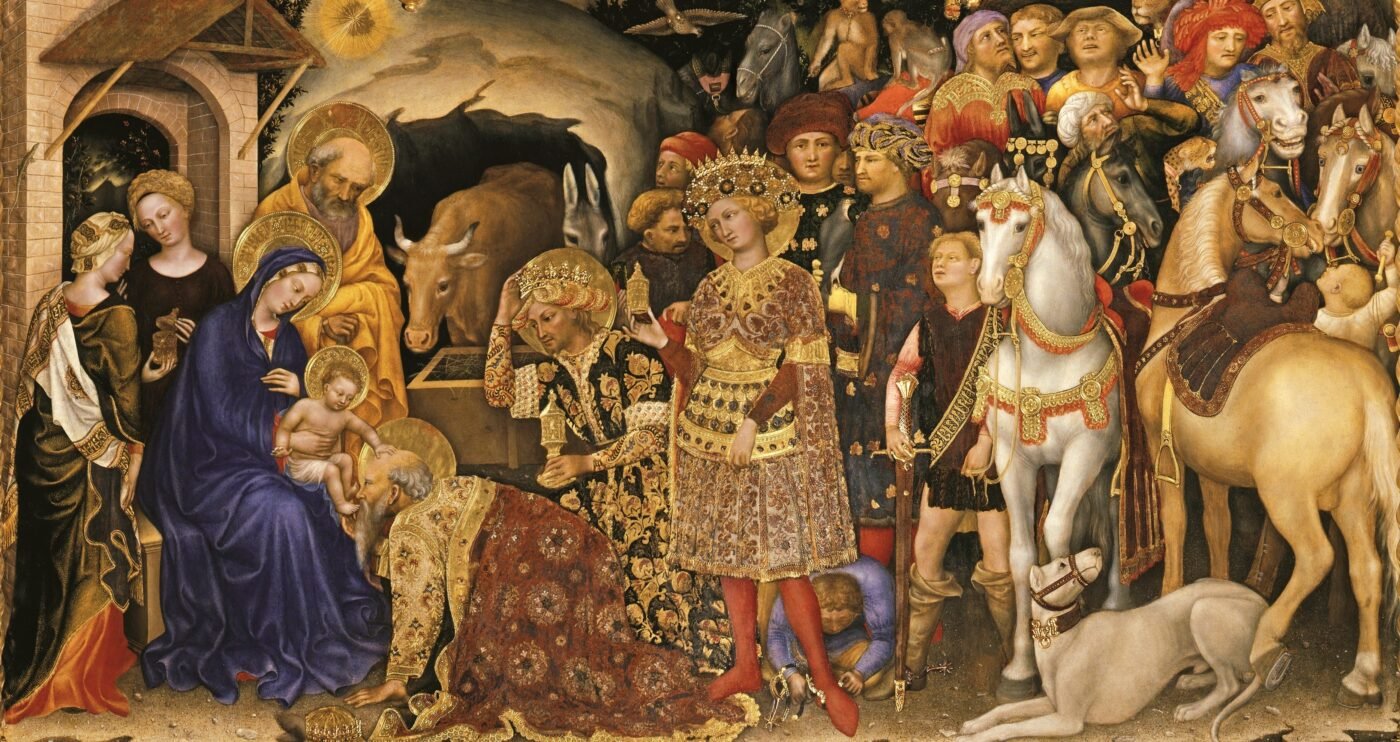
In our prayerful pondering for Epiphany, among other things, we can be attentive to what Sunday’s 1st reading’s emphasis on Light opens up about Jesus as the Light of the world (allegorical sense). With our Gospel, we might explore what it says about our own seeking and finding Jesus in our lives, through the word, and sharing this with others (moral). We can also share how in our praying with these readings, we experienced our own epiphanic manifestation of the mystery of God and rested in His love in the One who has brought us Eternal Peace (anagogical). Like the magi, gazing upon the Child Jesus in the arms of Mother Mary, we fall down in worship and offering (Mt. 2:11). Indeed, the proper atmosphere of reading the Bible is “Glory to God in the highest.”
Editor’s Note: This is the first article of a new CE series on “Exegesis of the Word” by Fr. Ignatius Schweitzer, breaking open each Sunday’s readings for the following 8 weeks. Tune in next Friday for the next article!
Image from Wikimedia Commons