In the classic historical drama The Lion in Winter (1968), King Henry II, played by Peter O’Toole, laments to his wife Eleanor, “Aquitaine is not a province, it is a way to torture me.” While fictional, this line of dialogue accurately captures the tumultuous nature of Henry’s relationship with his wife of over thirty years. The twilight years of their marriage were defined by a relentless power struggle, fueled by Eleanor’s immense personal authority. When they married in 1152, she was not only eleven years his senior but also the recently divorced queen of France and the ruler of that kingdom’s largest and wealthiest fiefdom, the Duchy of Aquitaine. The union created the sprawling Angevin Empire and transformed Henry into Western Europe’s most powerful monarch. In her new book Eleanor of Aquitaine: Woman, Queen, and Legend, Lindy Grant seeks to reevaluate this famous queen, a singular figure whose role in the courtly politics of Europe was at different times pawn and kingmaker.
Grant prefaces her book with an important caveat: the historical record of Eleanor’s life has been badly warped by contemporary and later mythmaking. Her life coincided with the age of the troubadour—chivalrous balladeers who often originated from her own domains and felt a duty to glorify her deeds. Court historians, too, had an agenda, reporting only what benefited their patrons. Consequently, the most concrete contemporary evidence for Eleanor’s actions comes not from chronicles, but from legal documents: land grants, church donations, feudal charters, and so forth.
In the first three chapters of the book, Grant gives the hard facts of Eleanor’s biography, insofar as her life can be reconstructed. Eleanor was born in 1124 to Duke William of Aquitaine, the most powerful vassal of the king of France. At this time, France was an anarchic array of squabbling feudal domains and was ruled by the Capetian kings in name only. With their power confined to a cluster of holdings around the realm’s capital at Paris, the French monarchs, limited in resources, struggled constantly to assert themselves over their restive vassals. When the young Eleanor suddenly inherited her father’s duchy upon his death in 1137, King Louis VI could not afford to let the opportunity pass by and promptly secured a marriage between Eleanor and his son and heir, also named Louis. The old king was dead before the year was out, and Eleanor became the queen of France.
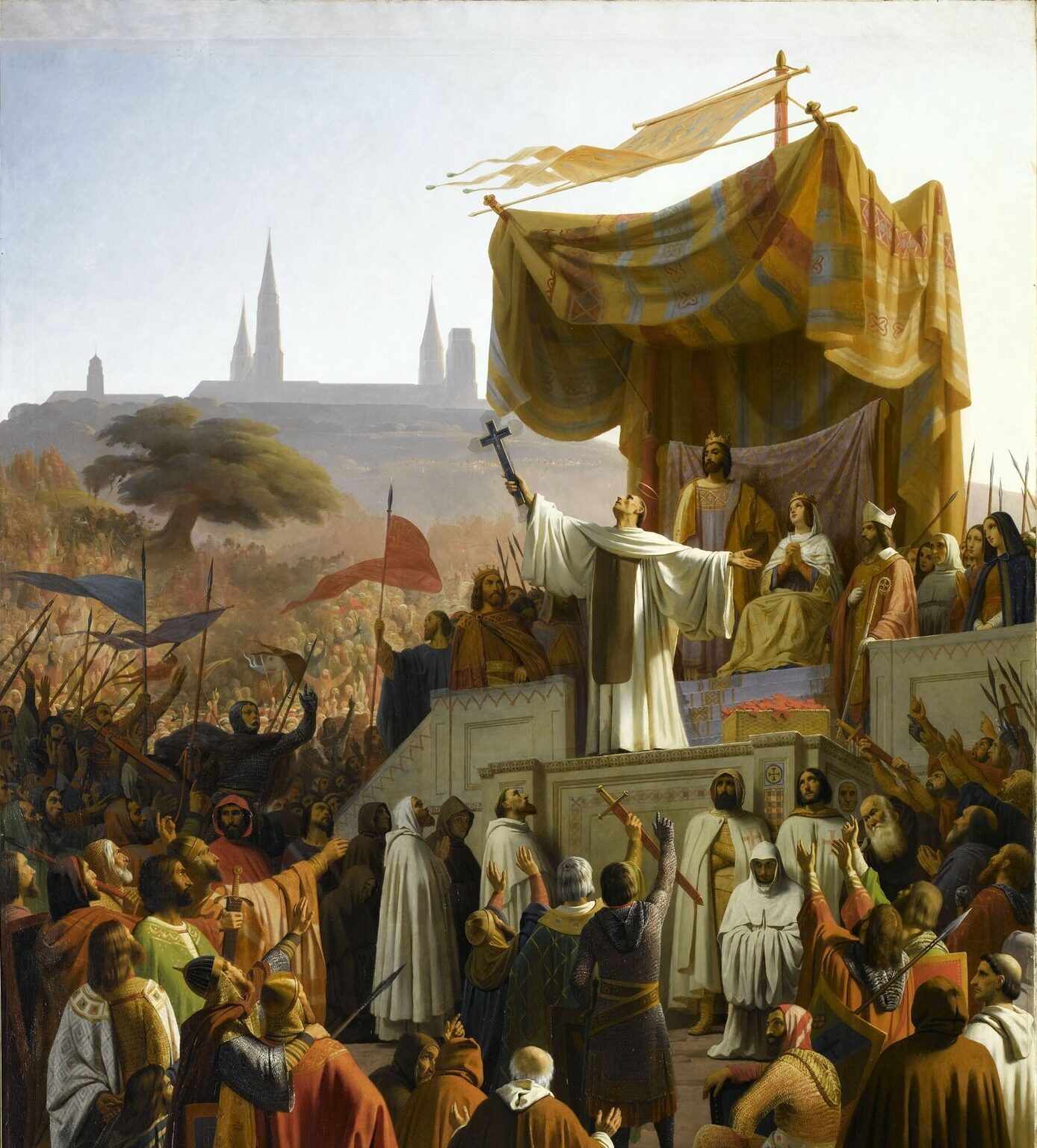
Accounts of the following two decades of Eleanor’s life are arguably the most distorted by legend. Deeply in love with his young wife, Louis brought her with him to the Holy Land on the Second Crusade, where she witnessed the Christian defeat at the siege of Damascus (1148). But the bliss of Eleanor and Louis’ early years of marriage did not last long after two daughters were born and the desired son failed to arrive. There were whisperings of infidelity as well: it was said that at Antioch Eleanor and her uncle Raymond had conducted an incestuous affair. Later chronicles frequently recounted this alleged relationship with varying degrees of salaciousness. Grant analyzes these persistent “black legends,” questioning their origin. She dismisses a motive often cited by some historians—medieval misogyny—noting that other contemporary female rulers, such as Empress Matilda, avoided such notoriety. Instead, Grant suggests, these later tales were concocted to discredit Eleanor’s first French match, and tie her closer to the English Angevin dynasty, the family she eventually married into.
The union of the future Henry II of England and Eleanor in 1152 redefined European politics. Earlier that year, Eleanor and Louis had annulled their marriage on grounds of consanguinity (they were third cousins), and the twenty-eight-year-old Eleanor was free to seek a new husband. By marrying Eleanor, Henry became the effective ruler of Aquitaine de jure uxoris (a medieval law asserting the right of the husband to rule the properties of the wife). Aquitaine thus passed from the French to the English sphere of influence, threatening Louis’ ability to control his own kingdom. Historians have termed the lands collectively ruled by Henry and Eleanor the “Angevin Empire,” after Henry’s dynasty. Perhaps more credit for its founding should be given to Eleanor. The young superpower barely outlived the couple: their children, the future kings Richard I and John, fought a losing battle against a resurgent France, which took back possession of Aquitaine in 1214, ten years after Eleanor’s death.
Ruling on matters such as the personal agency and influence of famous historical women can be a difficult matter, especially when there is a scarcity of reliable firsthand accounts. From the vantage point of modernity, glimpses of powerful female figures who seem to defy the standards of their time can prove tantalizing. In Eleanor of Aquitaine, Lindy Grant wrestles with the posthumous legends of a wily, conniving Eleanor as presented in works such as The Lion in Winter. She ultimately finds a queen who was a creature of her age, sufficiently adept in the tools of politics and diplomacy to survive amid the power games of Europe’s most ambitious men.