NEWYou can now listen to Fox News articles!
FIRST ON FOX: A Republican lawmaker in the House of Representatives introduced legislation on Thursday to make federal resources for fighting illegal immigration available to local authorities — even as Democrats unveiled their own language that would restrict partnerships between the two.
Rep. Pat Harrigan, R-N.C., unveiled the COPS Anti-Organized Crime and Cartel Enforcement Act of 2025, looking to provide new resources to local communities combating cartels and other organized threats.
201 HOUSE DEMS VOTE AGAINST BILL NAMED AFTER 20-YEAR-OLD AMERICAN KILLED BY ILLEGAL IMMIGRANT TEEN
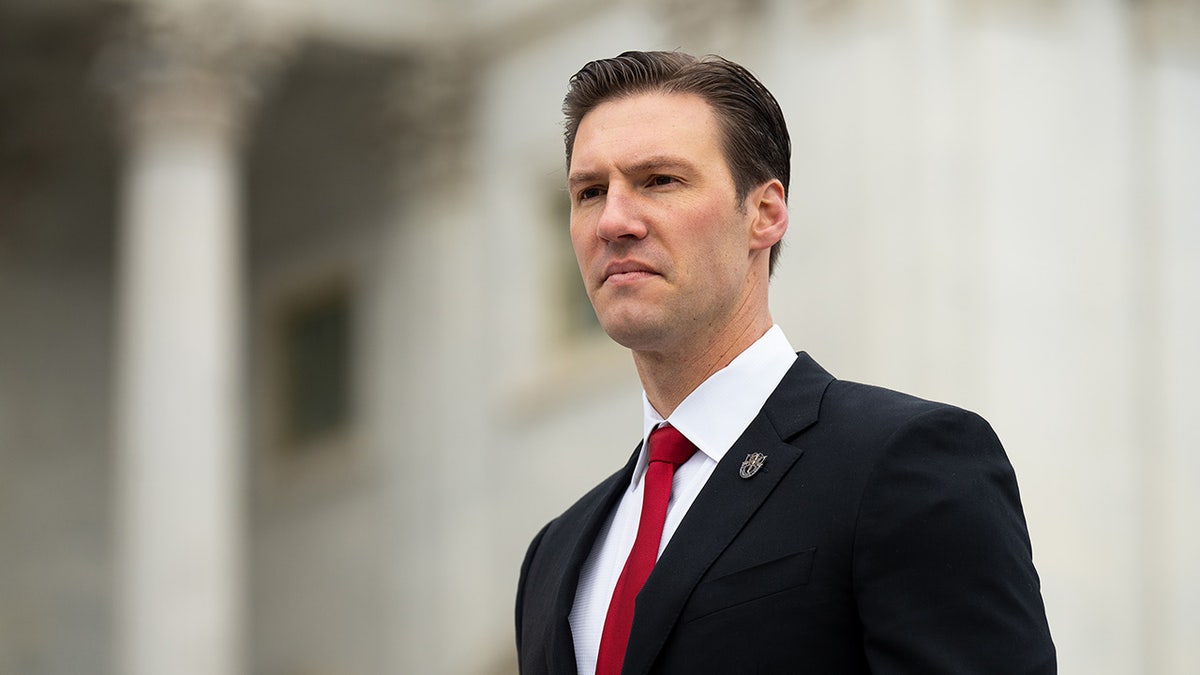
Rep. Pat Harrigan, R-N.C., poses for a photo on the House steps after freshman members of Congress posed for their class photo on the House steps of the Capitol in Washington, Nov. 15, 2024. (Bill Clark/CQ Roll Call, Inc. via Getty Images)
Those new resources would be made available through the Department of Justice’s Community Oriented Policing Services (COPS) office.
“My bill gives police departments access to federal COPS grant funding specifically to create specialized units that can take on organized crime, with the training, equipment and personnel they need to dismantle these operations,” Harrigan said.
His bill comes as Democrats led by Rep. Mike Quigley, D-Ill., unveiled the PROTECT Act, a piece of legislation that would forbid federal agencies from deputizing local authorities to carry out immigration-related enforcement. The contrasting pieces of legislation highlight split understandings over the country’s most pressing law enforcement needs and views on how to address them.
Harrigan’s bill would create a $200 million COPS grant over four years. Under current law, COPS provides a wide range of federal assistance for specific purposes — like its “Anti-Heroin Task Force Awards” or the “Preparing for Active Shooter Situations” grant.
The proposed bill would create a similar category for communities grappling with organized crime and cartels.
The bill expands the permissible uses of COPS funding to include the purchase of drones, ballistic vests, helmets and other pieces of equipment. It also looks to codify one of President Donald Trump’s executive orders allowing the purchasing of tactical vehicles by local law enforcement.
In total, Harrigan’s proposal would reroute $1.4 billion in COVID-19-era unemployment funding to cover its provisions.
“Drug cartels and transnational criminal organizations are operating on American soil with near impunity, and our local law enforcement agencies need the resources to fight back,” Harrigan said.
TOP REPUBLICAN REBUKES NOTIONS TO ARREST DHS AGENTS WITH PLAN TO PULL FUNDING FROM PROBLEM CITIES
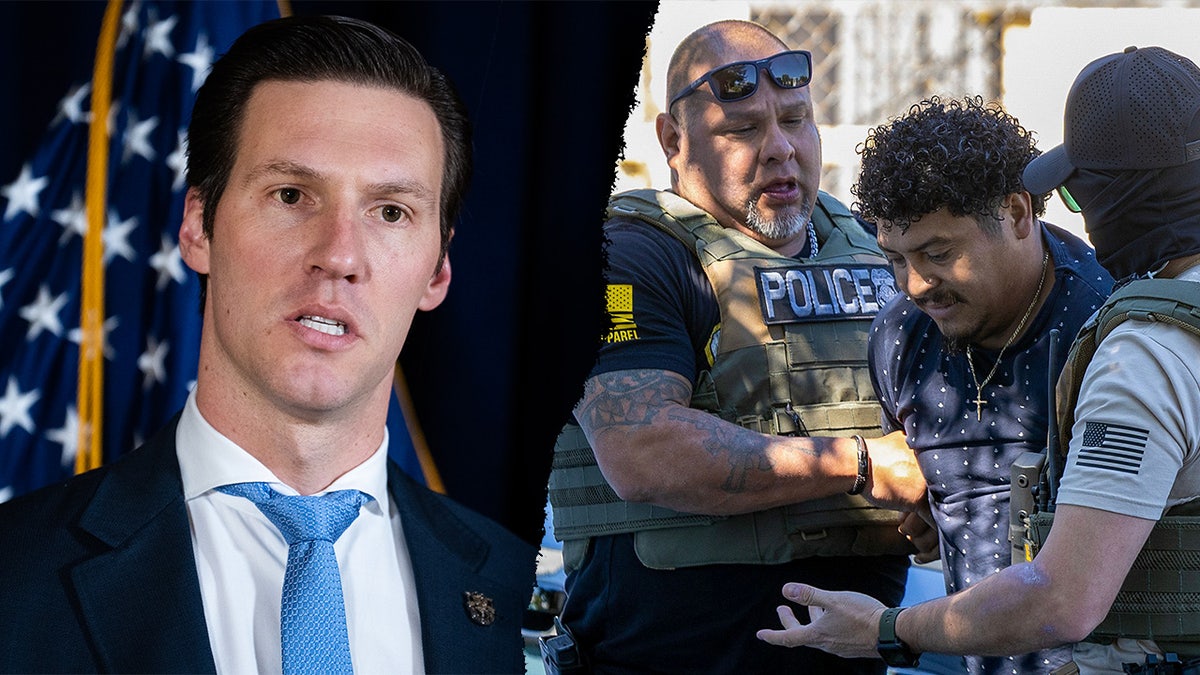
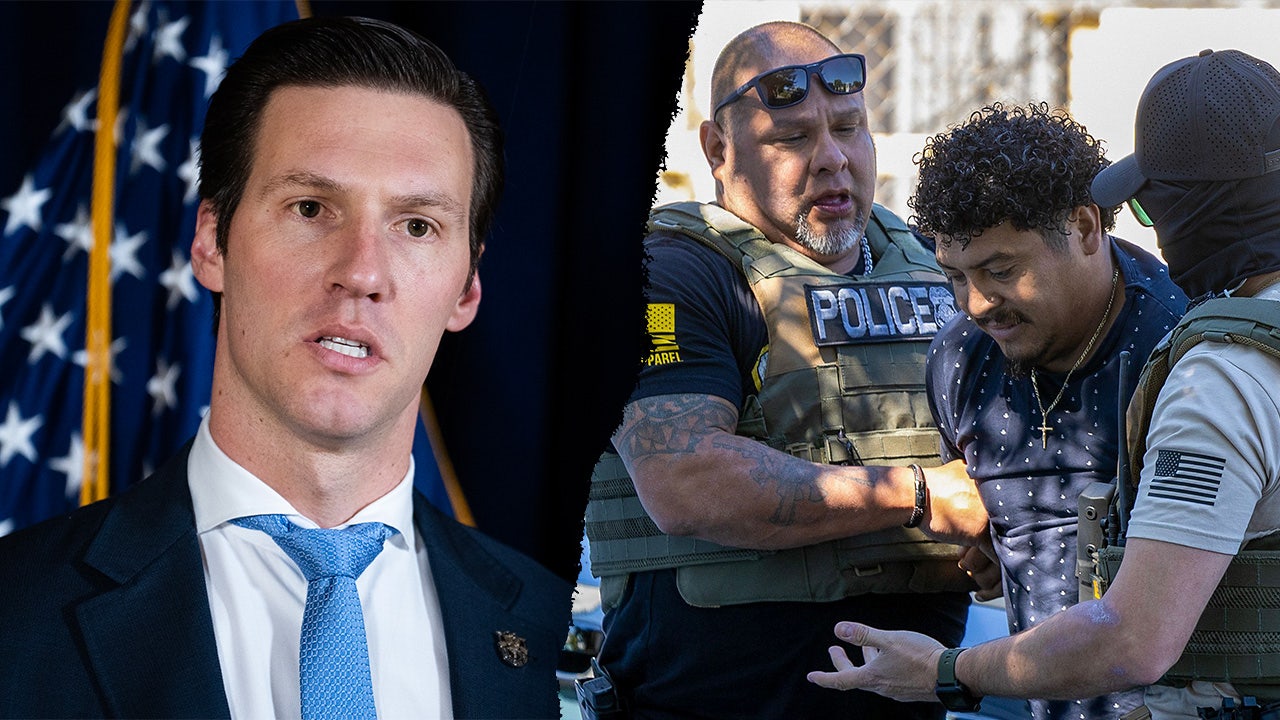
Rep. Pat Harrigan, R-N.C., left, pictured alongside a pair of law enforcement officers making an arrest, right (Tom Williams/CQ Roll Call, Inc. via Getty Images; Photo by Tasos Katopodis/Getty Images)
Democrats, however, have a different set of concerns.
Quigley, who is spearheading the PROTECT Act, believes that local law enforcement that looks and behaves like federal agencies don’t promote public safety if they also erode public trust.
“When people believe that if they call 9-1-1, they have a risk of being scooped and taken away, they’re less likely to call, and they’re going to be less safe,” Quigley said. “I was at the Cook County Domestic Violence Courthouse, talking to advocates. Women were afraid to go in and get the justice they deserved. They were afraid to go get orders of protection to protect them from abusers.”
“In Chicago, the 9-1-1 calls in Latino communities went down 20%,” Quigley added, referencing reporting by the Chicago Tribune earlier this year.
The PROTECT Act, which resurfaces legislation originally introduced by Sen. Cory Booker, D-N.J., would look to eliminate the 287(g) provision of the Immigration and Nationality Act.
That language allows federal agencies to empower local law enforcement bodies to make their own immigration enforcement decisions. When asked what makes the 287(g) provision more problematic than other forms of local-federal collaboration, Quigley said he believes it goes too far.
“I think it’s more likely to create a distrust, just because it’s all-encompassing,” Quigley said. “It’s an extraordinary program, but the public can’t distance local law enforcement and ICE, and they’re less likely to have faith and call in any crime.”
DEMOCRATS REVEAL WHETHER THEY BELIEVE US CITIZENS OR DRUG BOAT TRAFFICKERS ARE MORE IMPORTANT
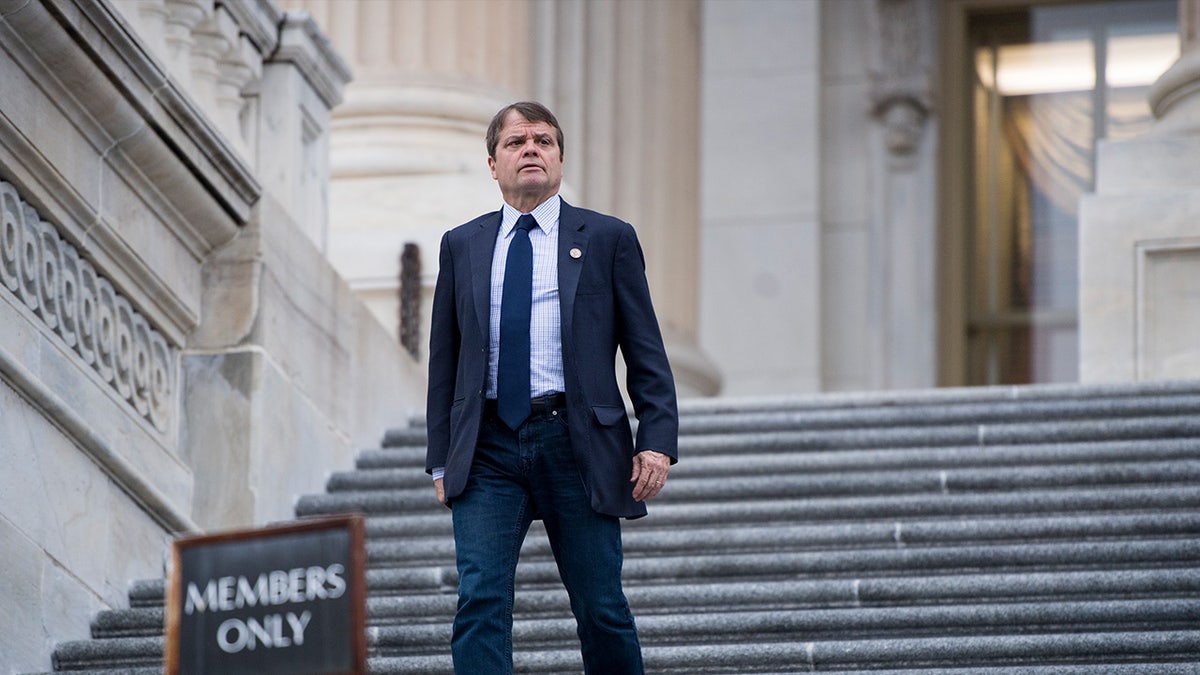
Rep. Mike Quigley, D-Ill., walks down the House steps following a vote in Washington, Oct. 11, 2017. (Bill Clark/CQ Roll Call)
As lawmakers prepare to leave town for the holidays, it’s unclear when the respective bills will receive consideration.
Harrigan pressed the urgency of needing to equip local law enforcement.
CLICK HERE TO DOWNLOAD THE FOX NEWS APP
“We’re talking about the same criminal organizations flooding our streets with fentanyl and fueling violence in our communities, and if we’re serious about securing our communities, we need to give our police the tools to do it,” Harrigan said.