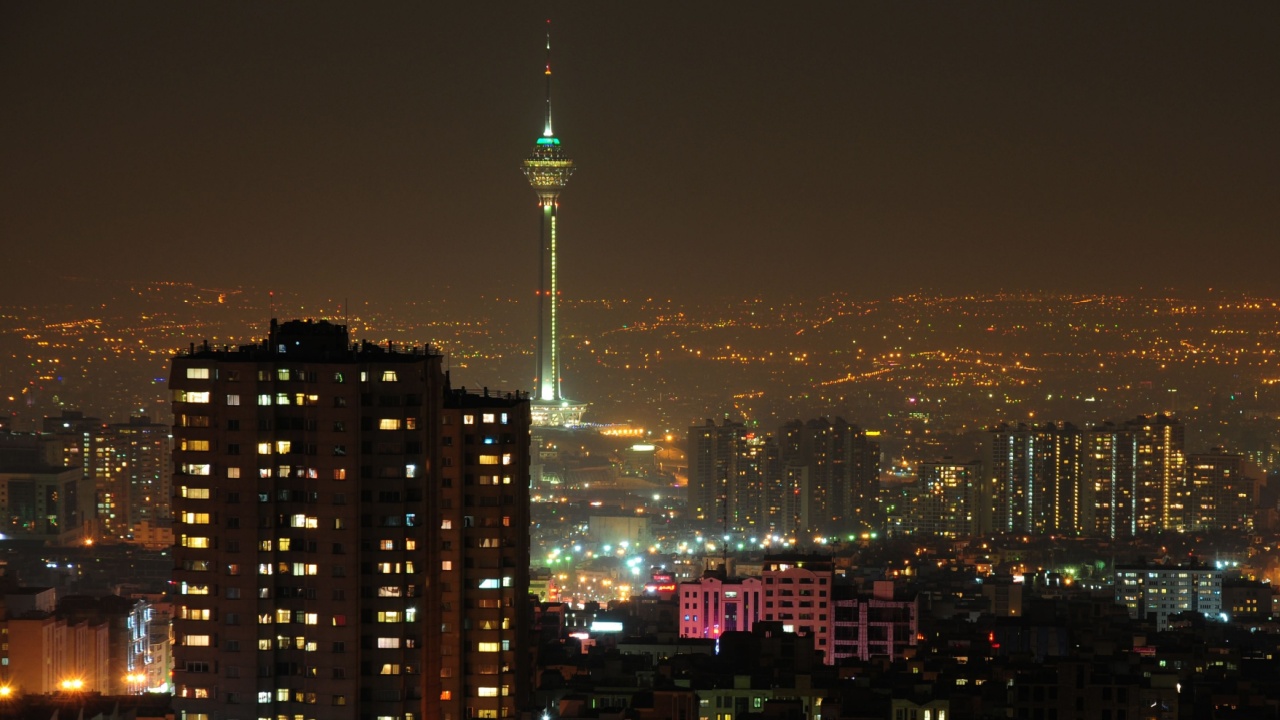
Iran’s ethnic composition and political divisions suggest that a post-Islamic Republic environment would not be hospitable to liberal democracy.
No one disputes that the Iranian people have been dealt a terrible set of cards, but the looming prospect of a US military intervention could very likely make things worse for them. For some, democracy, freedom, and happiness are all the same words. They cannot conceive of a country’s population being free or happy unless they are open to the influence of international institutions and NGOs.
In the case of Iran, the adoption of democracy isn’t an inherently bad thing. Still, it’s delusional to believe that a shift to democracy will fix its preexisting internal divisions and ensure the ascendance of liberalism. Most importantly, it’s not worth the US and Western governments spilling blood and treasure to ensure Iranians get that system of government.
Many seem to have forgotten that one of the lessons of the Arab Spring is that popular discontent with one autocratic regime does not necessarily translate into the uprooting of that regime and its replacement with a government committed to freedom and democracy. Nor should it be assumed that a population which has so many internal divisions is yearning for a Western-approved government.
Iran is estimated to be the third most populous country in the Middle East and one of the most diverse. Other than Persians, there are Azerbaijanis, Kurds, Lurs, Arabs, Balochs, Talysh, and Turkmen, among others, as well as a significant Sunni minority in the Shia-dominated country, along with smaller Christian and Jewish populations. Many of these demographic groups have ties to populations outside Iran who have agendas different from those of the Iranian people as a whole.
For example, the Kurds may want to guarantee autonomy for Kurdistan, the Azerbaijanis may want to unite with neighboring Azerbaijan, and the minority populations stuck in the middle may not want to join such states. And of course, the Persian majority may not want major chunks of their territory breaking off and voting themselves out of Tehran’s control. Anyone can see Iran has to manage a delicate balancing act, no matter what type of government is in charge.
So does this mean Iran is destined forever to despotism? Not at all. What it means is that any attempt to transition the Iranian regime to a democracy by force is bound to be riddled with uncertainties and contradictions. If the United States and its allies banded together to topple the regime, how much thought has been put into what the replacement government would look like? What steps would be necessary to transition it to that point? Would these countries need to provide military assistance to keep the peace? How would the local populace react to a foreign military presence?
Although it may seem strange to many, as radical as the Iranian regime is in its adherence to Twelver Shia Islam, there are always more radical extremists waiting to fill a power vacuum. This is what happened in Iraq. Soon after the United States crushed Saddam Hussein’s Ba’athist regime, Iranian-backed militias, and later ISIS, filled the void—not political alignments conducive to Western-style democracy. Should we really expect non-state actors waiting in the wings to simply sit back and let the West build a democracy without interference?
In all likelihood, there are probably insurgent groups who will fight to keep the regime. In the last Iranian election, Saeed Jalili, the most favored by Ayatollah Ali Khamenei and probably the most radical, advanced to the final runoff and only lost with 49.8 percent of the vote. Of course, Iranian elections are not exactly a strong indicator of what the Iranian people believe, but observers cannot ignore that the current regime still has its supporters.
But even if it does successfully transition to a democracy, there’s no guarantee Iran will be on board with US goals in the region. Turkey is a democratic NATO member, but its pursuit of its own interests often creates friction with Washington and other NATO and US allies. With so many factions deeply repressed in Iran, it’s impossible to guarantee which would come out on top and how their goals would overlap or conflict with US objectives. Moreover, if we’re dealing with a democratic Iran, that means public policy is subject to the will of the people, which may change too quickly to make long-term planning practical.
The Iranian people are not destined for eternal despotism. It is possible for them to have a democratically-controlled destiny. But America should be wary of the idea that installing a democratic government in Iran is its responsibility. The consequences of a botched attempt to establish a democracy will be worse than Iraq, as Iran is larger, more resource-rich, and stands as a Silk Road stop between Asia and the rest of the Middle East. An American attempt to forcefully change Iran’s regime is an extremely high-risk bet that could very well come at a high cost of unforeseen repercussions, whether or not Washington achieves its goal.
About the Author: Alex Madajian
Alex Madajian is a contributing fellow at Defense Priorities. Madajian graduated from George Mason University in 2022 with a bachelor’s degree in Government and International Studies with a concentration in Politics, Philosophy, and Economics. He is also a former congressional staffer.