The Trump administration’s flurry of shoddy “peace deals” is built on an unstable foundation.
President Donald Trump’s public yearning for a Nobel Peace Prize has led him to stretch beyond recognition the meaning of the terms “peace agreement” and “mediation.” He claims credit for anything that can possibly be portrayed as a move from war toward peace, and to which he has had any connection, however tenuous.
In his first term, it was the grandly named “Abraham Accords,” which were not peace agreements at all but instead an upgrading to full diplomatic relations between Israel and some Arab states that were not at war with Israel and already had extensive cooperation with it. The net effect on peace in the Middle East was negative, given how Israel saw the upgrading as an alternative to making peace with the Palestinians and as a basis for an anti-Iran military alliance.
In his second term, Trump has claimed to be a peacemaker in several disputes in which someone else did most of the mediation. This was the case with the border dispute between Cambodia and Thailand, in which Malaysia did the heavy diplomatic lifting. The “peace agreement” to which Trump claimed a connection did not even resolve the issues in dispute, as both Cambodia and Thailand noted when describing that document as merely a transcription of the meeting.
In other conflicts in which Trump has claimed a peacemaking role, such as the one involving Congo and Rwanda, fighting continued to rage because the militias doing the fighting were not parties to the “peace agreement.” In the case of the decades-old Indian-Pakistani conflict, one party—India—adamantly opposes any third-party involvement and has explicitly denied that the United States mediated.
The involvement of President Trump or his administration in efforts to resolve some of these conflicts has been as minimal as threatening to suspend trade negotiations, as in the Cambodia-Thailand case. But in two other cases, the administration’s involvement has been much greater. And those two are enough to discern a pattern—one that can be seen partly as an extension of Trump’s obsession with identifying with “winners” and showing disdain for “losers.”
The pattern is to take the side of the militarily dominant power while mostly ignoring the interests of the other party to the conflict. Trump evidently sees facilitation and encouragement of the strong completing its objective of crushing the weak as the quickest way to get to the end of a war, and something he can portray as “peace.”
One of those cases is Trump’s 20-point “peace plan” for Gaza. Notwithstanding commentary in recent weeks about Trump influencing Israeli prime minister Benjamin Netanyahu on certain matters, such as getting Netanyahu to apologize to Qatar for conducting an airstrike on its territory, the plan is consistent with Trump’s posture throughout his presidency of acquiescing to Israeli preferences on all the big issues.
In Trump’s first term, that posture included gifts he bestowed on Netanyahu’s government, such as moving the US embassy to Jerusalem and recognizing Israeli sovereignty over the Golan Heights, both of which were contrary to an international consensus. In his second term, he has provided diplomatic and military support for Israel’s lethal assault on the Gaza Strip, including huge material aid to the Israeli military.
Such support assisted Israel in inflicting so much devastation on Gaza that Hamas, to put at least a temporary halt to the suffering, submitted to a limited ceasefire and prisoner exchange in which it gave up the last of its hostages and thus much of its leverage. Apart from this act of submission, there was essentially no Palestinian involvement in the construction of the Trump “peace plan.” Israel recently pressured the administration into canceling what would have been a meeting in Turkey between Trump’s envoy Steve Witkoff and a Hamas leader.
Hamas has rejected the plan as a whole, citing specifically how it would leave Palestinians under foreign rule. The obsolete Palestinian Authority has said it is willing to participate, but Israel rejects the PA’s involvement, and there is no indication the Trump administration is willing to overrule Netanyahu on that issue.
The terms of the plan tilt heavily toward Israeli preferences and against the interests of the Palestinians. Hamas is expected to disarm totally, but no such requirement is levied on the side that has caused far more death and destruction. There is no guarantee of an Israeli military withdrawal, and Israel can veto any prospective withdrawal by saying that other conditions have not been met.
There is no policing of Israeli violations of the ceasefire, which have already been substantial. As with a ceasefire earlier this year, the prospect is for Israel to resume military operations wherever and whenever it pleases, and to disregard supposed Israeli obligations in later phases of the plan.
Most importantly, on the key question of whether Palestinians ever will have self-determination of some sort, let alone a state of their own, the answer of Trump’s plan is “no.” The controlling authority will be a board led by someone firmly in Israel’s camp—namely, Trump himself. The Israeli objective of keeping the Palestinians subjugated and stateless will continue to prevail.
The plan also ignores what is happening in the West Bank, where Israel’s mass expulsions and military attacks, and surging violence by Israeli settlers are making the territory increasingly unlivable for its Palestinian residents. The Trump plan’s language about how, if certain things happen, “the conditions may finally be in place for a credible pathway to Palestinian self-determination and statehood” is at least as weak and meaningless as any earlier formulations along this line.
The other case that fits the pattern of siding with the stronger power is the recently constructed 28-point “peace plan” to end the Russia-Ukraine war. It is about as one-sided as the Gaza plan. It reflects no Ukrainian involvement. Witkoff and a Russian official wrote it. Trump has given Ukrainian president Volodymyr Zelensky a short-deadline ultimatum to accept the plan or else lose US aid.
The key substantive provisions in the plan would require Ukraine to cede even more territory, in the Donetsk region, than Russia has been able to conquer. Russia would retain most of the land it occupies in other regions. The plan is phrased in terms of “de facto” Russian control of territory, which could have been the basis of a narrowly-drawn ceasefire that would halt the bloodshed without prejudicing either side’s claims. But combined with the other terms of the plan, it is not surprising that the territorial provisions are widely regarded by Ukrainians as well as by outside observers as equivalent to a Ukrainian surrender.
The plan places limits on the size of Ukrainian armed forces and on its freedom to join alliances or host foreign forces, but places no comparable limits on Russia. Meanwhile, it provides for a lifting of sanctions on Russia and an invitation for Moscow to rejoin the G-8.
The plan comes against a backdrop of a larger tilt by Trump toward Putin’s Russia. That bias is not institutionalized in the same way as the one toward Israel, but instead is based largely on Trump’s personal and political ties to the Russian regime.
If Trump wanted to be a genuine peacemaker, he could take a cue from the one US president who received a Nobel Peace Prize for peacemaking: Theodore Roosevelt, for his role in mediating an end to the Russo-Japanese War of 1904–1905. That role was true mediation, with both belligerents fully represented in negotiations and the United States recognizing the interests and objectives of both sides. The United States hosted the mediation at Portsmouth, New Hampshire, which produced a peace treaty ending the war.
President Roosevelt had earlier shown some favoritism toward Japan but was even-handed in the peace negotiations, partly because of the realpolitik objective of avoiding either Japanese or Russian dominance in the Far East. Japan won most of the military engagements in the war and got most of the concessions at the negotiating table. But Russia had the potential for turning the military picture around if the war had continued, and it secured some concessions, too, especially in rejecting a Japanese demand for reparations.
The Treaty of Portsmouth did not resolve all the differences between Japan and Russia. But it bought three decades of peace between those two powers, despite Japan’s imperialism and Russia’s revolution.
There is no prospect for anything like that in Trump’s approach to the conflicts in Gaza and Ukraine, especially Gaza. As long as Israel subjugates the Palestinians and is determined to live by the sword, there will be Palestinian resistance, some of it violent, just as there was for many years before Hamas even existed.
A settlement imposed on Ukraine will leave resentment and instability in Ukraine. And it is unrealistic to expect lasting peace after the partial achievement of war objectives in Ukraine by a Russian president whose goal is to seize or subjugate all of Ukraine and who once declared the collapse of the Soviet Union to be “the greatest geopolitical catastrophe of the century.”
There are also larger demonstration effects to consider, including a further breakdown of norms against the use of armed force. Acceptance of Russian gains in Ukraine represents a reward for an act of naked aggression, carried out when nobody was attacking or threatening to attack Russia. Acceptance of the Israeli position in Gaza is, in effect, a reward for an operation that is widely considered to be genocide.
Donald Trump gives no indication of having thought about such things. His personal, short-term desire to chalk up anything he can label, validly or otherwise, as a peace agreement will leave behind him a less peaceful world.
About the Author: Paul Pillar
Paul R. Pillar retired in 2005 from a 28-year career in the US intelligence community, in which his last position was as the National Intelligence Officer for the Near East and South Asia. Earlier, he served in a variety of analytical and managerial positions, including as chief of analytic units at the CIA, covering portions of the Near East, the Persian Gulf, and South Asia. His most recent book is Beyond the Water’s Edge: How Partisanship Corrupts US Foreign Policy. He is also a contributing editor for this publication.
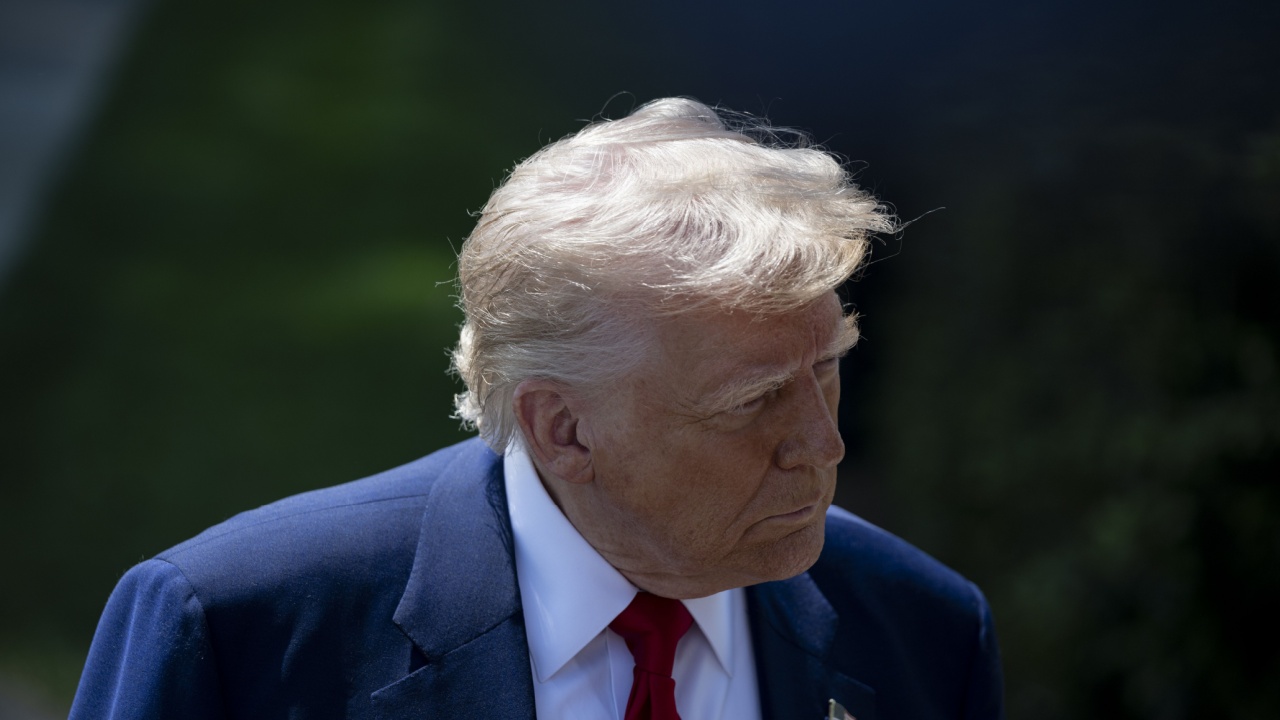
Image: PhotoIbo / Shutterstock.com.