Three weeks ago, I went to Taiwan—joyfully, gratefully, and with a deep sense of privilege. I felt immensely blessed to be part of the Lord’s work, to preach, speak, serve, and pour myself out for souls. Then I came home to Michigan, expecting to plunge immediately into the mountain of work waiting for me at Ave, but instead, I got unbelievably sick. For most of the week, I was barely functional. I still did the broadcast, and some listeners kindly mentioned that they could hear the roughness of and strain in my voice. They were right.
That was never my plan. In truth, and I share this with some embarrassment, I had hoped that after such a mission, after pouring out energy in travel and preaching and ministry, the Lord might grant me some immediate and obvious consolation. I thought perhaps He would bless my return with unusual vigor, abundant stamina, and a kind of spiritual wind at my back so that I could catch up on every delayed task, respond to every demand, and throw myself into my duties with renewed force. Instead, I came home and was laid low. My body simply gave way, and my plans collapsed with it.
That experience exposed something small and petty in me. Somewhere in the recesses of my heart, there was a childish calculation, as if I had rendered service and was waiting for a prompt earthly return. That is a humbling thing to admit, especially for a Christian, especially for a man who speaks publicly about faith, providence, and surrender. Yet the Lord is merciful enough to reveal the hidden poverty in us, and He often does so by letting our illusions fall apart under the weight of ordinary suffering.
My illusion was simple. I had imagined that sacrificial labor in evangelization might result in a smoother road immediately afterward. The Lord, in His fatherly wisdom, allowed that illusion to die.
As a general principle in my spiritual life, I rarely ask God why I’m suffering. I know, in the deepest sense, the answer from the Book of Job. God is my Father. He loves me dearly. He governs all things with wisdom that infinitely exceeds mine. He owes me no tidy explanation tailored to my limited understanding. Even if He were to unfold His purposes before me, I would still fight it. I know myself. So I do not usually ask why.
Instead, I ask Him to receive the suffering, to consecrate it, and to use it for His will. I ask Our Lady and St. Joseph to take it as well, since my family is consecrated to them. And then, with all the energy of a frail human creature, I beg for healing. And I mean beg. I ask for it earnestly, repeatedly, and with the full force of my weakness.
Then, just as I began to turn a corner, my bride, who is very pregnant and already dealing with the exhausting burden of nausea, caught what I had. That brought another cross. It is one thing for me to suffer. It is another thing entirely to watch the woman I love suffer, especially when she is carrying my child and already expending herself in daily sacrifice.
At precisely the time when I would most want to remain home and care for her in every possible way, I have had to face the backlog that grew while I was away in Taiwan and while I was sick after returning. I am, of course, doing everything I can to lighten her burden, and thanks be to God, we have family helping us as well. Even so, there is a sharp edge to this whole season, because I truly long to do more than circumstances allow.
So today, with a mixture of affection, fatigue, and holy exasperation, I understand St. Teresa of Avila’s words more vividly than usual: “If this is how you treat your friends, no wonder you have so few!” The saints knew how to love God while also speaking to Him from the furnace, from the field of battle, and from the bed of affliction.
This, then, is where I find myself. If there is a reward for our labors in evangelization, my bride and I have not yet seen it. And it’s been hard. It’s been discouraging. It has exposed our fragility, our limits, and our dependence, and that is impossible to romanticize. There has been real weakness here, real inconvenience, real fatigue, and real need.
Yet perhaps this itself is part of the reward, though it’s hard to see at first glance. Perhaps the Lord is teaching us that the fruit of evangelization never rests finally in our visible efficiency, our physical strength, our completed task lists, or our preferred timetable.
St. Paul writes, “My grace is sufficient for you, for my power is made perfect in weakness” (2 Cor. 12:9). That verse is easy to quote when we feel strong enough to admire it. It hits much more deeply when weakness is our lived condition. Likewise, St. Peter exhorts us to cast “all your anxieties on him, for he cares about you” (1 Pet. 5:7). Yet, often, the Lord cares for His children through the wilderness. He gives manna sufficient for the day, and He trains our hearts to trust.
That is where my bride and I are right now. We are leaning on God completely. We are soldiering forward. We are trusting Him to supply what we visibly lack, and we do lack a great deal right now. Yet grace is already at work within that poverty. The Father is blessing us even here. He is carrying us even here. He is answering prayer even here, though in a form that humbles us and draws us lower before Him.
I am aware that we are never promised earthly ease as payment for good works. We are, however, invited to ask the Father for His blessing, to seek His mercy with bold confidence, and to hold fast to joyful faith. He will come through, because He always remains faithful to His covenant. He does come through, because His mercy endures through every season. And even now, in this very trial, He is coming through already. And that is where we are: asking Him to come through and seeking His blessings. He is a good Father who never fails His children.
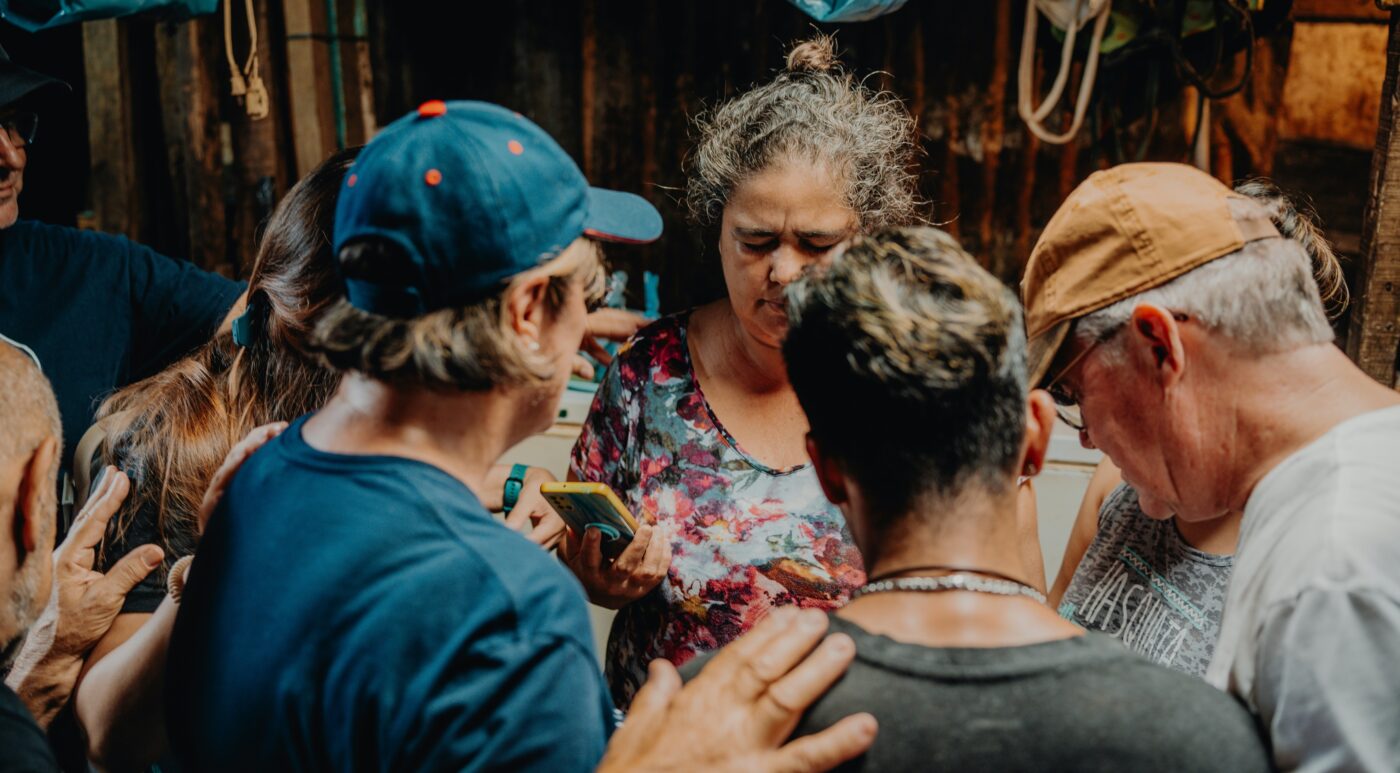
Photo by Elianna Gill on Unsplash