Collecting Old Masters might seem a pipe dream for all but the wealthiest members of society. This is doubtless true for the most famous and greatest of painters, but there remain worthy, though less-known, artists whose works are more affordable but can still be of surprising quality. Orléans’ Fine Arts Museum is marking its bicentennial with an exhibition devoted to the collection of Antoine Béal, composed of overlooked French and Belgian painters of the seventeenth, eighteenth, and nineteenth centuries.
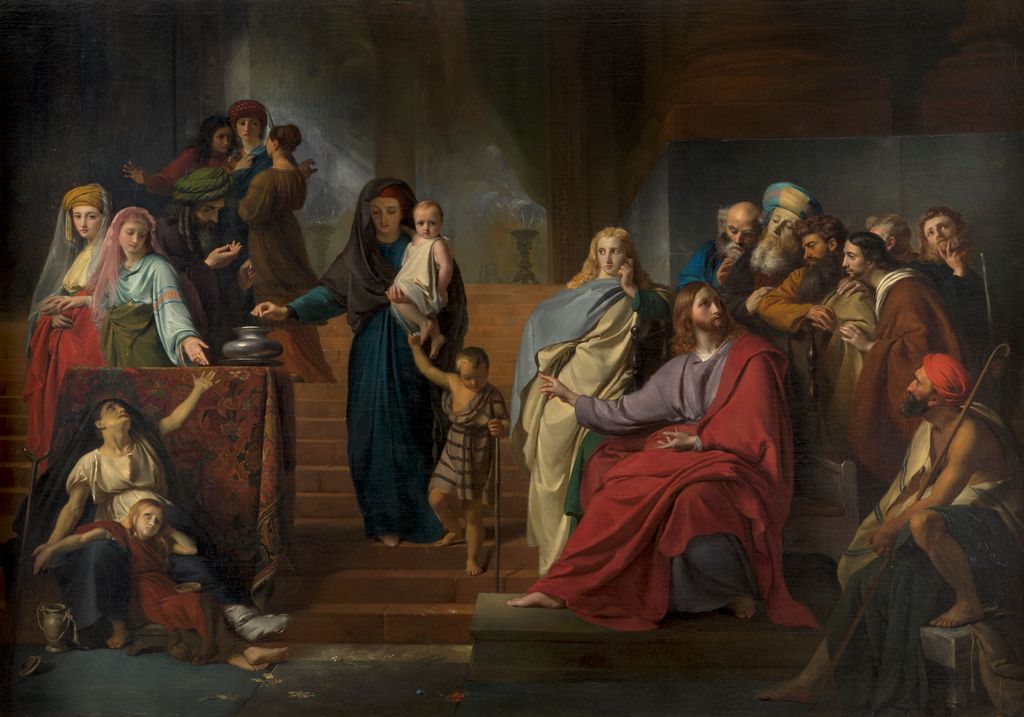
Béal, a Parisian administrative judge, has promised three of his paintings to the Orléans museum in usufruct: Auguste Couder’s Frédégonde et Chilperic (ca. 1825), François Edouard Picot’s Herculaneum and Pompeii (ca. 1829), and François-Joseph Navez’s The Widow’s Mite (1840). He is also giving other works to the Louvre and to smaller French regional museums. His choice of museum for his donations depends on the particular collection’s needs and preferences: seventeenth-century paintings for the Louvre, Romantic history paintings for Orléans, religious pictures for Rennes.
Antoine Béal, a balding, tubby, and beaming man of seventy-one, is a born collector. He started in his childhood with stamps and little flags. Born and raised in the Calais region close to the English Channel, Béal was often taken by his parents to museums and exhibitions. He began to collect art while studying law in his twenties. In addition to his role as a jurist, he is an editor of, and contributor to, legal encyclopedias. His aptitude for research is evident in his collection.
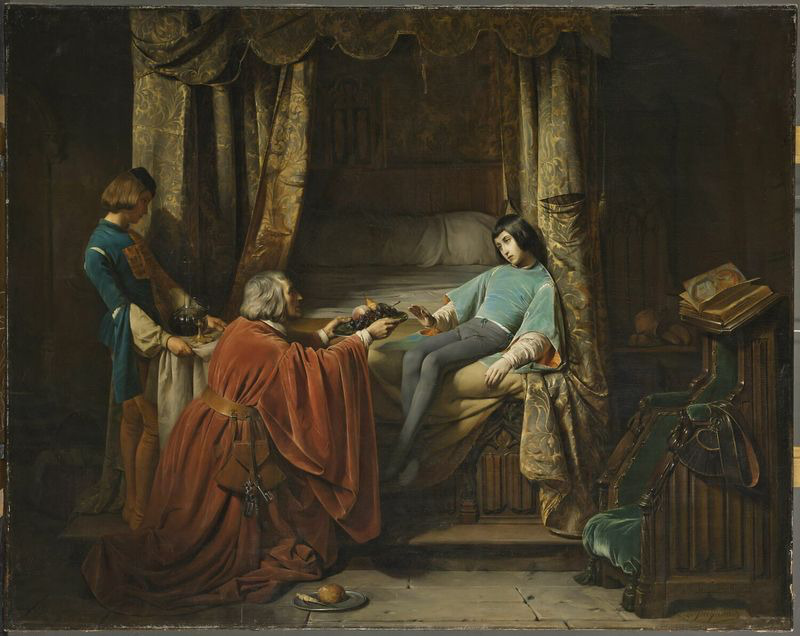
The Galerie Cailleux, specializing in Old Masters sales, guided his initial foray into art collecting and satisfied his youthful taste for eighteenth-century drawings. His early enthusiasm for the Rococo later diminished as he felt that the likes of Boucher, Lancret, or Pater were “too easy even if they have charm,” as he told Olivia Voisin, the Orléans museum’s director and the exhibition’s curator, in an interview printed in the show’s catalogue. In his thirties, he developed a taste for nineteenth-century Romantic history painting, which he found intellectually satisfying, “implicating a good knowledge of history, a good knowledge of mythology.” A particular favorite of the collector’s is Claudius Jacquand’s Young Gaston, Known as the Angel of Foix (1838). As told in Jean Froissart’s Chronicles (ca. 1400), the young Gaston was imprisoned and eventually killed by his father, the count of Foix, following Gaston’s failed attempt at poisoning him. Jacquand’s dramatic rendition is centered on the kneeling father offering fruit to his pale, teenage son, reclining on a sumptuous bed. It is unclear if the fruit represent a gesture of reconciliation or something more sinister.
Béal was also a devotee of the Northern European Baroque, as evidenced by his acquisition of Jacques de l’Ange’s The Martyrdom of Saint Lawrence (ca. 1640–44). The artist was active in Rubens’s native Antwerp in the 1630s, though de l’Ange lacks Rubens’s intensity: the boyish saint seems too relaxed as he reclines on his bed of flames. A landscape by Johannes Glauber (ca. 1690–1710) has the kind of serene beauty that made Claude famous. Pierre Thullier’s View of Rochechinard in Dauphiné (after 1838) shows that a Romantic painter could adapt seventeenth-century motifs, in this case closer to Salvator Rosa than to Poussin, to the then-current fashion without a hint of the mawkishness that can blight nineteenth-century art.
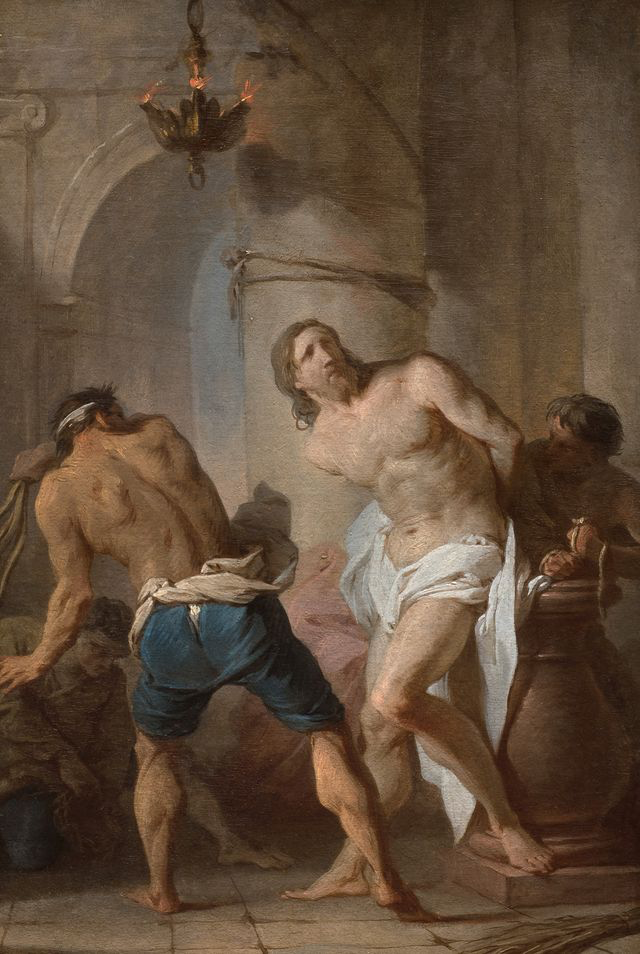
Béal gives credit to the exhibitions that have influenced his taste. “Suleiman the Magnificent” (1990) at the Grand Palais inspired him to collect Islamic ceramics, a selection of which can be seen in the exhibition’s opening room. “Pierre Subleyras” (1987) at the Musée du Luxembourg, curated by Pierre Rosenberg, was another revelation, and a study for that painter’s Flagellation of Christ (ca. 1735), which Béal acquired in 2020, shows that Béal still has time for serious eighteenth-century art. Next to it is a chalk sketch lent by the Musée du Grand Siècle in Saint-Cloud, donated to that museum by Pierre Rosenberg.
Rosenberg is one of the defining figures in the French museum world, whose legendary exhibitions at Paris’s Grand Palais steered art lovers of Béal’s generation towards French seventeenth-century painting. A section of the exhibition is even titled “At the School of Pierre Rosenberg,” because Rosenberg’s book France in the Golden Age: Seventeenth-Century French Paintings in American Collections (1982) was foundational to Béal in his youth. Several seventeenth-century pictures in “Rosenberg’s taste” are presented here, such as Mercury and Herse (ca. 1670–75), by Jean-François Millet (also known as Francisque Millet to avoid confusion with the more famous nineteenth-century realist of the same name). The works show a flying Mercury, about to swoop in to pursue Herse, who is accompanied by her sisters as they return from a festival of Minerva. The myth, as told in Ovid’s Metamorphoses, is fittingly set by Millet in a classical landscape, with golden light and lush, green trees reminiscent of Claude.
A second, smaller exhibition, “The Marcille Chardin Family,” is on view on another floor of the museum. François Marcille (1790–1856) came from a family that made its money selling grain in the Beauce region. In 1822, he began buying paintings by the then-unfashionable painters of the previous century—Boucher, Fragonard, Greuze, Prud’hon, and Chardin—acquiring thirty pictures by the last. Marcille’s son Eudoxe (1814–90) became the Orléans museum’s director, and a small group of Chardins, most on loan, are a pleasant tribute to this local family of collectors. It makes for a nice coda after Antoine Béal’s original and diverting collection.